Here’s why primary votes for Janet Mills will still count
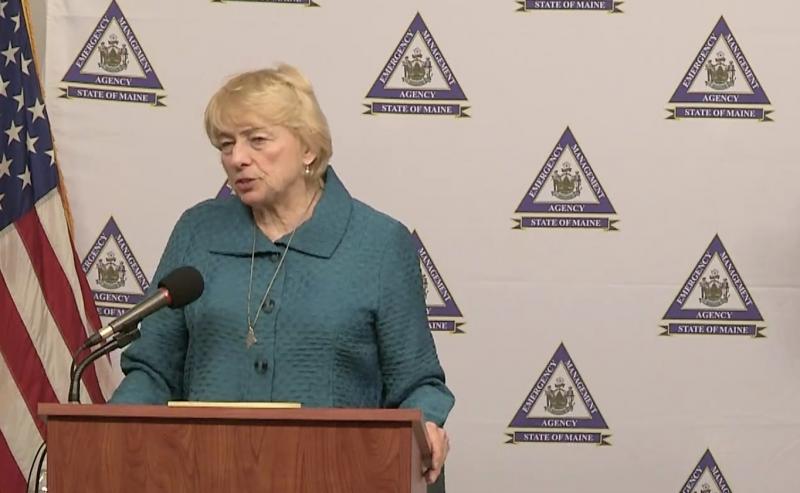 Gov. Mills in 2020
Gov. Mills in 2020
Gov. Mills in 2020The State of Maine has a formal process for political candidates to remove themselves from the ballot if they decide to withdraw from an election, and to prevent any of their votes from counting.
But when Gov. Janet Mills stepped back from the June 9 Democratic primary race for one of Maine’s U.S. Senate seats, she didn’t go through that process.
In her April 30 statement about suspending her candidacy, and in comments to the Portland Press Herald last weekend, Mills has emphasized that she simply suspended “active campaigning” rather than formally withdrawing from the race.
“People have the impression that I ‘withdrew’ or ‘dropped out,’” Mills told Press Herald columnist Steve Collins last Sunday. “but I simply suspended active campaigning. I am still on the ballot.”
Not only is she still on the ballot, but any votes cast for her will still count. That’s a needed clarification given the administrative process involved.
In order for a candidate’s name to be removed from the ballot, state law requires that they file a withdrawal notice at least 70 days ahead of a primary election.
For this election, according to the Maine secretary of state’s office, that withdrawal deadline was March 31. Mills’ announcement about suspending her campaign didn’t come until a month later, so it was too late for her name to be removed from the ballot.
However, even if a candidate misses the window to remove their name from the ballot, they still have an option to submit a written notice of withdrawal, which leads to the candidate’s votes not counting. State law also requires that voters receive notice of that withdrawal at polling places and as part of absentee voting materials.
But Mills never submitted a written withdrawal notice to the secretary of state’s election office, according to a secretary of state’s office spokesperson. This means votes for her will still count.
The same is true for Republican candidate for governor James Libby, a current state senator who ended his campaign in April after failing to secure public financing, but remains on the ballot.
“Since neither Mills nor Libby notified Elections that they were withdrawing, their names are on the ballot, and votes for them will be counted,” according to an email this week from Jana Spaulding, the deputy secretary of state for communications.
Mills’ campaign did not respond to two emails and a text message from The Maine Monitor seeking more information about why she has made a point to say that she is still on the ballot, and whether she is encouraging people to vote for her over fellow Democratic candidate Graham Platner.
Her comments to the Press Herald followed reports in the Wall Street Journal and the New York Times about Platner sending sexually explicit text messages to other women while married to his wife. Platner’s campaign did not respond to two emails asking about Mills’ recent remarks and renewed calls from fellow Democratic candidate David Costello about debating before Tuesday’s election.
Votes for Mills, Platner, Costello and declared write-in candidate Andrea LaFlamme will all count in Tuesday’s primary election, which will feature use of Maine’s ranked-choice voting system because there are at least three candidates on the ballot.
While Platner’s campaign didn’t respond for this story, he did address Mills’ comments in a national TV interview Thursday night.
“I’m not going to really speak to what the intent of the governor was there. I think a lot of people can probably draw their own conclusions,” Platner told Chris Hayes on MS Now. “She is correct, she is still on the ballot. It is a statement of fact. I do believe that it’s a bit of opportunism, but I think anybody can sort of see that.”
And though Mills’ campaign didn’t respond to The Monitor, partner organization NOTUS spoke with a source close to Mills on Friday.
“The Governor remains on the ballot, and in the wake of this week’s stories, people across Maine are reaching out to tell her they’re voting for her and encouraging her to get fully back into the race,” that unnamed source said.
Though the Mills campaign did not provide more insight into her decision not to formally withdraw from the Democratic Senate race, Libby did share input on his choice not to file that formal notice with the secretary of state’s office.
Unlike Mills, who had been running a traditionally financed campaign, Libby said his decision came down to his failed effort to secure public financing through the Maine Clean Election Act.
“The date had passed for name removal from the ballot (last day of March). Clearly the Clean Elections qualification deadlines should be prior to that, but it is not,” Libby explained in an email. “The Clean Elections deadline is instead, April 1. My decision about whether to continue was based on qualifying for Clean Elections funding came a week later.”
Libby’s decision not to formally withdraw was also guided by his belief that the municipal notification required to go out to voters “would cause confusion and waste money and time,” he said.
“The Governor’s considerations were clearly much different, and they did not involve the Clean Elections system,” Libby added.
This story was originally published by The Maine Monitor, a nonprofit civic news organization. To get regular coverage from The Monitor, sign up for a free Monitor newsletter here.