Dead osprey discovered in nest atop Camden CMP power pole, sparks community outrage
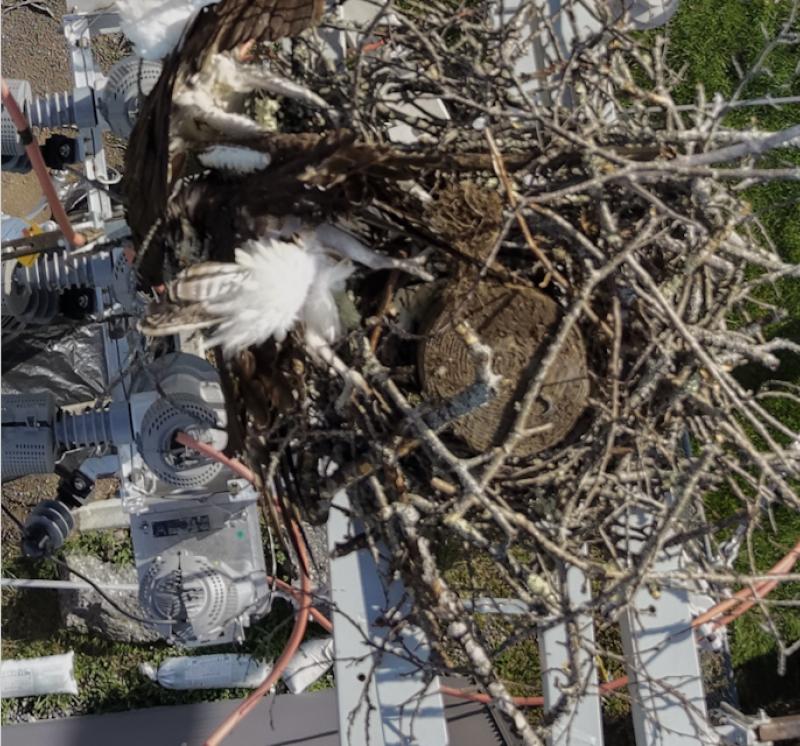 The nest that the two now dead osprey had been building atop the Central Maine Power pole near the Megunticook River and the Camden-Rockport Middle School in Camden. (Photo courtesy Alison McKellar)
 (Photo courtesy Alison McKellar)
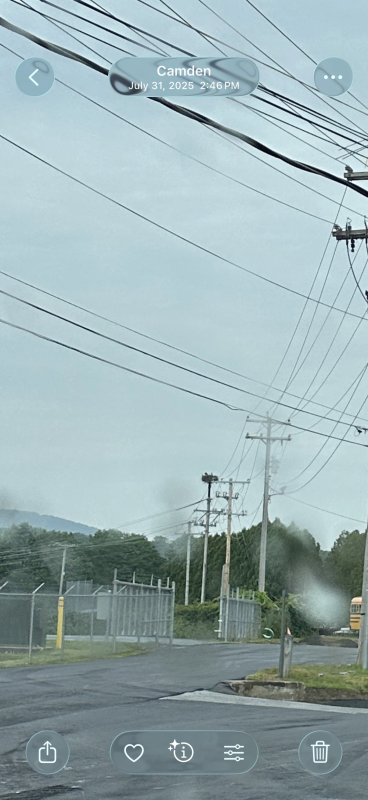 July 30, 2025, with the previous nesting platform intact. It was subsequently dismantled with power line upgrades to feed electricity to downtown Camden. (Photo courtesy Alison McKellar)
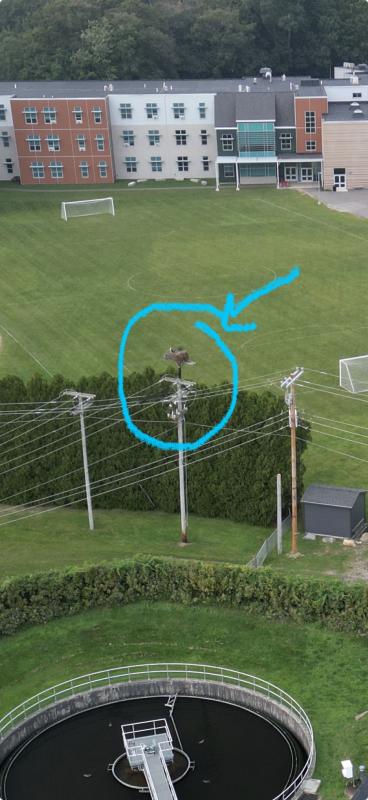 This is the osprey nest constructed on a dedicated platform in years past. (Photo courtesy Alison McKellar)
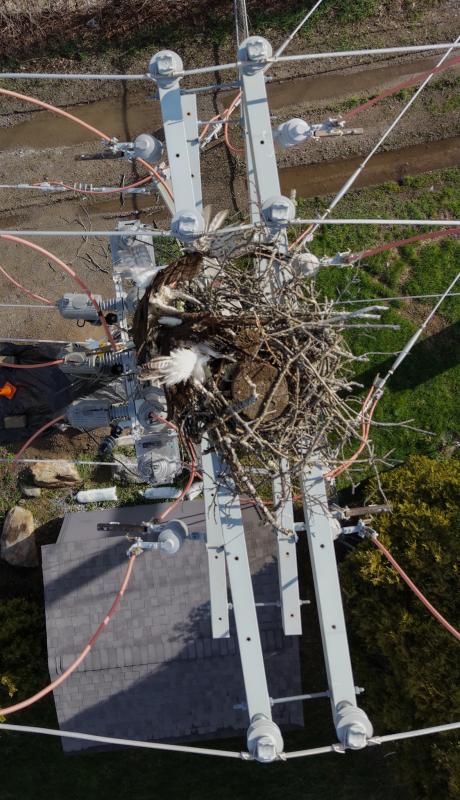
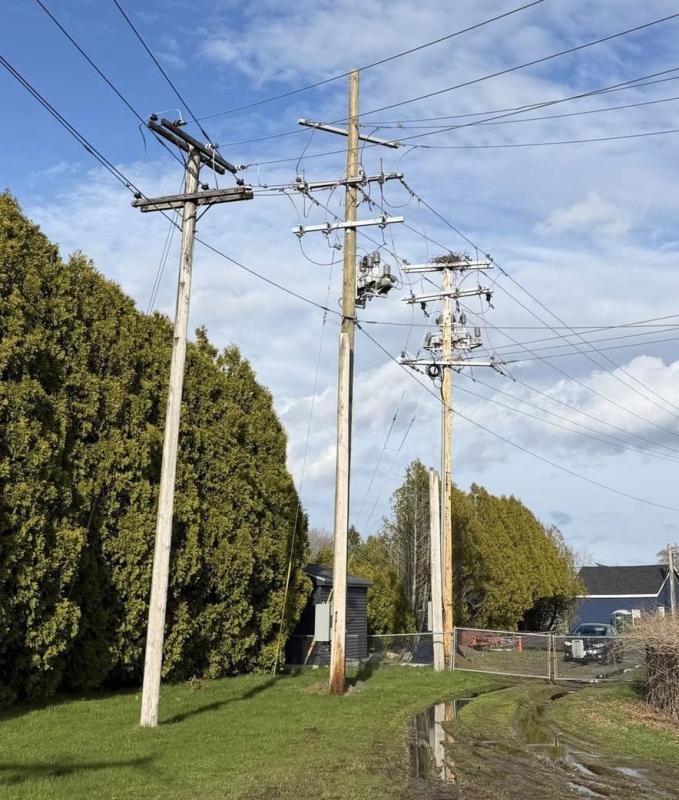 This is the osprey nest this year and which was under construction by the two ospreys found dead May 3. (Photo courtesy Alison McKellar)
The nest that the two now dead osprey had been building atop the Central Maine Power pole near the Megunticook River and the Camden-Rockport Middle School in Camden. (Photo courtesy Alison McKellar)
(Photo courtesy Alison McKellar)
July 30, 2025, with the previous nesting platform intact. It was subsequently dismantled with power line upgrades to feed electricity to downtown Camden. (Photo courtesy Alison McKellar)
This is the osprey nest constructed on a dedicated platform in years past. (Photo courtesy Alison McKellar)
This is the osprey nest this year and which was under construction by the two ospreys found dead May 3. (Photo courtesy Alison McKellar)
This is the osprey nest this year and which was under construction by the two ospreys found dead May 3. (Photo courtesy Alison McKellar)
The nest that the two now dead osprey had been building atop the Central Maine Power pole near the Megunticook River and the Camden-Rockport Middle School in Camden. (Photo courtesy Alison McKellar)
(Photo courtesy Alison McKellar)
July 30, 2025, with the previous nesting platform intact. It was subsequently dismantled with power line upgrades to feed electricity to downtown Camden. (Photo courtesy Alison McKellar)
This is the osprey nest constructed on a dedicated platform in years past. (Photo courtesy Alison McKellar)
This is the osprey nest this year and which was under construction by the two ospreys found dead May 3. (Photo courtesy Alison McKellar)CAMDEN — A pair of nesting osprey were found dead atop a power pole in Camden, between the Megunticook River and the Camden-Rockport Middle School on Knowlton Street.
It is suspected they were electrocuted by live Central Maine Power (CMP) hardware atop the pole on which they were building a nest.
When Camden resident Alison McKellar learned from a citizen May 3 that the birds were thought to have been harmed, she flew her drone overhead, and the camera snapped photos of the dead birds.
"Both birds are now dead in that nest," she wrote, in a May 4 letter to CMP, and other federal and state agencies. "I have drone footage documenting the original nest platform configuration, with birds actively using the site; the current infrastructure after the upgrade, showing the nest embedded in metal crossarm hardware; and both deceased birds in the nest as of May 3, 2026."
CMP said in a Monday afternoon, May 4, statement, that it: "takes all animal incidents involving our equipment very seriously. This better ensures our more than 25,000 miles of power lines can co-exist with Maine’s wildlife as safely as possible as we perform our obligation to our customers, ensuring communities have safe, reliable power."
CMP spokesman Dustin Wlodkowski said the power company, which services Southern, Central and Midcoast Maine, is investigating the circumstances.
"CMP immediately contacted Maine Inland Fisheries and Wildlife upon learning about this osprey incident and dispatched teams to this site to respond," he said. "We are fully cooperating with Maine IFW as they investigate the circumstances of what occurred."
Osprey, which are protected under the Federal Migratory Bird Treaty Act, return to Maine in early spring each year to rebuild their nests in high places in Maine, "on top of tree snags, in large forks in tree trunks, cliffsides, or human-built structures such as buildings or utility poles," according to the Maine Dept. of Inland Fisheries and Wildlife.
IF&W said they are at risk of electrocution from transmission lines, which both of Maine's large power companies — CMP and Versant — acknowledge.
Versant Power, which delivers electricity to Down East and Northern Maine, designed and built a nesting platform near a Lamoine pole where ospreys formerly had a nest. A webcam now records life atop the platform.
Around coastal areas, such as Lamoine, ospreys tend to build nests at the top of utility poles, which presents a danger to the birds while raising the risk of disruptions to electric service, said Versant.
"After a 2020 incident with an osprey nest built on a utility pole in Lamoine, Versant Power crews wanted to prevent a future safety risk to the birds as well as the public," said Versant. "As a result, Versant employees designed and built an alternate nesting platform near the pole where the ospreys originally built their nest.
"The platform was built with ospreys’ preferences in mind and required Versant’s environmental team as well as the expertise of outside environmental groups, including the Maine Department of Inland Fisheries and Wildlife," said Versant, on its webcam page. "Because ospreys like to be at the tallest point above the water, Versant crews replaced an existing utility pole with a taller one. Crews installed a square platform with no coverings, as experts tell us the birds prefer to look down and hunt for fish below without any obstructions overhead."
Camden's osprey at the riverside power pole site once did have a nesting platform, but according to McKellar, that nest platform was moved during the most recent power line upgrades.
"For many years, a mated pair of ospreys successfully nested at this location on a dedicated nest platform — a single tall pole with the nest elevated safely above your active electrical infrastructure. Presumably installed by CMP. During a recent infrastructure upgrade at the Camden substation, that nest platform pole was removed entirely and replaced with new metal crossarm hardware at this pole and one immediately adjacent to it," she wrote in a letter to CMP, as well as the U.S. Fish and Wildlife Service and the Maine Department of Inland Fisheries and Wildlife.
"No replacement nest platform was installed. No bird-safe mitigation of any kind was added to the upgraded infrastructure. Ospreys are well-documented to exhibit strong nest site fidelity, returning to the same location each spring. This pair returned in spring 2026 to find their platform gone. With no safe alternative, they rebuilt their nest directly within the grounded metal crossarm hardware of the upgraded pole, surrounded by live conductors."
McKellar said that, "ospreys are well-documented to exhibit strong nest site fidelity, returning to the same location each spring. This pair returned in spring 2026 to find their platform gone. With no safe alternative, they rebuilt their nest directly within the grounded metal crossarm hardware of the upgraded pole, surrounded by live conductors."
CMP said May 4: "After ospreys left the site last fall, CMP relocated the platform in this area about 40 yards away because nest materials were falling onto a smart device serving more than 3,000 local customers, including downtown Camden. Ospreys are now nesting on that relocated platform. CMP regularly reviews its practices around osprey safety and plans to do so again following the conclusion of the investigation into this incident.
"For years, CMP has worked closely with Maine IFW to install platforms for osprey to safely nest on. This better protects both ospreys and our customers. Osprey nests that fall onto lines can and have caused outages. So far, we’ve installed more than 30 platforms across our service area. These platforms have successfully helped prevent osprey from nesting on lines."
To McKellar: "This situation represents more than a failure to mitigate a known hazard. CMP actively removed an existing bird-safe solution, replaced it with dangerous infrastructure at an established nesting site, and took no steps to protect the birds that were certain to return."
She is asking that CMP installs a proper osprey nest platform at this location prior to the 2027 nesting season, as well as review what steps should be taken to prevent further harm this year.
She also asked that CMP reviews, "other recently upgraded infrastructure near established osprey nesting sites in Maine."
On McKellar's Facebook page, comments from an angry community critical of CMP's hardware installation increased through the day May 4.
"So thoughtless and unnecessary," said one resident. "I have been watching those birds raise their offspring for many years. Thany you for being on top of this killing. CMP workers must be educated and held accountable."
Other comments said CMP has usually, "been good about nesting platforms. I cannot understand what happened here that they did not make space for them."
And still others criticized CMP, asking for a seasoned biologist be placed on staff to mitigate harm.
Reach Editorial Director Lynda Clancy at lyndaclancy@penbaypilot.com; 207-706-6657