Your Count Counts
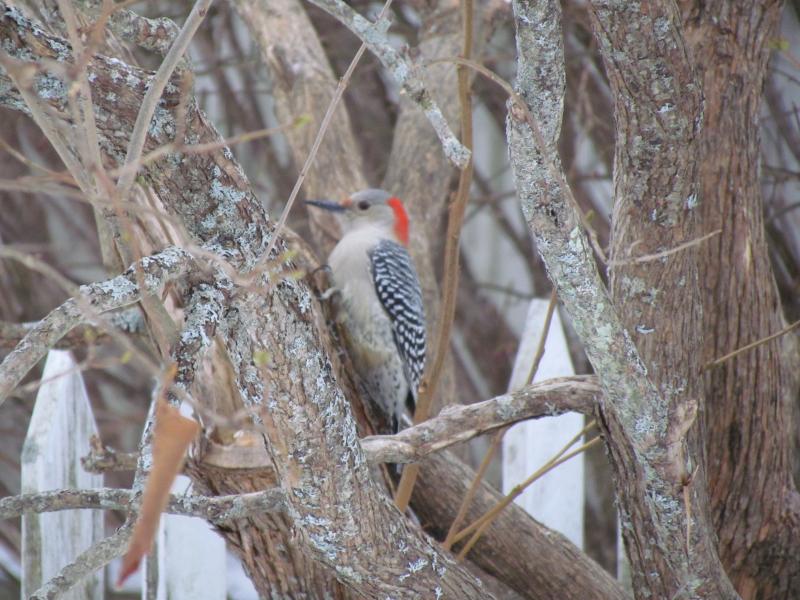 The expansion of red-bellied woodpecker populations into Maine that has taken place in Maine over the last twenty years has been documented thanks to the thousands of volunteer Maine birders who submit their records into eBird and other community science projects. Courtesy of Jeff Wells
 The bubbling song of bobolinks was a common sound across much of Maine, including the Boothbay Peninsula many decades ago when agriculture was more prevalent. Photo by Paul Danese, courtesy of Wikimedia Commons.
The expansion of red-bellied woodpecker populations into Maine that has taken place in Maine over the last twenty years has been documented thanks to the thousands of volunteer Maine birders who submit their records into eBird and other community science projects. Courtesy of Jeff Wells
The bubbling song of bobolinks was a common sound across much of Maine, including the Boothbay Peninsula many decades ago when agriculture was more prevalent. Photo by Paul Danese, courtesy of Wikimedia Commons.
The bubbling song of bobolinks was a common sound across much of Maine, including the Boothbay Peninsula many decades ago when agriculture was more prevalent. Photo by Paul Danese, courtesy of Wikimedia Commons.
The expansion of red-bellied woodpecker populations into Maine that has taken place in Maine over the last twenty years has been documented thanks to the thousands of volunteer Maine birders who submit their records into eBird and other community science projects. Courtesy of Jeff Wells
The bubbling song of bobolinks was a common sound across much of Maine, including the Boothbay Peninsula many decades ago when agriculture was more prevalent. Photo by Paul Danese, courtesy of Wikimedia Commons.
In this age of artificial intelligence, satellite tagging technology, automated sound recorders, genetic analyses, and countless other sophisticated science tools, you could be easy to be lulled into assuming that old-fashioned personal natural history observations are obsolete and of little use.
But you’d be wrong. Very wrong!
The truth is, individuals paying attention and reporting what they see and hear in the natural world is not only relevant but crucial. Without such observations, often described as “community science” (formerly, citizen science), many of the most critical science and conservation needs would be literally impossible to achieve.
Consider the question of how populations of each of the world’s 11,000 or so bird species are faring. Or even just the roughly 300 species that occur regularly in Maine. To ensure accurate data, species that are found over vast continental ranges and that migrate thousands of miles need to be monitored at hundreds of thousands of locations throughout the year. Without volunteer human observers, such monitoring is not possible.
Many of you may be familiar with the often-cited scientific research that showed that North America has at least three billion fewer breeding birds now as compared to the 1970s. Those analyses were based completely on data collected by volunteer birders participating in the U.S. Breeding Bird Survey, organized by the U.S. Geological Survey, and the Audubon Christmas Bird Count. These datasets are literally the only information we have to examine continental bird population trends back fifty or more years in time. In more recent decades, other volunteer-collected datasets have become available, the most notable being eBird, a project started originally through a partnership of the Cornell Lab of Ornithology and National Audubon.
Another vital piece for understanding the natural world, and considering how humans manage or interact with it, is knowing WHERE birds (and other living things) occur. Even more particularly, what are the geographic areas that encompass their nesting grounds, migratory routes, and their non-breeding season habitats? Again, it’s probably obvious that getting information like that across continental and hemispheric scales is not possible except by collecting together the observations of millions of people.
And birders have been doing just that for a very long time.
More than 1.1 million birders have submitted more than two billion bird observations to eBird since it was launched in 2002. More than 80,000 people participate in the thousands of Audubon Christmas Bird Counts that take place across the Americas every winter. And about 3,000 Breeding Bird Survey routes are systematically completed in early summer across North America by volunteers who start the first of the 50 required point counts at dawn.
And state by state, volunteers have been brought together to complete bird atlases that carefully document the distribution of birds. Over time, these atlases can document changes to where birds occur increasingly as a result of climate change impacts. Maine’s second bird atlas project covered the period from 2018-2022, and the book compiling the results will be released this fall (register for a presentation coming up on Sept 17 at https://maineaudubon.org/events/maine-bird-atlas-final-presentation-online/).
Observations from volunteers have documented the arrival of birds like red-bellied woodpeckers and Carolina wrens to the region. Sadly, such community science-contributed data also have shown us the disappearance of birds like nesting bobolinks, eastern meadowlarks, savannah sparrows, and cliff swallows from many areas including from the Boothbay Peninsula.
We haven’t even mentioned the urgent need for observations of animals, plants, and other living things other than birds, which can now be easily contributed through apps like iNaturalist (one of our favorites!).
Maybe one of the most significant contributions you can make to the future of the natural world will be through another type of count: the vote! Make your observations count for birds, nature, and the environment—because just as in those community science projects, your vote counts!
Jeffrey V. Wells, Ph.D., is a Fellow of the Cornell Lab of Ornithology and Vice President of Boreal Conservation for National Audubon. Dr. Wells is one of the nation's leading bird experts and conservation biologists. He is a coauthor of the seminal “Birds of Maine” book and author of the “Birder’s Conservation Handbook.” His grandfather, the late John Chase, was a columnist for the Boothbay Register for many years. Allison Childs Wells, formerly of the Cornell Lab of Ornithology, is a senior director at the Natural Resources Council of Maine, a nonprofit membership organization working statewide to protect the nature of Maine. Both are widely published natural history writers and are the authors of the popular books, “Maine’s Favorite Birds” (Down East Books) and “Birds of Aruba, Bonaire, and Curaçao: A Site and Field Guide,” (Cornell University Press).