Belfast family lives without modern amenities to protest environmental destruction
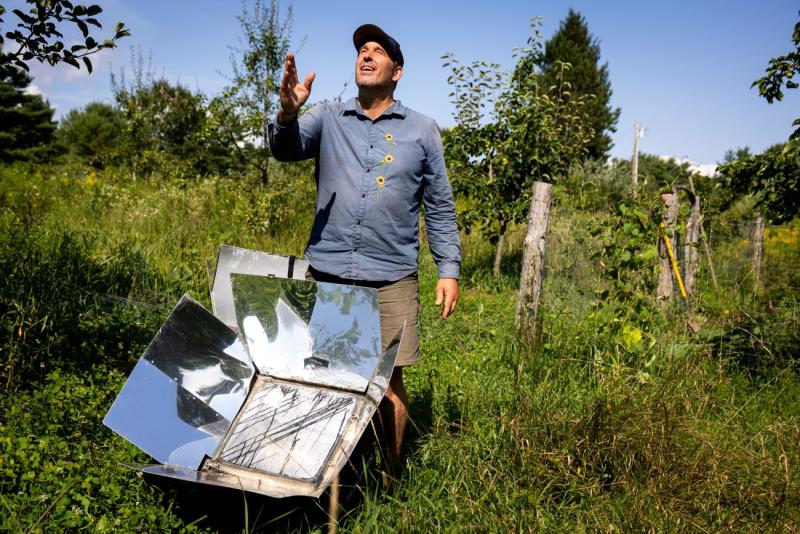 Ethan Hughes set up a solar oven to cook a loaf of bread on Aug. 8, 2026, at his home in Belfast. Photo by Joseph Ciembroniewicz for The Maine Monitor.
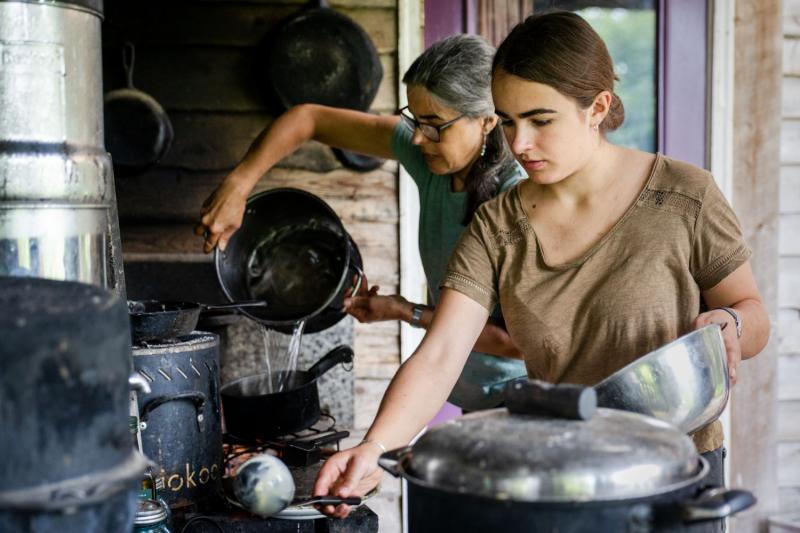 A Saturday morning in August at the Hughes’ home was full of music, laughter and home-cooked crepes. Photos by Joseph Ciembroniewicz for The Maine Monitor.
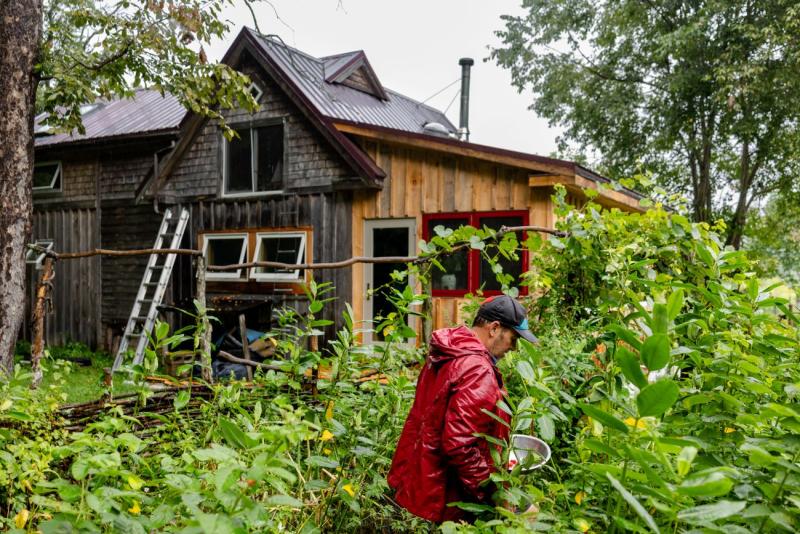 Ethan Hughes picked raspberries in the garden behind the family’s home in August. Photo by Joseph Ciembroniewicz for The Maine Monitor.
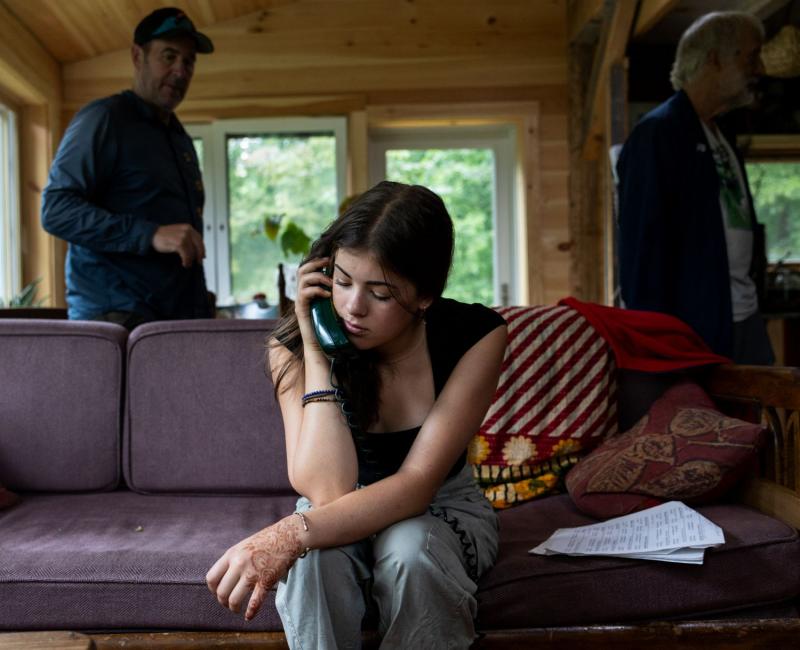 Isla Hughes, Ethan and Sarah’s younger daughter, called a friend on the family’s landline phone. Photo by Joseph Ciembroniewicz for The Maine Monitor.
Ethan Hughes set up a solar oven to cook a loaf of bread on Aug. 8, 2026, at his home in Belfast. Photo by Joseph Ciembroniewicz for The Maine Monitor.
A Saturday morning in August at the Hughes’ home was full of music, laughter and home-cooked crepes. Photos by Joseph Ciembroniewicz for The Maine Monitor.
Ethan Hughes picked raspberries in the garden behind the family’s home in August. Photo by Joseph Ciembroniewicz for The Maine Monitor.
Isla Hughes, Ethan and Sarah’s younger daughter, called a friend on the family’s landline phone. Photo by Joseph Ciembroniewicz for The Maine Monitor.
Isla Hughes, Ethan and Sarah’s younger daughter, called a friend on the family’s landline phone. Photo by Joseph Ciembroniewicz for The Maine Monitor.
Ethan Hughes set up a solar oven to cook a loaf of bread on Aug. 8, 2026, at his home in Belfast. Photo by Joseph Ciembroniewicz for The Maine Monitor.
A Saturday morning in August at the Hughes’ home was full of music, laughter and home-cooked crepes. Photos by Joseph Ciembroniewicz for The Maine Monitor.
Ethan Hughes picked raspberries in the garden behind the family’s home in August. Photo by Joseph Ciembroniewicz for The Maine Monitor.
Isla Hughes, Ethan and Sarah’s younger daughter, called a friend on the family’s landline phone. Photo by Joseph Ciembroniewicz for The Maine Monitor.
On May 25, 2024, more than 100 people gathered on the site of a potential land-based fish farm along the Little River in Belfast. The protest followed six years of conflict between the city’s residents and Nordic Aquafarms, the corporation behind the proposed build. The day-long demonstration involved singing and dancing, and, eventually, a number of kids and families climbing onto the roof of the building that was set to become a fish farm office.
“I’m here for all generations, for everyone to have access to water and all beings to have access to water,” Ethan Hughes, a Belfast resident who climbed on the roof with his two daughters, told FOX ABC Maine at the time.
The Hughes family had been involved in the pushback since 2018 when Nordic Aquafarms first purchased the plot of land. At the time, Ethan participated in several community discussions and public hearings, speaking out against a corporation he saw as contributing to ocean destruction.
The fish farm demonstration is just one example of the Hughes family’s decades of environmental activism. Ethan travels throughout Maine, and around the world, to stand against corporations he sees as exploiting natural resources and Indigenous peoples. He and his family also protest humanity’s disconnection from nature by attempting to embody the world they hope to see.
Ethan, his wife, Sarah Wilcox-Hughes, and their daughters, Etta and Isla, have an 11-acre homestead beside the Little River in Belfast. They’re 19 years into a lifestyle experiment they call the Possibility Alliance.
At the core of this project is a commitment to stewardship of the earth, and trying to avoid contributing to the corporations they believe profit off inequity, oppression and ecological damage. The family lives off the land and occasional unsolicited gifts; they minimize their use of petroleum, electricity and other modern systems such as imported food.
Ethan has never had a smartphone or email address. Yet the Possibility Alliance is embedded in a web of related movements, and Ethan coordinates supplies and protests all through the family’s landline.
Many of the calls the family receives are from people interested in visiting the Possibility Alliance. As word of their project has spread, it has become a mecca for climate activists and skeptics of modern comforts. Thousands of people have visited them in Belfast over the years, enjoying the family’s hospitality for a few days or weeks as a way to inform their own anti-capitalist projects. They help prepare food and tend to the animals and garden, contributing to what Ethan calls an “intentional community” practicing “collective liberation.”
But providing an escape from modernity does not mean leaving behind its contradictions. Trying to engage with the world while also establishing distance from it means constantly negotiating priorities and examining blindspots.
“We’re humans trying to do something, and we’re replaying everything we’re trying to stop, but just trying to, each day, do a little better,” Ethan said.
Deciding when and how to use imperfect systems to achieve their goals is a constant struggle, one that came to a forefront this February when Ethan decided to fly to Palestine for a month to volunteer for the International Solidarity Movement and contribute to mutual aid projects. After he couldn’t find other feasible means to travel there, he decided the importance of going was worth the carbon emissions of a plane. He flew for the first time in more than 30 years and hopes to return with 100 volunteers next year.
Traveling without the mobile ticket apps or digital banking systems now expected of travelers, Ethan was twice turned away from boarding flights.
“The world has changed so much,” Ethan said. “It was good for me to be really humbled.”
To an outsider, Ethan’s approach to modernity — refusing even technologies as standard as a refrigerator — may seem extreme. During the coronavirus pandemic, he turned down the vaccine, explaining that “Pfizer is a profit-driven, horrific pharmaceutical that has created harm to so many people.” (Sarah got the vaccine, however.) At the time, some neighbors voiced concern.
Yet his methods continue to attract visitors and proteges, including several who have gone on to start their own radical projects. Apprentices of Ethan’s from four years ago started Belfast’s Apple Tree House, an affordable housing co-op where residents all contribute to owning and running the home.
In this way, his homestead in Waldo County has become an incubator for broader climate and anti-capitalist activism. From his seat near the landline in the living room and with dozens of pages of hand-written contacts, Ethan often spends hours a day making and responding to phone calls to fundraise and organize.
Locally, Ethan’s organizing has made waves. He was one of 25 protesters arrested outside Bath Iron Works in 2019 for blocking the road during a protest against the carbon footprint of the Pentagon’s warships. And when Nordic Aquafarms eventually abandoned the Belfast fish farm project in 2025, a local environmental advocacy group raised $1.5 million to purchase the 54-acre property for permanent protection and public use. Ethan contributed $300,000 of his own fundraising for the buyback. He accomplished this despite living below the poverty line to avoid paying federal taxes that he sees as funding international warfare; Ethan’s only monthly bill is for the landline.
Ethan’s organizing reach extends beyond Maine. In 2021, he was one of eight protesters who chained themselves to a full-sized piano to sing songs while blocking a Line 3 Pipeline fueling station in Minnesota. Later that year, he helped stage a seven-hour blockade against the Mountain Valley Pipeline in Virginia that involved Ethan and other protesters locking themselves to a large wooden duck.
Even if these blockades haven’t stopped the operation of pipelines, Ethan said he sees them as demonstrating solidarity with the Indigenous activists who staged prolonged resistance to both the Line 3 and Mountain Valley pipelines.
“I’ve been arrested so many times. It’s not hard,” Ethan said. It’s the inner work — “undoing heteropatriarchy, white supremacy, colonization” — that Ethan said is more challenging, and requires a lifetime to undo.
Ethan’s focus on unlearning such systems of oppression means constantly checking himself as he talks, verbally reckoning with the contradiction of his own role as a white, cisgender male.
“I feel like we are in one cage, and then we dig out and think we’re free, but we realize we’re in another cage,” Ethan said. “It’s humbling and sometimes tiring.”
“You have to accept feedback, and it doesn’t negate all the other good works that are happening,” he added.
‘Navigating complexity and paradox’
After he finished his morning chores on the morning of Aug. 8, Ethan stepped out of his shoes and into the house. Sarah and Etta cooked on a wood stove on the porch. The family, along with nine additional friends and houseguests — the latest visitors in a near-constant stream who are invited to stay and learn from their way of life — slowly collected in a window-lit dining room for brunch.
Before the feast began, the group sang and took turns expressing gratitude. They lathered crepes with cheese from the milk of their six goats and blueberries preserved from last summer’s harvest.
If it were just the four Hugheses at the Possibility Alliance, the garden and animals would be enough to feed the family. But they can’t sustain so many additional visitors on their own. So people sometimes bring food to share, and any food the family does purchase is funded via donations. The Hughes family tries to use money as rarely as possible, so they often end up dumpster diving at Hannaford for items such as organic yogurt and cheese that are labeled as past their expiration date but that Ethan said are still safe to eat — and being wasted by the corporate infrastructure.
Their ceiling is speckled with small holes of exposed wires where light bulbs once screwed in. When the Hugheses bought the land in 2018, moving the Possibility Alliance from Missouri to Maine, the house was solar powered. While most consider solar power to be a clean energy source, Ethan said it relies on exploitative mining practices. They removed solar panels from the roof and built an expansion to the house with just hand tools and the help of friends.
The sink has a faucet, but the plumbing is turned off; a container of water resting nearby is kept full from large tanks that collect rainwater off the sides of the house. The family uses an outhouse, and, without a refrigerator, they rely on canned food and garden produce.
Ethan’s dedication to a technologically minimal lifestyle began at 13 when his father was hit and killed by a drunk driver. Shortly after graduating college with a degree in marine biology, he resolved to stop using airplanes, movies or a personal computer. He began giving away many of his belongings, and, in 1999, he began an attempt to live car-free.
In Sarah, he found a kindred spirit. She was the one to propose living without electricity altogether. The two of them spent several years studying different mutual aid and gift economy projects. They even took a freight boat across the Atlantic Ocean to live for 18 months at the Community of the Ark in France. The commune, which minimizes the use of money and deploys residents for acts of nonviolent civil disobedience, became a model for the Possibility Alliance.
They founded the Possibility Alliance in Missouri as an 80-acre community that survived off the land. Visitors stayed for free and were expected to contribute to the daily chores and food preparation, sustaining the project in relative isolation from the world around it.
But Ethan and Sarah noticed that the Possibility Alliance was most effective as a temporary stepping stone for activists as opposed to a permanent residence community. Downsizing to Maine, they have focused on supporting visitors who are working toward their own projects.
In Belfast, the Hugheses have also embedded themselves in the local community, organizing local sledding parties and puppet shows for their neighbors. Ethan is the unofficial caretaker of the nextdoor Little River Land Trust, a multi-racial community event space and temporary home available to help unhoused people get back on their feet. The family also regularly engages with the Belfast Cohousing and Ecovillage that is just a stones-throw from the Possibility Alliance.
Sarah is involved in the town’s art scene, and she and Etta just finished performing in the Belfast community theater’s summer production of “Pippin.”
“That’s exactly the same work as going to Palestine or blocking a pipeline,” Ethan said of Sarah’s performance. “People are coming, and they’re having entertainment with a way smaller footprint than a blockbuster movie.”
Ethan teaches Possibility Alliance visitors that collective liberation begins with individual healing and finding one’s unique contribution — such as Sarah’s performing.
To channel that insight, Ethan keeps a handwritten list of house principles on a bookshelf that includes concepts such as “community uplift,” “silliness” and finding “where your gifts meet the needs of the world.” Ethan said they don’t hang up the list to avoid creating a top-down culture in the home.
The list started at five principles but has grown to 13. The most recent addition? “Navigating complexity and paradox.”
Complexity is abundant in the Hugheses’ lifestyle.
Given the daughters’ tuition — Isla at Ashwood Waldorf in Rockport and Etta now at Vassar University in New York — Sarah brings in a small income by working as a caretaker for local elderly people one day a week. She also recently set up an email account; since the pandemic, she has found that there is no way to pay tuition without one, so she occasionally logs into it at the library.
In 2023, a friend also donated a car for community use. Sarah uses it to drive school carpools, transport bulk food items and donations, and visit town when snow makes biking too difficult. Ethan occasionally joins the family in the car, but he still does not have a driver’s license.
As their daughters have grown up, the negotiations around family values and lifestyle restrictions have evolved.
When she started college, Etta realized she would need a smartphone and laptop for her classes. Living in a dormitory in a city, she said it was hard to get used to the hum of appliances and the glow of street lights. It is a relief to visit home.
At the start of high school, she felt as though she was living two lives, she said, joining peers playing video games and returning to her home with no electricity.
But she eventually realized that her upbringing defined her and decided to embrace it. During high school, Etta gave public comment to the Maine State Legislature about sustainability in schools. She also wrote a musical called “If A Tree Falls,” a love story set in the midst of climate disaster and war. Ticket sales went toward fundraising to buy back the fish farm land on the Little River.
Even though she doesn’t live at the Possibility Alliance during the school year anymore, she is closely involved with environmental activism at Vassar. Now, transitioning between home and school hardly requires readjustment.
“I think I’ve gotten really used to the rest of the world being different, and my house being different,” she said.
The family doesn’t outright ban technology use in the home, but they encourage visitors to use their phones away from public space. Taking people away from their technology addictions can lead to discord, Ethan said, and he uses conflict resolution training to help manage the challenges that visitors sometimes face.
Though Ethan’s approach might seem dogmatic, he welcomes the friction that his beliefs sometimes create with people of diverse backgrounds who visit the Possibility Alliance. He used the concept of permaculture, a gardening practice that fosters the natural interactions of species’ ecosystems, to describe why.
“The most diversity is at the edge of two ecosystems,” he said, explaining that the same is true for people: “The greater diversity, then the greater the insight.”
This story was originally published by The Maine Monitor, a nonprofit civic news organization. To get regular coverage from The Monitor, sign up for a free Monitor newsletter here.