Camden-Rockport Harvest Fest puts an end to summer with living history
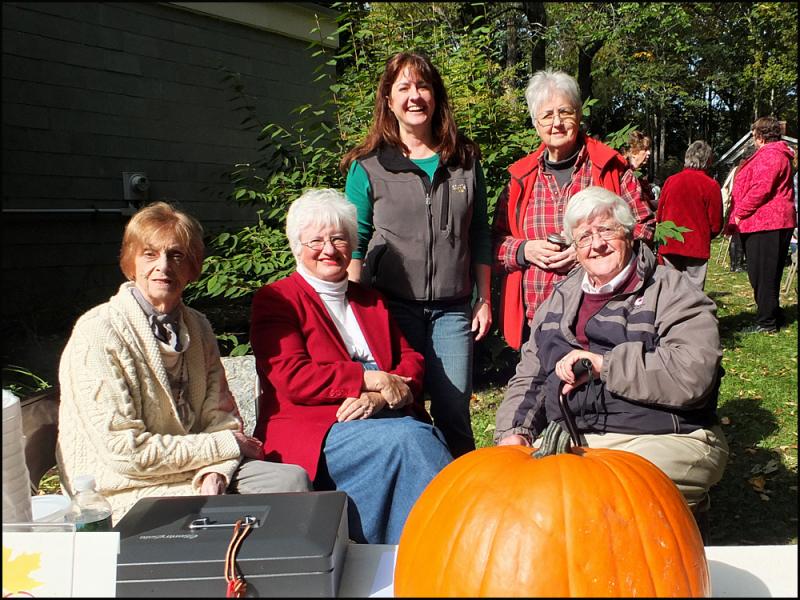 Camden Rockport Historical Society members greet festival goers to the Conway House and Museum on Sunday, Oct. 4. Left to right: Joan Bennett, Elizabeth Moran, Heather Moran, Andrew Moran Brenda Barrett and Andrew Moran. (Photos by Chris Wolf)
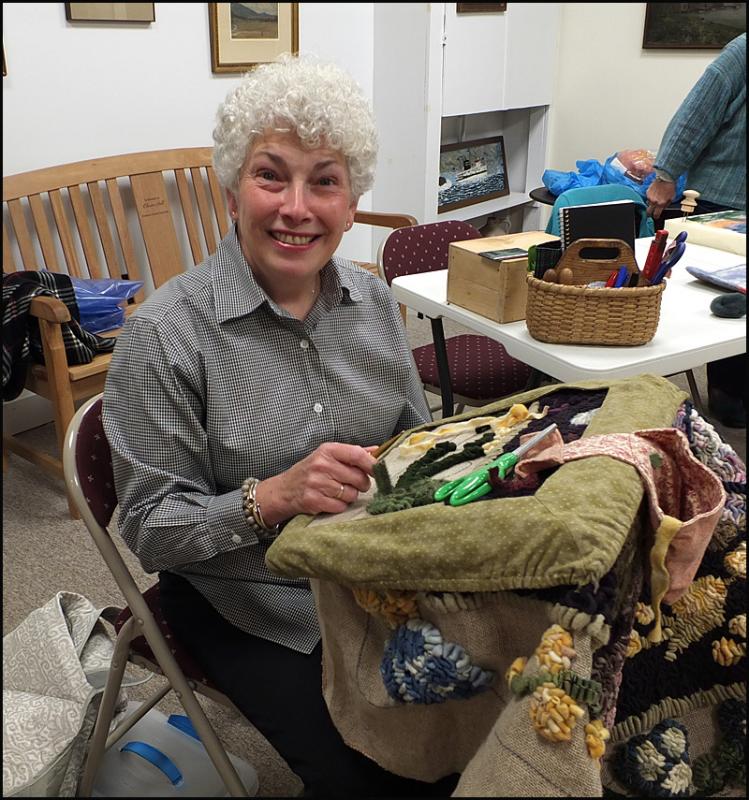 Gabrielle Wicklow was demonstrating traditional rug-hooking, which started in the Canadian Maritimes around 250 years ago. “It was originally a craft of need. Women would use old burlap feed bags and tear up old clothing, cutting it into strips, color it and hook it into rugs. They needed to cover their floors. It’s a simple technique of pulling loops to the surface.”
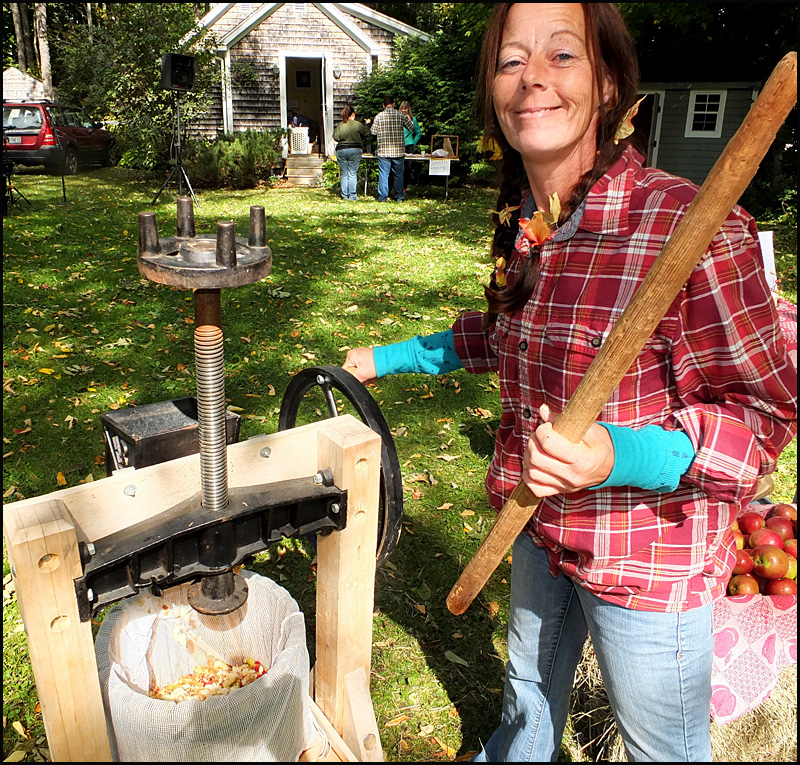 Tammy Grierson demonstrated the taste treat of freshly pressed cider.
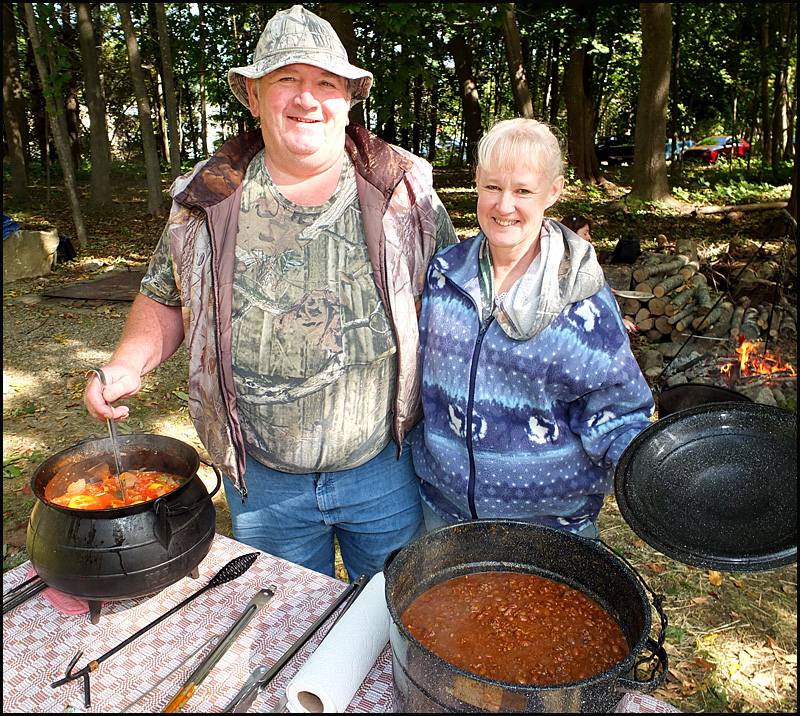 Maynard and Norma Stanley show off their beans that was the centerpiece of the festivities. If you recognize Maynard, or his beans, it’s because he took first place at the chili-chowder cook off held at Trackside Restaurant in Rockland last year.
 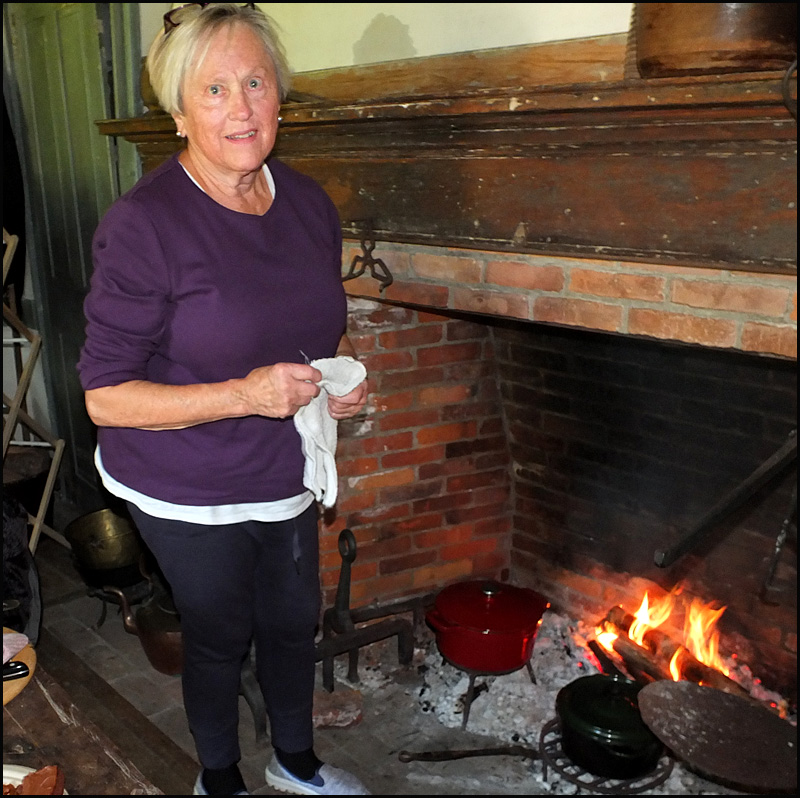 Jane Carr was cooking chicken and apples in the fireplace of the Conway House.
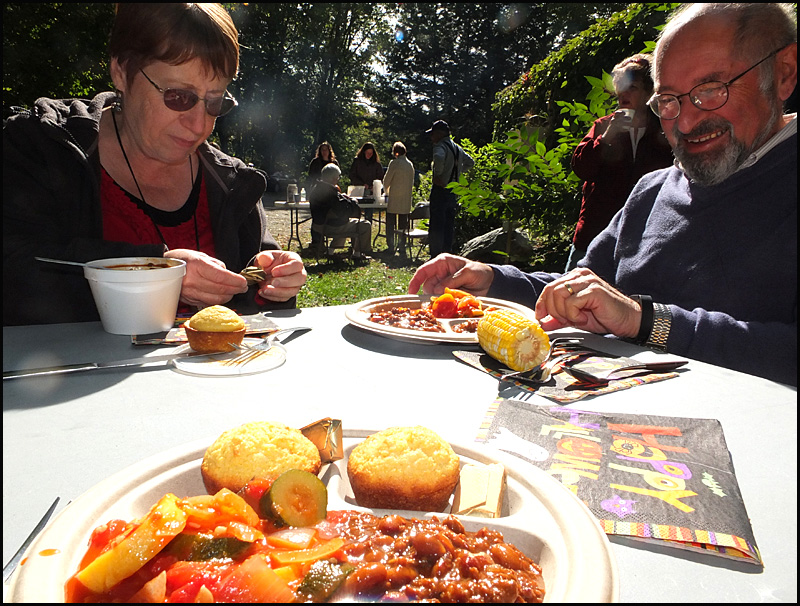 Jack and Evelyn Kane of Bethlehem, Pennsylvania. The Kanes visit Camden for nine weeks each fall. “The food is wonderful and we’ve toured the museum. They found a nice piece of history to preserve.”
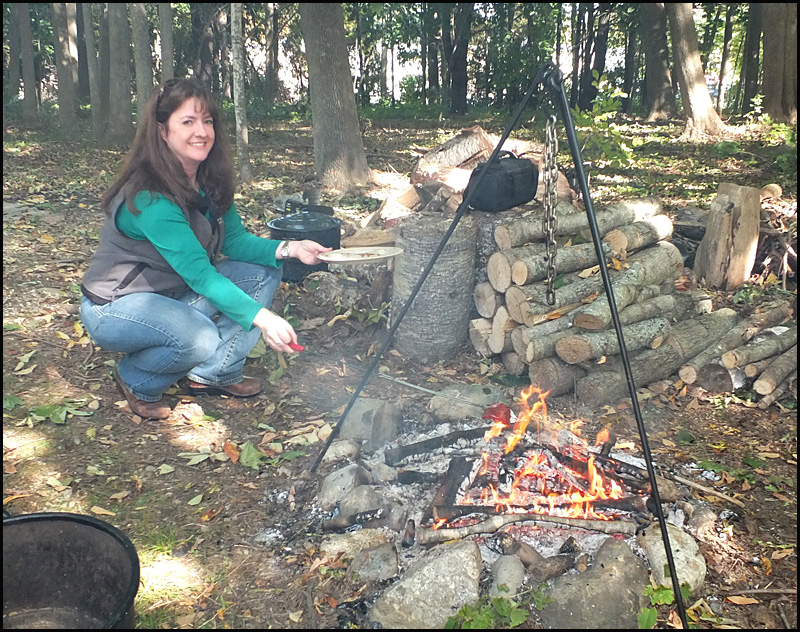 Heather Moran cooks maple marinated pepperoni on a stick over an open fire.
 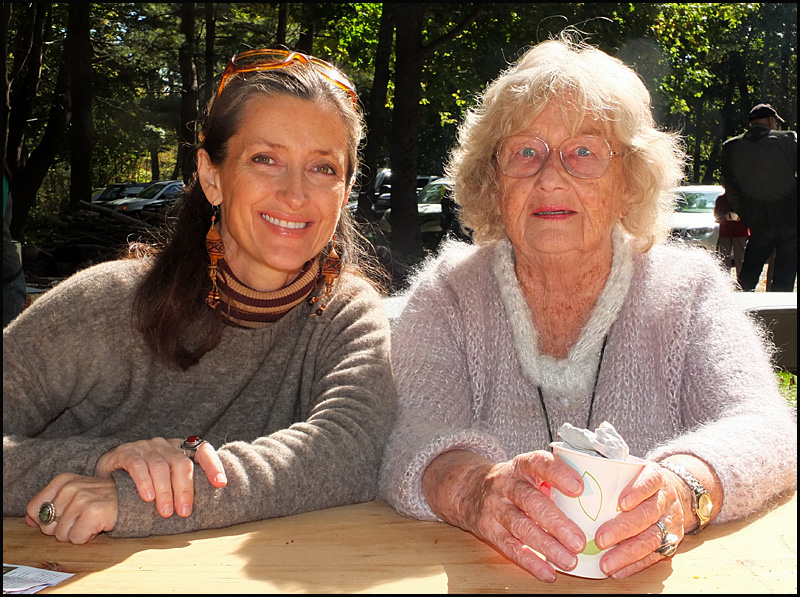 Lydia Dardi and Mathilee Dardi divide their time between Camden and Palm Beach Gardens in Florida. “We saw the sign yesterday and we wanted to check it out and it’s very nice. We went into the museum, we bought a couple of books and the food was just excellent.”
 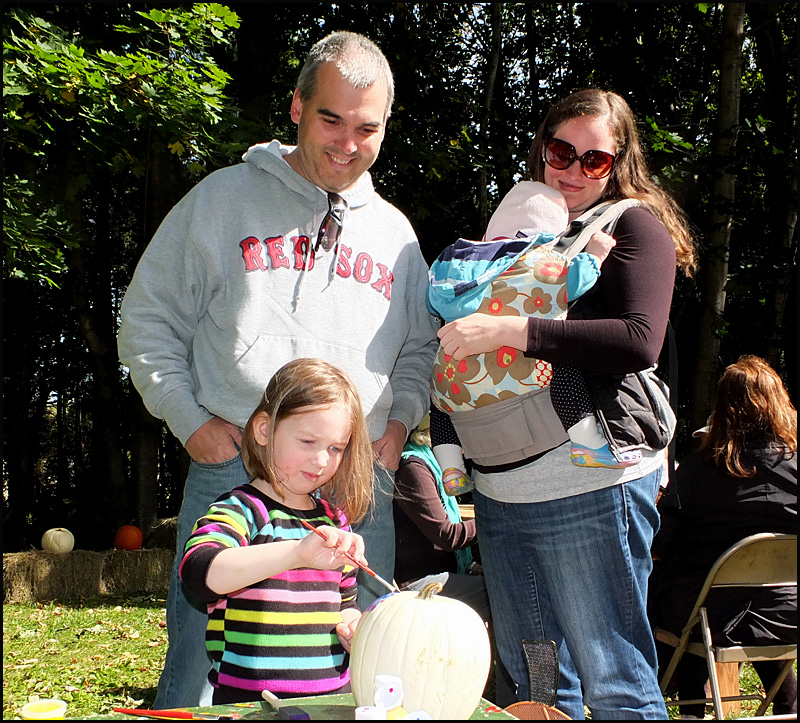 Andrew, Vanessa, Rosa and Nora Leigh, of Freeport. Nora tried her hand at pumpkin painting.
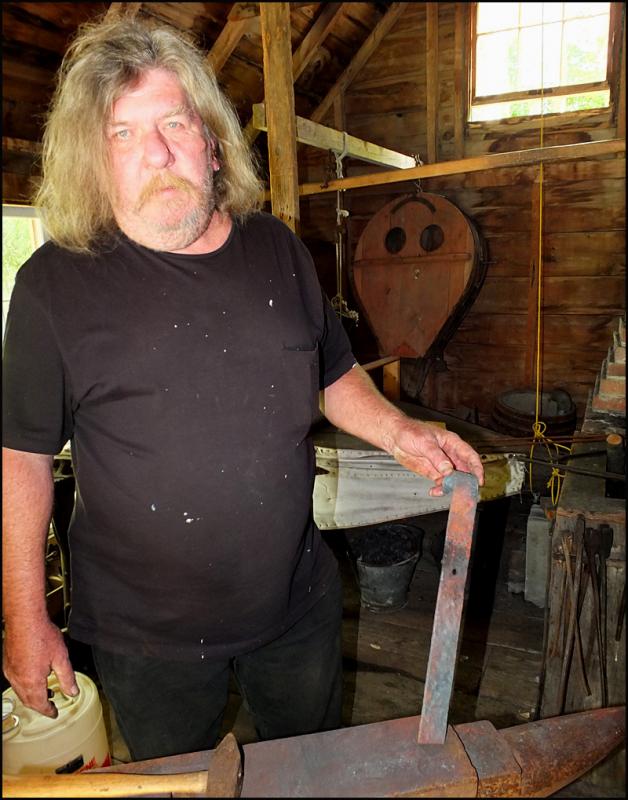 Blacksmith Martin Stanley shows his progress on making a froe.
 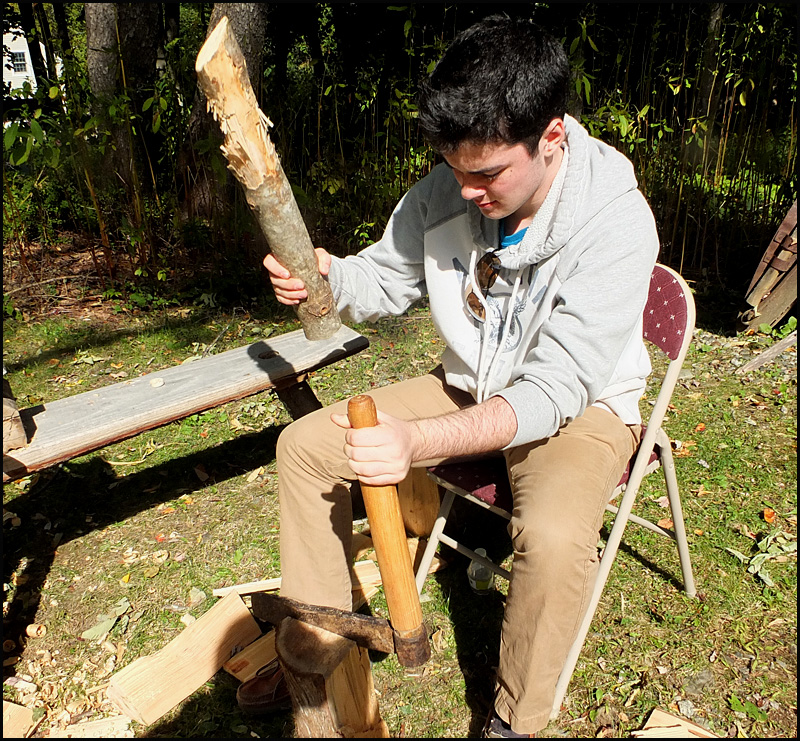 Tyler Bilodeau shows a froe in action, splitting shingles from a quartered log.
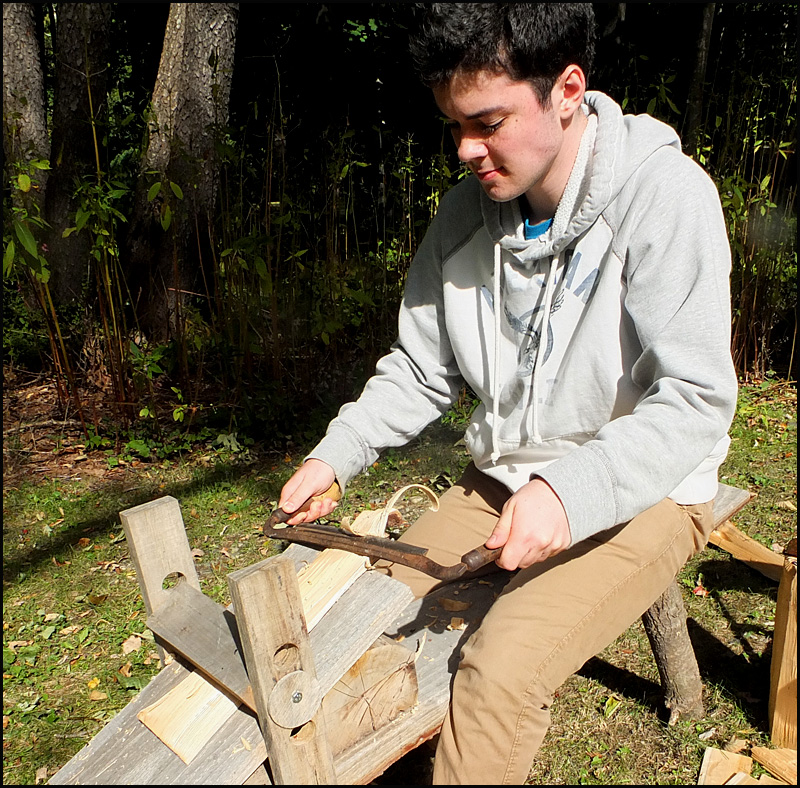 Tyler Bilodeau shows how to shave a shingle using a foot vise.
Camden Rockport Historical Society members greet festival goers to the Conway House and Museum on Sunday, Oct. 4. Left to right: Joan Bennett, Elizabeth Moran, Heather Moran, Andrew Moran Brenda Barrett and Andrew Moran. (Photos by Chris Wolf)
Gabrielle Wicklow was demonstrating traditional rug-hooking, which started in the Canadian Maritimes around 250 years ago. “It was originally a craft of need. Women would use old burlap feed bags and tear up old clothing, cutting it into strips, color it and hook it into rugs. They needed to cover their floors. It’s a simple technique of pulling loops to the surface.”
Tammy Grierson demonstrated the taste treat of freshly pressed cider.
Maynard and Norma Stanley show off their beans that was the centerpiece of the festivities. If you recognize Maynard, or his beans, it’s because he took first place at the chili-chowder cook off held at Trackside Restaurant in Rockland last year.
Jane Carr was cooking chicken and apples in the fireplace of the Conway House.
Jack and Evelyn Kane of Bethlehem, Pennsylvania. The Kanes visit Camden for nine weeks each fall. “The food is wonderful and we’ve toured the museum. They found a nice piece of history to preserve.”
Heather Moran cooks maple marinated pepperoni on a stick over an open fire.
Lydia Dardi and Mathilee Dardi divide their time between Camden and Palm Beach Gardens in Florida. “We saw the sign yesterday and we wanted to check it out and it’s very nice. We went into the museum, we bought a couple of books and the food was just excellent.”
Andrew, Vanessa, Rosa and Nora Leigh, of Freeport. Nora tried her hand at pumpkin painting.
Blacksmith Martin Stanley shows his progress on making a froe.
Tyler Bilodeau shows a froe in action, splitting shingles from a quartered log.
Tyler Bilodeau shows how to shave a shingle using a foot vise.
Tyler Bilodeau shows how to shave a shingle using a foot vise.
Camden Rockport Historical Society members greet festival goers to the Conway House and Museum on Sunday, Oct. 4. Left to right: Joan Bennett, Elizabeth Moran, Heather Moran, Andrew Moran Brenda Barrett and Andrew Moran. (Photos by Chris Wolf)
Gabrielle Wicklow was demonstrating traditional rug-hooking, which started in the Canadian Maritimes around 250 years ago. “It was originally a craft of need. Women would use old burlap feed bags and tear up old clothing, cutting it into strips, color it and hook it into rugs. They needed to cover their floors. It’s a simple technique of pulling loops to the surface.”
Tammy Grierson demonstrated the taste treat of freshly pressed cider.
Maynard and Norma Stanley show off their beans that was the centerpiece of the festivities. If you recognize Maynard, or his beans, it’s because he took first place at the chili-chowder cook off held at Trackside Restaurant in Rockland last year.
Jane Carr was cooking chicken and apples in the fireplace of the Conway House.
Jack and Evelyn Kane of Bethlehem, Pennsylvania. The Kanes visit Camden for nine weeks each fall. “The food is wonderful and we’ve toured the museum. They found a nice piece of history to preserve.”
Heather Moran cooks maple marinated pepperoni on a stick over an open fire.
Lydia Dardi and Mathilee Dardi divide their time between Camden and Palm Beach Gardens in Florida. “We saw the sign yesterday and we wanted to check it out and it’s very nice. We went into the museum, we bought a couple of books and the food was just excellent.”
Andrew, Vanessa, Rosa and Nora Leigh, of Freeport. Nora tried her hand at pumpkin painting.
Blacksmith Martin Stanley shows his progress on making a froe.
Tyler Bilodeau shows a froe in action, splitting shingles from a quartered log.
Tyler Bilodeau shows how to shave a shingle using a foot vise.ROCKPORT — The Camden-Rockport Historical Society held its Harvest Fest on Sunday to wrap up its season. Held from 11:30 a.m. to 3:30 p.m. the festival showcased the Conway House Farm, which dates back to 1770 and was restored in 1962. It serves as home to the C-R Historical Society.
Heather Moran, who is vice president of the society, said they were thankful for the good weather.
“We have cider pressing, pumpkin painting, candle-dipping, a blacksmith, hook-rug-making and great food,” she said. “It’s just a great community get together. We have Rosie and the Wayfaring Strangers providing some music and we had UkeRock, alias the Harvest Pickers, playing their ukuleles earlier. It was a good day.”
The Camden-Rockport Historical Society wanted to demonstrate lost crafts and art.
“It’s not that often that you run into a blacksmith, or see how shingles were made in the old days,” said Moran. “That’s part of our mission here at the Conway Homestead, to demonstrates life in the 19th-Century. We try to get people interested in history.”
Maynard Stanley and his wife cooked all the food, and according C-R Historical Society President Brenda Barrett, that included homemade chuck wagon beans, ratatouille, biscuits and corn on the cob, along with an assortment of homemade desserts.
“Maynard cooks all of our food,” said Moran. “He’s very generous with his time. He also cooks all of the bean suppers throughout the summer. The chuck wagon beans are my favorite and he cooks those on Maine Maple Sunday in March, which kind of kicks things off for us. And, he cooks them again for the Harvest Fest.”
Gabrielle Wicklow was demonstrating traditional rug-hooking in the museum. The craft started in the Canadian Maritimes approximately 250 years ago.
“It was originally a craft of need,” she said. “Women would use old burlap feed bags and tear up old clothing, cutting it into strips, color it and hook it into rugs. They needed to cover their floors. It’s a simple technique of pulling loops to the surface.”
Jane Carr was cooking chicken and apples in the fireplace of the Conway House.
“The trick is to use the coals,” she said. “We keep a fire going at the back of the fireplace and then we pull the coals out and under the cast iron pots. Fire has oxygen in it and we don’t want that, but the coals are much hotter. You have to be attentive and use small wood because you want it flaming in the back all the time. And as it cooks down you pull out the coals.”
Tammy Grierson works at the Cedar Crest Country Inn when she’s not making apple cider for the historical society.
“It takes 2.5 pecks of apples to make a gallon of cider,” she said. (The small bags you buy at the store are about half a peck). “First, you crush or pulverize them into pulp and they go down into the press. The press is placed into the vessel and we turn the screw till the juice comes out the bottom.”
This particular press is at the Country Inn and has been there as long as Grierson has, which is ten years. The press is a reproduction and the inn thought it would be a good idea when apple season rolled around to make cider for the guests.
“Unpasteurized, the cider has a shelf life of two days,” said Grierson. “I’m also a landscaper and I’ve found that the left over pulp makes a great fertilizer. You can’t get it close to the root system, but I usually dig a trench around them and put it in.”
Grierson said it takes two years for the fertilizer to kick in.
“You get the brightest azaleas and the biggest I’ve ever seen,” she said.
Tyler Bilodeau had the distinction of being shingle-maker for the day. Martin Stanley was the blacksmith and explained that it took about 440 shingles per square to side a house.
“A square is a 10 foot by 10 foot area, or a 100 square feet,” he said. “I’m told you have to be really good to do a square a day. Back in the day, you would use any kind of wood that was available. Whatever was on the property to keep the rain out.”
Stanley said he was making a froe at the forge. A froe is the axe-like instrument that splits the shingle from the wood. He was making his from a piece of leaf spring from a boat trailer. He had about an hour in it to shape it on the anvil and after that he said it would take another hour to grind and sharpen.
Stanley said the hardest part to making shingles was learning how to do it. He said Bilodeau had the hang of it and was getting pretty good.
Bilodeau said it was fun once you got the hang of it.
“The hardest part is quartering the logs,” he said. “Then you split the shingles off the quarters with the froe. After that it goes to a foot vise to be shaved. It doesn’t have to be perfectly flat. You want them all to be about 20 inches long, though.”
There you have the Harvest Fest in a nutshell. It was a fun event. I hadn’t visited the Conway Museum in some time. I was glad I got to reacquaint myself with it. You can bet I won’t miss the Harvest Fest next year.
Event Date
Address
United States