
Where Actually is the Arctic?
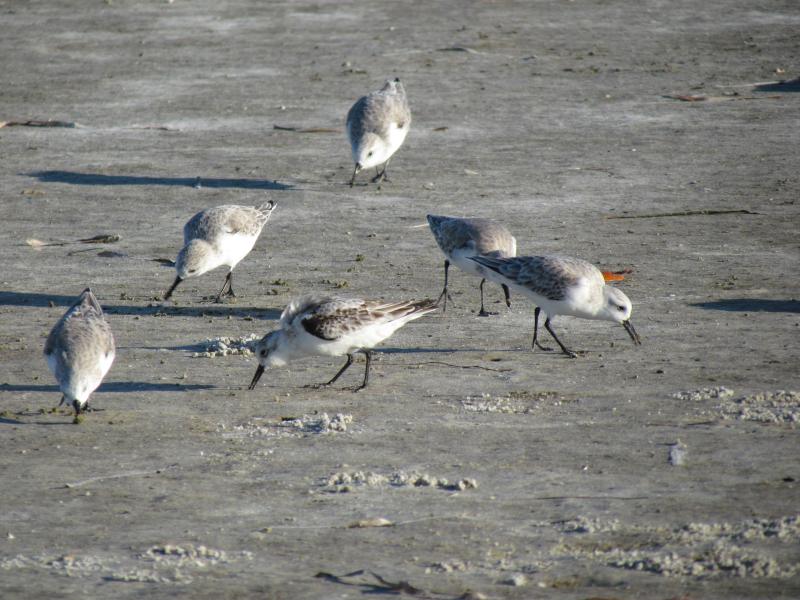 Sanderlings are among the most common birds on Maine beaches during spring and fall, but how many people know that they nest in the Arctic? Courtesy of Jeff Wells
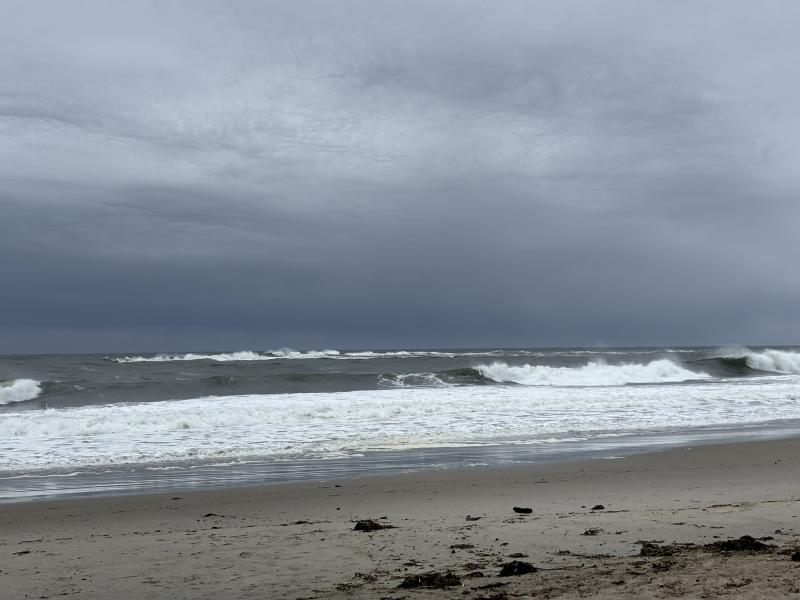 During a visit to see the Nor'easter surf at Biddeford Pool, the authors were delighted to see a flock of sanderlings feeding along the surf's edge. Courtesy of Allison Wells.
Sanderlings are among the most common birds on Maine beaches during spring and fall, but how many people know that they nest in the Arctic? Courtesy of Jeff Wells
During a visit to see the Nor'easter surf at Biddeford Pool, the authors were delighted to see a flock of sanderlings feeding along the surf's edge. Courtesy of Allison Wells.
During a visit to see the Nor'easter surf at Biddeford Pool, the authors were delighted to see a flock of sanderlings feeding along the surf's edge. Courtesy of Allison Wells.
Sanderlings are among the most common birds on Maine beaches during spring and fall, but how many people know that they nest in the Arctic? Courtesy of Jeff Wells
During a visit to see the Nor'easter surf at Biddeford Pool, the authors were delighted to see a flock of sanderlings feeding along the surf's edge. Courtesy of Allison Wells.
When you hear the word “Arctic,” what comes to mind?
Is it ice and snow and rocks? Is it polar bears and vast stretches of whiteness?
Do you feel a connection to the Arctic?
Before we go any further, does everyone agree on what geographic place the Arctic references? Some would say that the Arctic is the region of the globe encompassed by the mass at the top of the world above the Arctic Circle—a region essentially defined as the area where the sun never sets on the summer solstice and never rises on the winter solstice. Most ecologists and biogeographers define the Arctic region as the area north of the treeline. But that’s significantly south of the Arctic Circle in eastern Canada. Other scientists may define it based on a certain average temperature limit; one version of such a map extends the Arctic to Newfoundland and Labrador in the East and the Bering Sea off Alaska.
Those who define the Arctic based on the distribution of polar bears would extend the region farther south, perhaps as far as 50 miles from the coast of Hudson and James Bay where female polar bears den and give birth to their cubs. Churchill, Manitoba, is one of the most famous places in the world to see polar bears, and it is south of most mapped delineations of the Arctic.
We were down at Biddeford Pool recently to see the surf from the oncoming Nor’easter. There on the narrowing strip of white sand, dancing back and forth along the edge of the foamy surf, was a flock of forty to fifty white and gray birds with black legs and bills. Anyone who has spent any time at a beach just about anywhere in Maine—and the U.S.—should be familiar with these birds even if they don’t know that they are called sanderlings. Countless people have talked about, written about, photographed, and filmed them as they run back and forth in front of the waves.
Sanderlings are very familiar, but how many people know that 80% of this species (in North America—they also nest across Eurasia) nest north of the Arctic Circle and that the rest nest within 250 miles of the Arctic Circle. These are Arctic birds no matter how you define the Arctic. Sanderlings and many other species of shorebird, waterfowl, and waterbird travel to the Arctic to nest. There they find immense wild places where their young can quickly grow amid striking landscapes before flying south.
Black-bellied plovers, semipalmated plovers, and semipalmated sandpipers are can be seen all along the Maine coast right now. Like the sanderling, most of these nest in the Arctic.
American pipits have been spotted this week on Monhegan Island, among other places throughout the state. These are one of the species whose breeding range in eastern North America is largely delineated by the interpretation of the Arctic described as the area north of the treeline. They walk alertly about on the ground looking for tiny insects and seeds. On the breeding grounds, singing males fly up into the air, displaying.
Here in fall, after they’ve left the Arctic breeding grounds, we are likely to see them in open areas including on the upper sections of sandy beaches and gravel shorelines, in agricultural fields, closely cropped fields, and other similar places.
Does it make the Arctic seem closer somehow when your avian neighbors see it as their summer home?
Jeffrey V. Wells, Ph.D., is a Fellow of the Cornell Lab of Ornithology and Vice President of Boreal Conservation for National Audubon. Dr. Wells is one of the nation's leading bird experts and conservation biologists. He is a coauthor of the seminal “Birds of Maine” book and author of the “Birder’s Conservation Handbook.” His grandfather, the late John Chase, was a columnist for the Boothbay Register for many years. Allison Childs Wells, formerly of the Cornell Lab of Ornithology, is a senior director at the Natural Resources Council of Maine, a nonprofit membership organization working statewide to protect the nature of Maine. Both are widely published natural history writers and are the authors of the popular books, “Maine’s Favorite Birds” (Down East Books) and “Birds of Aruba, Bonaire, and Curaçao: A Site and Field Guide,” (Cornell University Press).