
Trish Riley honored for lifetime of public service with UMaine Alumni Career Award
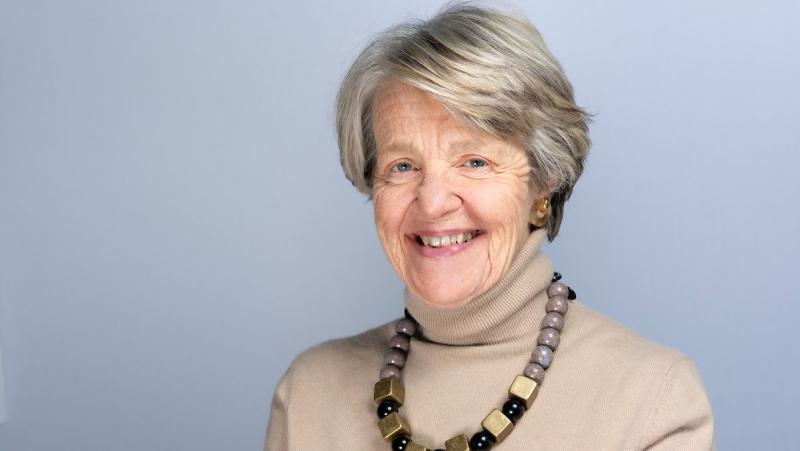 Trish Riley. (Photo courtesy UMaine News)
Trish Riley. (Photo courtesy UMaine News)
Trish Riley. (Photo courtesy UMaine News)
ORONO — On Sunday afternoons, Trish Riley would sit at the kitchen table of a University of Maine professor’s home on Chapel Road, drafting recommendations for the campus Commission on the Status of Women.
The professor, Connie Carlson, had become more than a teacher.
“She was very important to me as a mentor and became a lifelong dear friend,” Riley said.
At one early commission meeting, Riley watched as Carlson poured coffee for a room filled with distinguished male faculty members.
“I said, ‘Connie, what the heck? You’ve just put yourself in the same role we’re trying to change,’” Riley recalled.
Carlson’s reply stayed with her.
“You don’t want to push people too far.”
It was a lesson in strategy as much as conviction. Change required persistence, but it also required bringing people along. That balance would define Riley’s career, from the Maine State House to Washington, D.C., and now back to her alma mater as chair of the University of Maine System Board of Trustees. Her mantra has always been “raging incrementalism.”
This spring, Riley will receive the Alumni Career Award, the most prestigious honor presented by the University of Maine Alumni Association. The award recognizes a graduate whose life’s work reflects outstanding achievement in professional, business, civic or public service.
Building a voice in health policy
Riley’s life’s work spans decades of leadership in state and national health policy.
She is president emerita of the National Academy for State Health Policy, a nonpartisan nonprofit organization that works with state policymakers to improve health systems and health care policy. She first led the organization from 1988 to 2003, building it into a nationally respected voice for states, and returned in 2014 to guide a financial and organizational turnaround before retiring in 2020.
From 2003 to 2011, Riley served as director of the Governor’s Office of Health Policy and Finance, where she was the principal architect of Dirigo Health Reform and Maine’s liaison to the federal government during deliberations over national health reform. She chaired the governor’s steering committee to develop Maine’s plan to implement the Affordable Care Act.
Over the course of her career, she has held appointed positions under five Maine governors, directed the Office on Aging and Medicaid and served on national bodies including the Medicaid and CHIP Payment and Access Commission and committees of the National Academies of Science, Engineering and Medicine. In 2005, Modern Healthcare named her among the top 25 women in healthcare in the U.S.
When she learned she would receive UMaine’s top alumni honor, her reaction was characteristically understated.
“Embarrassment,” she said with a laugh. “I don’t like these things. I don’t like the attention.”
Finding her voice at UMaine
Riley arrived in Orono in the late 1960s, amid student activism and social change. She had once hoped to attend Brown University, but her mother famously threw the catalog in the wastebasket.
“That’s not us,” her mother told her.
A scholarship brought Riley to UMaine instead. She found a campus alive with ideas.
“It was such an open door,” she said. “An opportunity to explore different classes, different ideas, music, theater and the extraordinary natural wonders and beauty of Maine. It was a comprehensive university that said, ‘Come. Experience what you want.’”
She was deeply engaged, serving as student government president and immersing herself in the issues of the day. The experience gave her confidence and something more enduring.
“It was Maine’s public university,” Riley said. “The taxpayers of Maine helped pay my way. You feel that profoundly. It gives you a real commitment to the state itself.”
After beginning a doctoral program in American studies at Purdue University and teaching freshman composition, Riley returned to Maine for a position at the State House. While working full time, she completed a master’s degree in community development at UMaine.
A career built on problem solving
Her career path, she said, was less linear than it may appear.
“I’ve never really done a job interview the way people think of it,” she said. “My life has been sort of like Ping Pong. ‘Oh yeah, I’ll do that.’”
Early on, at age 23, she led the effort to abolish mandatory retirement in Maine.
“I had no clue what I was doing,” she said. “But we got it done.”
She went on to create Legal Services for the Elderly, an organization that recently marked its 50th anniversary. She launched the National Academy for State Health Policy in 1987, which continues to thrive. And though Dirigo Health Reform was controversial, she noted that its framework anticipated elements later included in the Affordable Care Act.
“It was an early canary in the coal mine,” she said.
Riley describes her creative talent not as artistic, like that of her siblings, but as problem solving.
“My brother is an artist. My sister was a poet. I have none of those creative skills,” she said. “My creative skill, if I have any, is problem solving.”
There are usually a million ways to solve a problem, Riley added.
“But solving it requires everybody to agree on a solution,” she said. “I find that fascinating.”
Throughout her career, Riley measures success by durability.
“I’m most proud that the things I led were sustained,” she said. “That they worked. That they helped people.”
Deep roots, lasting impact
As chair of the Board of Trustees, she sees UMaine’s trajectory through that same lens. She points to the growth of the university’s research enterprise and its designation as an R1 research institution.
She also reflects on how the campus has changed since her student days.
“When I started, I had two female faculty members,” she said. “Look at where we are now.”
She cites the leadership of UMaine President Joan Ferrini-Mundy as evidence of that progress and of the university’s continued strength.
Riley also speaks about the lasting relationships forged in Orono. Early in her State House career, the reporters covering her work were people she knew from campus. The television reporter had been part of WMEB, UMaine’s student-run radio station, when Riley was a student.
There was trust, she said. Those connections mattered.
“You create deep roots,” Riley said. “It’s those relationships that really matter.”
For students who hope to build careers of impact and service, her advice is direct.
“Learn broadly. Learn how to think,” she said. “Take something that stretches you: modern poetry, analytics, something outside your comfort zone.”
Then she offers a line she has carried with her for years from a political leader whose views she did not share.
“Margaret Thatcher said politics used to be about doing something. Now it’s about being somebody,” Riley said. “I think that’s the focus. What can you do? Not what you can be?”
About the University of Maine: As Maine’s only public research university and a Carnegie R1 top-tier research institution, the University of Maine advances learning and discovery through excellence and innovation. Founded in 1865 in Orono, UMaine is the state’s land, sea and space grant university with a regional campus at the University of Maine at Machias. Our students come from all over the world and work with faculty conducting fieldwork around the globe — from the North Atlantic to the Antarctic. Located on Marsh Island in the homeland of the Penobscot Nation with UMaine Machias located in the homeland of the Passamaquoddy Nation, UMaine’s statewide mission is to foster an environment that creates tomorrow’s leaders. As the state’s flagship institution, UMaine offers nearly 200 degree programs through which students can earn bachelor’s, master’s, professional master’s and doctoral degrees as well as graduate certificates. For more information about UMaine and UMaine Machias, visit umaine.edu/about/quick-facts/ and machias.edu/about-umm/umm-facts/.