
MaineCare changes aim to provide more support for high-needs children
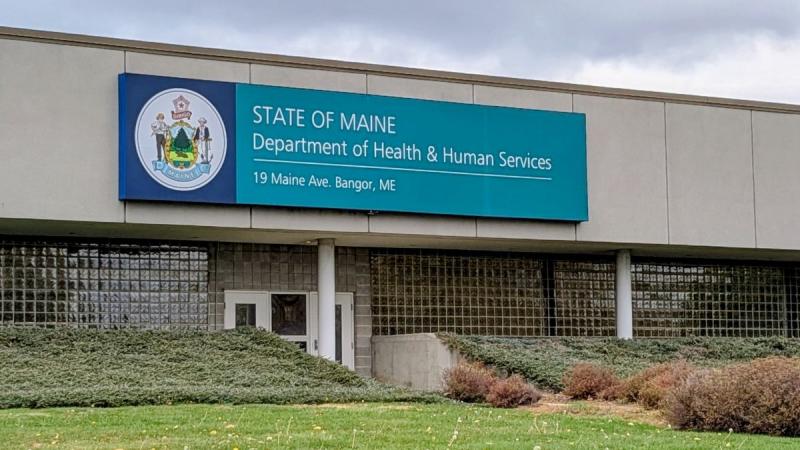 Photo by Erin Rhoda.
Photo by Erin Rhoda.
Photo by Erin Rhoda.
The state has begun rolling out changes to its system of behavioral health services for children covered by MaineCare, the state’s version of Medicaid. Under the changes, which were finalized in April, the Maine Department of Health and Human Services is aiming to standardize the process it uses to determine who qualifies for care and provide more comprehensive in-home services to children with higher needs.
The changes come in the wake of a 2024 settlement agreement with the U.S. Department of Justice, which sued Maine for placing children with mental and behavioral challenges in emergency rooms or juvenile detention facilities, rather than providing care in their communities.
Some of the changes are technical, minor language updates and clarifications, while others are more sweeping. One of the more significant shifts is a restructuring of the state’s mobile crisis service, which provides rapid-response care around the state. The state has also introduced a standardized assessment that children must undergo to qualify for care, restricted who qualifies for case management and added additional in-home support services for children with higher needs.
“This work is grounded in one goal: ensuring children receive timely, appropriate, community-based supports whenever possible, with services coordinated around each child’s individual needs,” said the Maine Department of Health and Human Services in an announcement outlining the changes.
The agreement requires that the state do more to provide children who need behavioral support with services in their homes and communities and more effectively prevent them from being institutionalized or placed in juvenile detention facilities. It also requires Maine to regularly track outcomes and report data to the Department of Justice, and appoint an independent watchdog to evaluate compliance. The changes, a major part of the settlement agreement and the state’s initial implementation plan to comply with the agreement, began rolling out early this year.
The Maine Monitor spoke to more than a dozen providers, advocates and case managers who had mixed feelings about the changes. Some worried that they would limit access to preventive services for children with lower-level needs, increasing the risk that those children could wind up in crisis. Several said the state lacks enough behavioral health providers and other staff to carry out all necessary services in a timely manner and that meaningful change would require significant bolstering of the workforce. Others said they think the changes will help better serve Maine’s kids.
Shaun Quimby, the clinical director at Becket Maine, a residential treatment program for 13- to 20-year-olds with mental health and behavioral challenges, said that while he could see the benefit of some of the changes, he doesn’t expect the results to be visible for years.
“I feel like we might have just increased the bureaucracy without making any meaningful changes,” Quimby said.
Standardizing crisis response, adding services
Maine’s former mobile crisis system did not require that providers respond within a set time or set standards for how many crisis workers needed to respond.
Under the state’s new plan, providers should respond to crisis calls within two hours in rural areas and one hour in urban areas. Additionally, providers should “make reasonable efforts” to have two people respond to each crisis call.
The state aims to have crisis units respond to 95 percent of calls within these time frames by Dec. 20, 2027, according to the implementation plan.
Each team will be assigned between one and four counties. The teams should be available to respond 24 hours a day, seven days a week, to children in crisis anywhere in the state, including at home, school, on the street or in an emergency shelter and help connect them to mental health screenings and other support.
The state has also added a higher level of in-home behavioral services for children with greater needs, including those who have experienced multiple hospitalizations, been involved in the juvenile justice or child welfare systems, are homeless or housing insecure, or have been at risk of an out-of-home placement in the past year. In-home behavioral services can include physical and occupational therapy, and other services that help children develop behavioral, social and life skills. Home health care coordinators are charged with organizing access to these services, developing plans of care, making referrals, ensuring children attend appointments and connecting families to resources.
Children who qualify for the higher tier of services must receive a minimum of 10 hours per month.
The home health care coordinators overseeing services for these children must get additional training, maintain a caseload of 10 or fewer children and carry out weekly check-ins and monthly meetings. Home health coordinators coordinating services for children with less intensive needs do not have to meet those requirements.
A new assessment process
Another major shift is the move to the “single assessment,” a standardized screening run by Acentra Health, a health care technology company, that will be used to determine whether kids qualify for medium- or higher-level services. Previously, health care providers could directly refer kids to behavioral health services.
The state moved to the single assessment in early February.
The list of those who can submit a request for a single assessment includes families, case managers, medical providers, corrections officers and school staff members. The first step in the assessment is a virtual, 90-minute meeting with an Acentra clinician, a child’s legal guardian and anyone else the family invites. If Acentra determines a child needs medium- or higher-level services, a case manager or care coordinator meets with the family to discuss the recommendations and help them decide which services to seek.
The assessment is designed to help connect children with more intensive needs with the appropriate services quickly, according to the state. This includes children who may be a safety risk, have attempted suicide or self-harm, have expressed severe aggression through violence or property destruction, or have repeatedly made use of the crisis system, explained Jessica Lachance, system of care quality assurance manager for Children’s Behavioral Health Services within the Maine Department of Health and Human Services, at a meeting in January.
“This is not intended for mild, routine outpatient behavioral health concerns or situational stress,” said Lachance. “We’re not looking for this for medication management alone or outpatient therapy alone.”
The standardized assessment is a shift from the previous process, in which case managers or providers, such as pediatricians, could directly refer their patients to behavioral health services, at which point those service providers could assess kids for eligibility. That lack of standardization resulted in children waiting for services that were not the most appropriate for their needs, and caused a ballooning of wait lists that may not have accurately represented demand, said Dean Bugaj, associate director of Children’s Behavioral Health Services, at the January meeting.
By standardizing the process, said Bugaj, the state is aiming to elevate the voices of families, collect better data, understand where gaps are and match children with appropriate and timely care.
Implementation of the new assessment process, which began Feb. 2, has been bumpy. Care coordinators, who help families access and navigate the support services, have struggled with delays. As of early May, the average time from request to assessment was around 20 days, said Acentra. The company said it had completed 950 of 1,490 assessment requests received between Feb. 2 and May 6. As of June 10, the company no longer had a backlog, they said.
The initial backlog was driven by higher-than-expected assessment requests and challenges scheduling assessments at times that work for families, Acentra said. The company has received roughly 125 requests per week. It was anticipating 75.
The new system also restricts who qualifies for case management. In addition to receiving a diagnosis from a clinician, children must reach new screening thresholds that were not required by the old rules.
More work needed for “long-term, sustainable change”
The providers The Monitor spoke to expressed mixed views about the changes. Several said that meeting the terms of the settlement agreement and keeping children from entering out-of-home placements would require significant bolstering of the workforce and an increase in reimbursement rates.
“On paper, early intervention will work,” said Justin Gifford, executive director at Becket. “But we don’t have the people to do it. We already have a workforce shortage.”
Maine has long struggled with a shortage of mental health providers that has exacerbated waitlists for care.
Assessing the workforce is part of the state’s implementation plan for this year. One reason the state created the standardized assessment was to help the state gather better data and understand where the greatest service and workforce gaps are, Bugaj said.
Some providers The Monitor spoke to worried that the new screening requirements could limit access to preventive services for kids with a lower level of need, which they said would then increase the risk that children end up in crisis and need more intense care.
“Kids aren’t going to get their needs met, and the longer we take to improve the state for our children, the worse things are going to be,” said Nancy Cronin, the executive director of the Maine Developmental Disabilities Council.
Erica Boudette, the Children’s Program Coordinator at Choices are for Everyone, a nonprofit supporting people with intellectual disabilities, said she hasn’t felt any effects of the changes under the adopted rules.
Roslyn Gerwin, a child and adolescent psychiatrist at MaineHealth, said she thinks changes such as the assessment would help streamline a fragmented and confusing system.
“Is there more work to be done? Yes,” said Gerwin. “Do I see that as a problem? No, that’s just reality. We have to put more work into creating that long-term, sustainable change.”
This story was originally published by The Maine Monitor, a nonprofit civic news organization. To get regular coverage from The Monitor, sign up for a free Monitor newsletter here.