
Maine ethics staff want to require candidates for governor to file personal financial statements
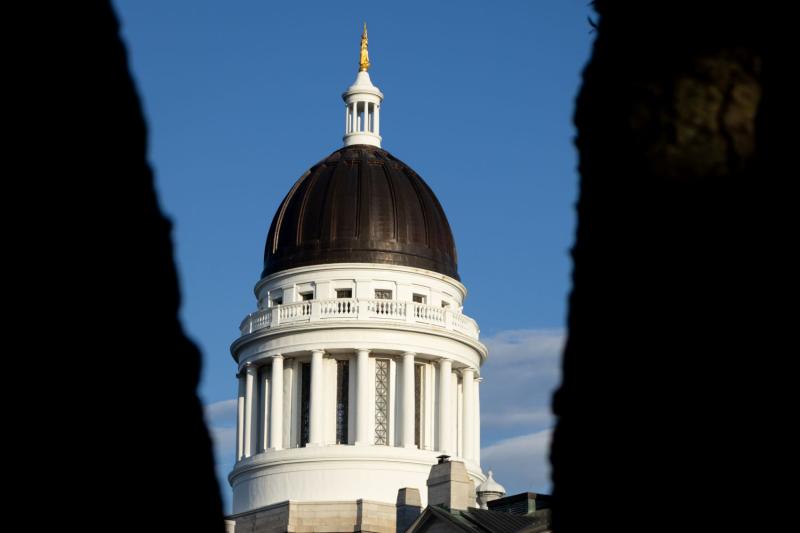 Under current Maine law, state legislative candidates have to file a personal financial statement before the election but candidates for governor do not. The Maine Ethics Commission is considering a proposal that could change that. Photo by John Forbes.
Under current Maine law, state legislative candidates have to file a personal financial statement before the election but candidates for governor do not. The Maine Ethics Commission is considering a proposal that could change that. Photo by John Forbes.
Under current Maine law, state legislative candidates have to file a personal financial statement before the election but candidates for governor do not. The Maine Ethics Commission is considering a proposal that could change that. Photo by John Forbes.
Maine’s ethics watchdog could start the process to close an apparent campaign finance reporting gap at a meeting next week.
Under current Maine law, state legislative candidates have to file a personal financial statement outlining how they make their money. This common disclosure, which helps the public discern potential conflicts of interests between government work and personal finances, also applies to the sitting governor and other top executive branch officials.
But there has been a notable exception to this requirement: candidates for governor.
While sitting lawmakers and candidates running for the State House have to file personal financial statements with the Maine Ethics Commission before the general election takes place, the same is not true for candidates running for Maine’s highest office.
The staff of the Maine Ethics Commission have put forward a proposal to change that, and commissioners are set to consider it at their meeting next week. Under the proposal, gubernatorial candidates would be required to file personal financial disclosures within a month of qualifying for the ballot.
This staff recommendation follows reporting from The Maine Monitor that shed light on the inconsistency in Maine’s approach to these personal financial disclosures. Maine is one of only two New England states that does not require candidates for governor to provide some sort of personal financial disclosure before the election.
“In 2022 and 2026, the commission received inquiries about why gubernatorial candidates do not file a [personal financial disclosure], considering that a governor may influence all parts of state government,” ethics commission staff said in a memo this week. “Commission staff propose that gubernatorial candidates who qualify for the ballot file a one-time statement, similar to legislative candidates.”
In July, The Maine Monitor reached out to the three candidates for governor on the ballot — Republican Bobby Charles, Democrat Hannah Pingree and independent Rick Bennett — to see if they would provide the financial information required of other state candidates voluntarily, and to ask if they would support updating Maine law to require this disclosure from candidates for governor.
Bennett’s personal financial information was already available because he currently serves in the Maine Senate. Pingree agreed to provide her information, while Charles declined at the time.
But when The Maine Monitor followed up with the Charles campaign on Wednesday, a spokesperson said he is planning to release personal financial disclosure information next week.
In July, both Bennett and Pingree told The Monitor that they would support changing state law to require personal financial disclosure statements for gubernatorial candidates before the election. Charles was less committal than his opponents but said at the time that he wasn’t opposed to requiring this type of disclosure from candidates for governor. He said he would likely sign the change into law, depending on the specific language of a potential bill passed by the Legislature.
If the commission accepts the staff recommendation at its meeting next week, the next step will be to work with the legislative revisor’s office on final language and propose legislation for lawmakers to consider next year.
The potential new reporting requirement for future gubernatorial candidates is one of several proposed changes offered by ethics commission staff. Consideration of those changes is on the commission’s agenda for its Sept. 30 meeting, which will be held in Augusta at 9 a.m. and livestreamed on the commission’s YouTube channel.
This story was originally published by The Maine Monitor, a nonprofit civic news organization. To get regular coverage from The Monitor, sign up for a free Monitor newsletter here.