Kentucky, a distant echo of Eden
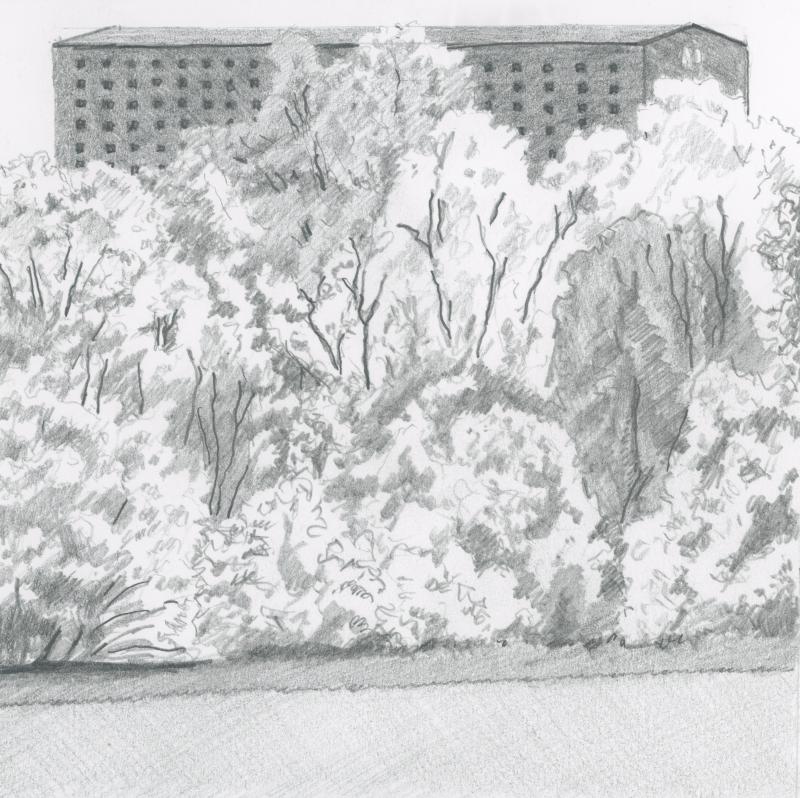 Wild Turkey Distillery, Kentucky. (Drawing by Rick Cronin)
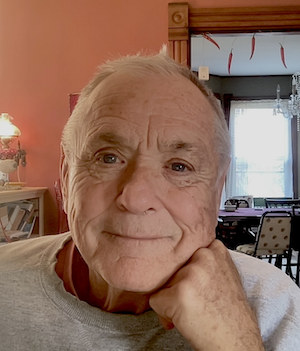 Rick Cronin, a Belfast artist, began exploring Waldo County with his sketchpad in 2024, finding the mystery and peace of the landscape, and drawing it. Then last summer, he thought: Why not broaden his horizons, explore the U.S. and sketch what captured his attention on the road? So, he bought a 1997 Dodge Roadtrek camper, and he and his wife, Susan, agreed that their shaggy dog, Dolly, would be up for the adventure. Right now, Rick and Dolly are traveling the highways of America and sending back their observations and sketches for us all to read. Those interested in receiving the full set of drawings of each state, email croninme47@gmail.com.
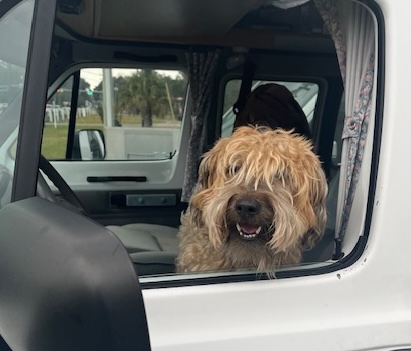 Dolly (Photo courtesy Rich Cronin)
Wild Turkey Distillery, Kentucky. (Drawing by Rick Cronin)
Rick Cronin, a Belfast artist, began exploring Waldo County with his sketchpad in 2024, finding the mystery and peace of the landscape, and drawing it. Then last summer, he thought: Why not broaden his horizons, explore the U.S. and sketch what captured his attention on the road? So, he bought a 1997 Dodge Roadtrek camper, and he and his wife, Susan, agreed that their shaggy dog, Dolly, would be up for the adventure. Right now, Rick and Dolly are traveling the highways of America and sending back their observations and sketches for us all to read. Those interested in receiving the full set of drawings of each state, email croninme47@gmail.com.
Dolly (Photo courtesy Rich Cronin)
Dolly (Photo courtesy Rich Cronin)
Wild Turkey Distillery, Kentucky. (Drawing by Rick Cronin)
Rick Cronin, a Belfast artist, began exploring Waldo County with his sketchpad in 2024, finding the mystery and peace of the landscape, and drawing it. Then last summer, he thought: Why not broaden his horizons, explore the U.S. and sketch what captured his attention on the road? So, he bought a 1997 Dodge Roadtrek camper, and he and his wife, Susan, agreed that their shaggy dog, Dolly, would be up for the adventure. Right now, Rick and Dolly are traveling the highways of America and sending back their observations and sketches for us all to read. Those interested in receiving the full set of drawings of each state, email croninme47@gmail.com.
Dolly (Photo courtesy Rich Cronin)Once upon a time I was fascinated by blacksmithing and sought out anyone who could teach me the skills. Lawrence Boone was a man with great stories. He ran away from his home in N.C. at 13 to work as a blacksmith in various silver mines in the west. He made and sharpened tools for the construction of the Hoover Dam. Eventually he returned to Carolina and about 50 years ago I was lucky enough to spend a few days with him. By then he was a tough old bird with a sly humor. He’d pluck a coal out of his forge with his leathery fingertips to light a Chesterfield cigarette. His brother was Daniel Boone, the sixth.
That’s a pretty elaborate way to name-drop, but it gets me to Kentucky. Unlike earlier explorers, I came into the state from the west just below where the Ohio River joins the Mississippi.
Daniel Boone came through the Cumberland Gap into southeastern Kentucky looking to turn the bountiful wildlife and his skill as a woodsman into cash, which he and his young family were short on.
I knew a few unrelated facts and had impressions of Kentucky that seemed like possible places to start my exploring. The birthplace of Abe Lincoln. Churchill Downs, the Home of the Kentucky Derby. And Bourbon. The childhood vacations of John Prine. The National Quilt Museum in Paducah. All of those in no particular order. And what do you think? Just like almost everywhere else it still turns out to be about geology.
Boone found a country he believed primed for settlement as he followed the rivers, the buffalo traces, and snippets of Shawnee information about their land. The buffalo were following the same old trails, the traces, that had led their migrations from salt lick to salt lick for centuries. Both the buffalo and Boone appreciated the value of salt. And both found the rich bluegrass meadows a good place to call home. The Shawnee didn’t encourage Boone or the pioneers that followed him. They were pretty happy with the way things were.
Boone was a Quaker and not the most belligerent interloper to open the west. But his stature as a frontier hero and his glowing stories of the rich land of Kentucky were just as effective in displacing the Shawnee as Custer or the railroads during the next generation’s dispossession of the Native American cultures.
Lincoln’s family had followed a similar path to Boones. Their forebears arrived from Europe. Eventually both families moved south and then west in search of land and the American Dream. Abe’s father, Tom, was a carpenter who wanted to be a farmer and serially owned several pieces of Kentucky. There is a Lincoln Memorial at the site of the Sinking Spring farm where he was born. Inside this classical temple is a reproduction of the log cabin he was born in.
A few more generations went by before John Prine’s grandpa, a carpenter, and his wife, a teacher, ended up in Kentucky, but they all got there eventually, and so did I.
They all found a kind of Paradise. That’s kind of what I found, too, at least a distant echo of Eden.
There were spring fields of butter yellow rapeseed — canola. The spring greenness of the meadows rivaled Ireland’s. And clear running brooks cascaded over limestone. The horse farms of the Inner Bluegrass around Lexington were picture places like no other farms I’ve seen in this country. If you were a horse you’d want to spend the rest of your life rolling around in those pastures. If you’re a dude you’d want to dress nice and sip bourbon. If you’re a woman singing My Old Kentucky Home, wearing a flowery hat, and sipping a Mint Julep on Derby Day would be just about perfect.
As John Prine points out, it’s not all perfect. There is the “world’s biggest shovel” and “Mr Peabody’s Coal Train”, but there are some very appealing seductions if you’ve ever held a winning ticket at the track or sipped a really good bourbon.
And what created it all? The limestone. Limestone filters iron out of the water and makes bourbon sweet. It transfers calcium and phosphorus into the bluegrass that creates dense bones in young racehorses. The winning combination for Derby Day.