Green burial is ecologically sound, affordable and deeply meaningful
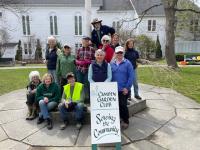
As a member of Midcoast Maine Green Burial and a fellow Camden resident who cherishes Camden’s natural beauty and community spirit, I’m writing to continue a conversation about our effort to establish a dedicated green burial section in one of our local cemeteries.
We are often asked thoughtful questions about this practice. We welcome them, as open dialogue is the heart of our community. Below, I hope to address some of the most common concerns with accurate, kindly meant information.
“Wouldn’t a green burial ground fail to protect the land in perpetuity?”
A green burial site is a permanently protected conservation area. By using only biodegradable materials—a simple shroud or plain wooden casket—and foregoing concrete vaults, the body returns naturally to the earth. The land is legally dedicated as cemetery space forever, often with native trees, wildflowers, or fieldstones as markers. It becomes a living, growing sanctuary, not a development site.
“Won’t green burial pollute the groundwater, especially from substances like chemotherapy residues?”
This is a vital concern for public and environmental health. Science shows that natural decomposition poses no risk of groundwater contamination. Regarding medical treatments: the body naturally metabolizes and eliminates almost all traces of chemotherapy drugs within days or weeks. By the time of death and burial, these substances are not present in concerning amounts. It’s worth noting that the formaldehyde and other chemicals used in conventional embalming pose a far more documented risk to soil and water, and to the mortuary workers who handle them. Green burial eliminates that chemical introduction entirely.
“Won’t the graves sink, causing an uneven, messy landscape and more maintenance?”
Natural settling, or subsidence, occurs in all burials as materials decompose and the soil compacts over time. In conventional burial, the concrete vault prevents this initially, but can eventually lead to sudden sinking if it collapses. In green burial, this settling is expected, gradual, and managed. The soil is gently mounded above the grave initially, anticipating this natural process. Over time, as the mound settles, the area is seamlessly reintegrated into the meadow or woodland landscape. Maintenance shifts from frequent mowing over flat markers to the managed care of a natural ecosystem, which can be less intensive in the long term.
“Wouldn’t it be unsanitary or unsafe?”
Green burial meets all state and local public health standards, and is a right of Maine citizens by law. Natural decomposition is a safe, fundamental biological process. Graves are dug to a specific depth (3.5 to 4 feet) that optimizes aerobic microbial activity for complete, efficient, and contained decomposition, just as nature has done for millennia.
“Isn’t this just a passing trend, disrespectful to long-held traditions?”
Green burial is a return to the oldest human tradition there is—allowing the body to return simply to the earth. It honors traditions of simplicity and stewardship, offering a choice that aligns with the values of many who love Camden’s environment. We seek not to replace, but to add this meaningful option for those who desire it.
Our goal is to provide a choice that is ecologically sound, often more affordable, and deeply meaningful to many in our community. We are your neighbors, and we are happy to talk more, answer questions, and listen to thoughts.
David Kibbe lives in Camden