Following the road from Liberty to Freedom on America's 250th Birthday
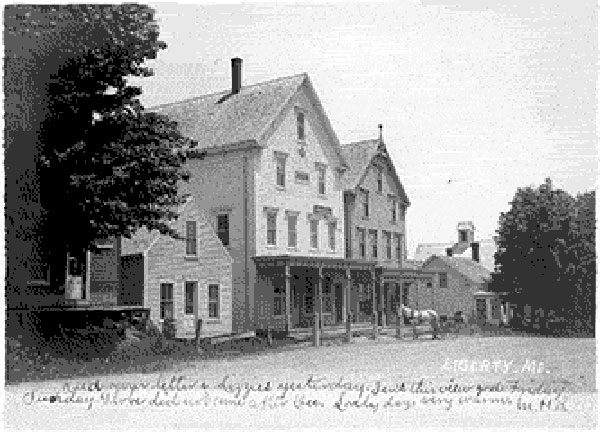 A scan made from an old postcard of the Masonic Building in Liberty, Maine around 1904. (Photo: Unknown photographer, Public domain, via Wikimedia Commons)
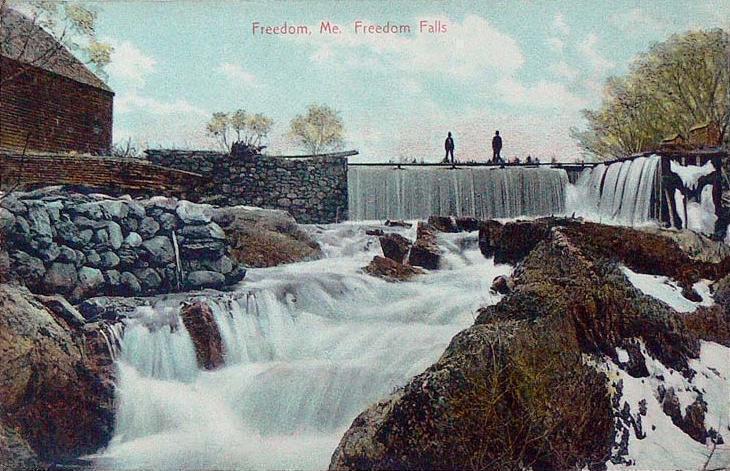 Freedom Falls, Freedom Maine. (Unknown photographer, Public domain, via Wikimedia Commons)
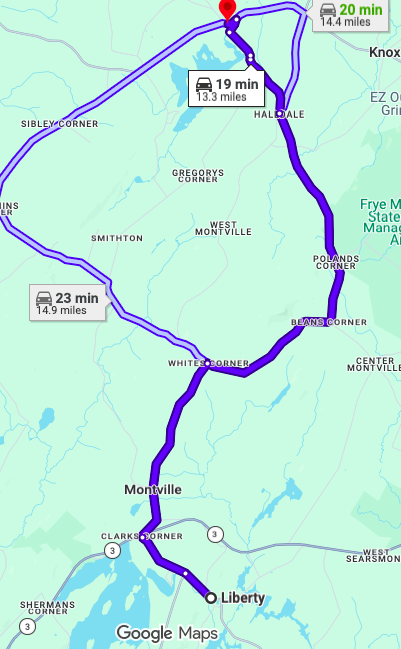 Google Maps screenshot of the short 20 minute distance between the two towns. Image via Google Maps
A scan made from an old postcard of the Masonic Building in Liberty, Maine around 1904. (Photo: Unknown photographer, Public domain, via Wikimedia Commons)
Freedom Falls, Freedom Maine. (Unknown photographer, Public domain, via Wikimedia Commons)
Google Maps screenshot of the short 20 minute distance between the two towns. Image via Google Maps
Google Maps screenshot of the short 20 minute distance between the two towns. Image via Google Maps
A scan made from an old postcard of the Masonic Building in Liberty, Maine around 1904. (Photo: Unknown photographer, Public domain, via Wikimedia Commons)
Freedom Falls, Freedom Maine. (Unknown photographer, Public domain, via Wikimedia Commons)
Google Maps screenshot of the short 20 minute distance between the two towns. Image via Google MapsMIDCOAST—As America turns 250 this weekend, neighboring Midcoast towns of Liberty and Freedom remind us that a country's ideals are mirrored by its people.
The History of the Two Towns
The town names of Freedom and Liberty may not have originated from an association with the Declaration of Independence, but that doesn't mean its feisty, spirited first inhabitants didn't name their towns accordingly.
According to Gail Philippi, Treasurer of the Liberty Historical Society, both Montville and Freedom were originally one plantation called Davistown after James Davis, a minister from Massachusetts. Montville was incorporated in 1807. In 1825, the inhabitants of the Montville Plantation met and, “voted that the assessors petition to the next Legislature for the plantation to be incorporated into a town by the name of Liberty or Fruitfield or Pearl.” Most agree that choosing Liberty was the right choice.
The town of Freedom, according to the Freedom Historical Society, "was settled in 1794 by the Revolutionary War veteran Stephen Smith. The plantation was named Smithton in honor of the first homesteader but was then changed to Beaver Hill Plantation and finally Freedom when the town became incorporated during the last war with Great Britain in 1813."
How did Mainers Interpret Independence After 1776?
Around the 1800s, hard-working people settled in the Midcoast, building log cabins and clearing the land for farming. At the time, the "Proprietors and Twenty Associates" were a group of wealthy Boston and New England businessmen who owned and developed massive tracts of land in Midcoast Maine.
Because Maine was heavily controlled by Massachusetts at the time and the government favored the elite, farmers were getting taken advantage of by these wealthy land companies.
"A lot of these veterans of the Revolutionary War came to Maine to claim land they considered they were owed by the government," said Steve Bennett, a retired Freedom selectman. "They didn't get paid real money for their military service; they were paid in Continental dollars, which were useless at the end of the war. They couldn't get any land in Cambridge or towns that were already incorporated, so they moved to uninhabited areas in Maine and staked their claim. Then these Proprietors' agents would come to these veterans and tell them they would get kicked off the land unless they paid the Proprietors money."
By 1816, as told by the grandson of Benjamin Tibbetts to the Liberty Library, a man in Liberty named John Edwards had already obtained a title to a piece of property for $1.50 an acre. A Proprietors and Twenty Associates agent told him the price was now $2.50 per acre, seeking to monetize the deal.
That sat with the settlers as well as you would think.
A group of Liberty frontiermen formed a secret society called "The Liberty Men" and, on one winter night, assembled to decide what to do with the agent. Turns out, they ambushed him when he came to collect at another settler's house. Dressed as Indians, they kidnapped the agent, took him to Lake St. George, and threatened to drop him in a hole in the ice, scaring him so badly that he put up no resistance. Then, they took his saddlebag and burned all of his papers.
You can read the outcome of this resistance here.
A massive counter culture formed around this time as backcountry settlers viewed these proprietors as "Devils" according to the document, "Liberty Men and Great Proprietors: The Revolutionary Settlement on the Maine Frontier, 1760-1820" by James S. Leamon. The overall sentiment gave rise to more violence against the proprietors.
The Maine Historical Society is marking this day with a free public celebration and offering a rare glimpse of one of the orginal remaining copies of the Declaration of Independence document known as the Dunlap Broadside (named after the printer, John Dunlap, who printed 200 copies overnight on July 4, 1776.) The day also kicks off MHS' 16-county summer tour, bringing the document (of which only 26 original copies remain today)to libraries, schools, museums, and community organizations across Maine. Click to reserve free ticket.
Kay Stephens can be reached at news@penbaypilot.com