
Small public libraries urge Maine Library Commission to allow volunteer staffing, unpaid directors
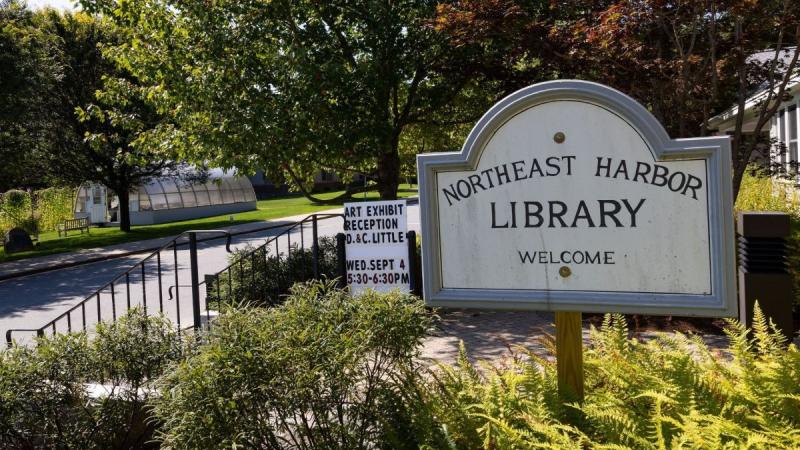 Photo by Katherine Emery for The Maine Monitor.
AUGUSTA — Maine has 257 public libraries.
A handful sit in densely populated urban and suburban areas. Most, modest to tiny in size by comparison, serve the small cities, towns and villages that make up one of America’s most rural states.
There are a lot of tough jobs in Maine — past and present. Utility lineman, timber harvester, paper machine operator and granite cutter come to mind. In 2026, serving on the Maine Library Commission ranks right up there.
Over the past year, the commission has faced the unenviable task of writing new rules that libraries large and small must follow to keep receiving key services from the Maine State Library System.
Nearly 20 people gathered Tuesday at the former Augusta Mental Health Institute campus, while others joined via Zoom as the commission invited public feedback on the proposed changes.
“Small and rural libraries from all over Maine are grouped together. And yet the variety of those libraries in physical size and staff size, and in every other way, are so different,” said Andrea Stark, volunteer director of the community library in Monroe, a town of fewer than 1,000 residents in western Waldo County.
Under the proposed standards, every library, regardless of size, must employ a paid director to retain key state services. These include internet access; content filtering, web hosting, tech support and special pricing through The Maine School and Library Network; Maine Public Library Fund grants; and subsidized van service for interlibrary loans.
Other standards require eight hours of annual professional development for library directors and training for trustees and directors serving on governing boards. Libraries must also regularly review policies covering operations, patron records, chain of custody, collection management, and facility safety and security. Additionally, the rules mandate public operating hours and staffing averaging at least 12 hours per week annually, along with at least one dedicated computer and printer for public internet access.
“We see no connection between sustainability and a paid director. Monroe has always relied on volunteers,” Stark said, noting that visitors routinely marvel at the variety of books and services in the single-room, 600-square-foot library inside the Monroe Town Hall.
The Maine Library Commission began developing the new standards more than a year ago with an initial proposal that sparked intense backlash from small rural libraries. Those early guidelines required at least two staff members present during open hours, set a rigid requirement to open 12 hours every week rather than an annual average, and insisted on paid directors.
The commission abandoned the earlier framework in January, consulted with the Office of the Maine Attorney General, launched a formal rulemaking process and unveiled updated draft guidelines in March.
“With regard to a paid director, I do recognize the need to advocate for fair wages for library staff and against replacing paid staff with volunteers. I also understand that may not be practical or possible in some of our smallest communities,” Jon Knepp, director of the Thompson Free Library in Dover-Foxcroft, said.
“All-volunteer libraries can work — I’ve seen it work; I’ve made it work — but should not become the norm. We also do not want to set a precedent where town budget committees look at all-volunteer libraries in other communities and decide to pull funding.”
Knepp said small and midsize libraries that have fought for paid staff members at a living wage would suffer most under such a scenario.
Of Maine’s 257 public libraries, 20 have unpaid directors, while others pay directors small stipends, according to the 2023 Salary and Benefits Statistics for Maine Libraries report.
In Georgetown, the origins of the Laura E. Richards Library date to October 1937, when its namesake donated 15 books to the town. The library officially opened in 1948 in a one-room schoolhouse overlooking Robinhood Cove.
Because snow removal at the location is challenging, the library closes from November through April. Every fall, according to Lisa Sabatine, the volunteer librarian, patrons haul away bags and boxes filled with books to last through the winter, returning them when the building reopens in May.
“Instituting a requirement that there be a paid director will place us in a position that is not sustainable. It will require the town to provide additional funds when costs are escalating and property taxes are already too high,” Sabatine told the commission, asking that the library be allowed to continue operating as it has for the past 89 years.
The deadline for public written comments on the proposed rule is 5 p.m. Friday, Nov. 20.
Comments can be submitted online, by email at state.library@maine.gov or by U.S. mail to Maine State Library, Attn: Lori Stockman, 64 State House Station, Augusta, ME 04330-0064.
This story was originally published by The Maine Monitor, a nonprofit civic news organization. To get regular coverage from The Monitor, sign up for a free Monitor newsletter here.