
The roads we share
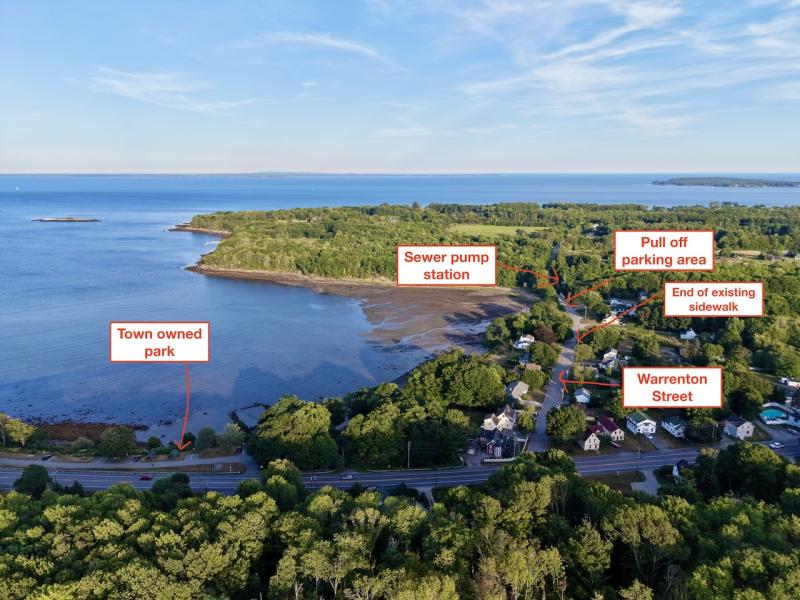 Aerial view of Clam Cove and intersection of Warrenton Street and US Route 1. All photos in article are by Alison McKellar unless otherwise noted.
Aerial view of Clam Cove and intersection of Warrenton Street and US Route 1. All photos in article are by Alison McKellar unless otherwise noted.
Aerial view of Clam Cove and intersection of Warrenton Street and US Route 1. All photos in article are by Alison McKellar unless otherwise noted.On April 12, 2026, Penobscot Bay Pilot published a letter to the editor by Warrenton Street resident Ethan Jones titled, “Nothing about the Rockport Warrenton Street Multi-use Pathway is justified.” By May, the Midcoast Villager reported that Jones had engaged attorney Kristin Collins on the matter.
I was initially just glad the headline had nothing to do with Camden, but more than anything, I was left shaking my head at how difficult it is to do anything around here without enraging someone.
Nine years on the Camden Select Board taught me that town government related headlines are generated disproportionately by loud, angry and sometimes grossly distorted allegations. This isn’t universally true, but a lot of municipal work is boring, and people generally speak out when they’re upset or feel threatened, not when they notice something they like.
The Warrenton Street controversy is a useful example. The outcome won’t impact my property, my taxes, or my pride, but it does fit a pattern that I’ve seen over and over again in municipal government.
Most Midcoast residents have probably driven on Warrenton Street at least a few times — to the Samoset, Riley School, Glen Cove Cemetery or Clam Cove — without necessarily knowing the name of the road or even which town it belongs to.
Unless, of course, you’re a Rockport town official. In that case, you definitely know by now.
Warrenton Street and its degraded sidewalk, drainage problems and culverts all fall under Rockport’s municipal jurisdiction. The road runs along Clam Cove and includes infrastructure vulnerable to intense rainfall and coastal flooding. Rockport has had a few high profile culvert washouts during intense rain and voters approved a $3.2 million bond in 2024 to try and get ahead of it.
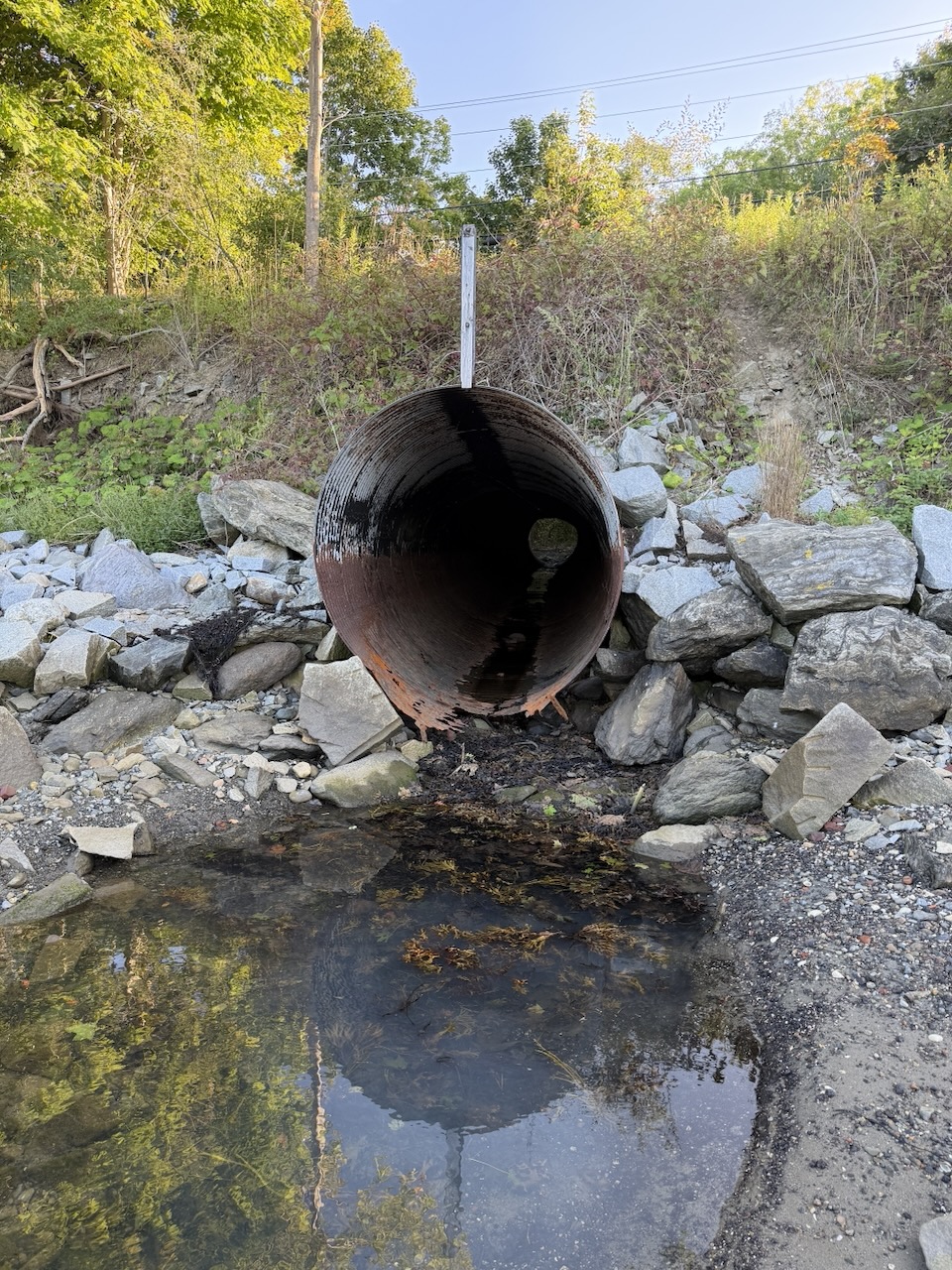
The culvert is one of Rockport's stream crossings scheduled for maintenance. The Town proposes to line rather than replace the culvert. Environmentally, this tidal marsh area has high ecological value and the stream crossing should be an open bottom culvert, but lining the existing culvert is less expensive and pending DEP approval. I do not think it's the best solution here, but I do understand why the town's engineers felt it was the most responsible use of resources. This aspect of the project is under review by the DEP.
The road was also due for maintenance paving, but rather than just pave over a bunch of known problems, they hired an engineer to design a solution that could address other infrastructure at the same time, including the vulnerable tidal/stream culvert. At its core, the Warrenton Street project is about improving and maintaining the road through better drainage.
Paved shoulders are not simply a bicycle or pedestrian amenity. The Federal Highway Administration identifies a broad set of benefits: they provide a stable place for people to walk where sidewalks are not feasible, give bicyclists greater separation from traffic, provide recovery and emergency stopping space for vehicles, improve roadway drainage, prevent erosion of road material into adjacent waterbodies, reduce shoulder maintenance, and help protect the pavement edge from premature failure.
FHWA research has found that paved shoulders at least four feet wide are associated with an approximately 71 percent reduction in pedestrian crashes involving people walking along the roadway — a specific category of pedestrian crash, not all pedestrian crashes. FHWA also cites MaineDOT’s own “17 reasons to pave shoulders,” including reducing conflicts between motorists, bicyclists and pedestrians and providing safer, more comfortable space for people traveling outside the vehicle lane.
The engineered drawings and request for bids went out in October 2025 and Farley was the low bidder. Knowing that this is a road that many people use for walking, the Town of Rockport then did something municipalities are frequently criticized for failing to do: they considered cyclists and pedestrians while making a major investment in a public road and went to the Pathways Committee to discuss line painting plans that could further improve the safety of the road.
The existing degraded sidewalk would be discontinued and replaced with a wider shoulder. This was deemed necessary as part of drainage improvements and because rehabilitating and/or extending the sidewalk was deemed unreasonably expensive. But a paved shoulder with painted lines creating more space along the edge of the road for pedestrians and cyclists was thought to be a reasonable compromise.
I’ll admit that when I first heard people talking about a “multi-use pathway,” I got a little excited. The phrase conjures up something much more ambitious than what Rockport actually proposed. The letter from Kristin Collins called the work “ill conceived in the extreme” suggesting that Rockport may be secretly planning a multi-use pathway to connect all the way to the Samoset, adding that “The City of Rockland has started on a sidewalk construction project connecting Samoset Resort with Route One, making questions about a quiet-but-coordinated plan even more acute.”
Oh what a sinister plot it would be (sarcasm). Actually, I wish the allegations were true. But I find no evidence that the Town of Rockport has been especially bold or aggressive in this area. Making any progressive on pedestrian connectivity there has actually been painstaking for those involved long term and has always involved pressure from the outside, not secret planning from those already in power. In fact, this is probably why the sidewalk was eliminated to begin with rather than proposed for expansion. And rather than fight the sidewalk removal, the Rockport members of the Pathways Committee understood that there are finite resources and are simply offering ideas for line painting and signage.
Waldo Avenue is the Rockland side of what is Warrenton Street in Rockland and the entire road is a very popular place for walking and recreation—featured in tourist books since the late 1800s. Rockport residents first voted to allocate money to a sidewalk there over a century ago. For generations, the cove was accessed via Warrenton Street for shellfish harvesting, beach combing, and bird watching.
Warrenton Street is named for Warrenton Park and comes from the middle name of one of New England’s wealthiest men: George Warren Smith who chose Clam Cove and what is now Brewster Point for a family estate of some 500 acres. He and his brothers could have afforded to live anywhere but chose this special spot on Penobscot Bay for many of the same reasons that people still pull their car over on the side of Warrenton Street to take in the view of the cove.
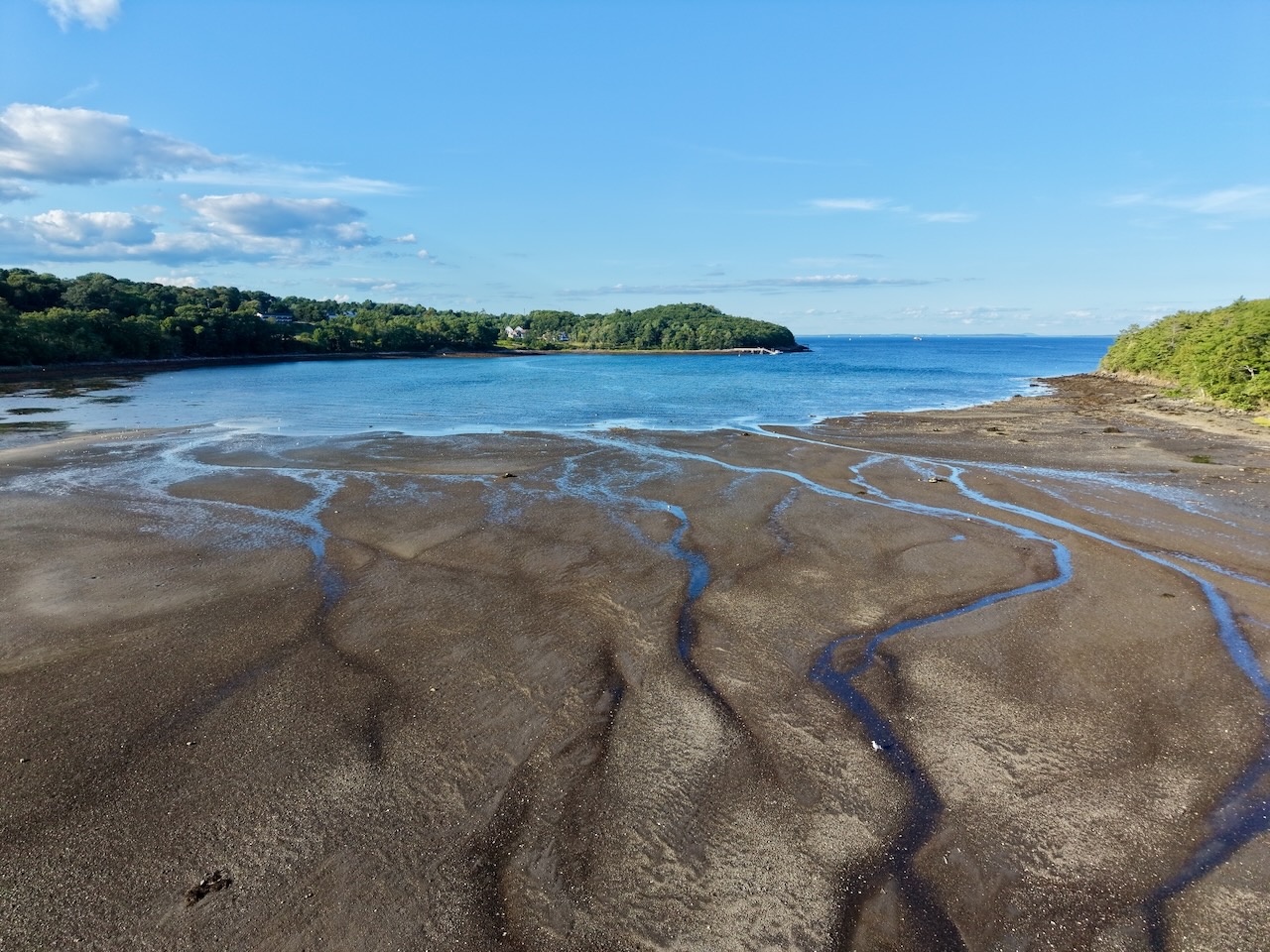
The mudflats and beach of Clam Cove at low tide as seen from Warrenton Street.
I have been a nonvoting Camden Select Board liaison to the Camden-Rockport Pathways Committee for years. The committee surveys sidewalks, seeks public input about priorities and provides recommendations to the Select Boards and Public Works directors in both towns.
Most people don’t particularly excited about making inventories of gaps in a sidewalk network or discussing shoulder width. But this is how towns gradually improve pedestrian and bicycle access: by looking for opportunities when roads are already being repaired. In this case, they didn’t come up with the idea of widening the shoulder and calling it a multi-use pathway. The shoulder widening was already happening as a matter of best practice in rural road maintenance and safety.
It is easy to see why upgrading or extending a conventional sidewalk was not included in the work, even though I feel a good case could be made for it. But Rockport is responsible for more than 70 miles of roads. If you’ve ever gotten a quote for driveway paving, you know none of this is cheap. If towns built sidewalks along every road where somebody might enjoy walking, they would bankrupt themselves. So they prioritize. Sometimes they build sidewalks. Sometimes they paint shoulders. Sometimes they replace culverts. Sometimes they do nothing because the money isn’t there.
On Warrenton Street, the existing sidewalk dead-ends just a few houses in from Route 1 and is in poor condition. Eliminating it entirely and allowing more of the public right of way to disappear into private landscaping might actually have generated less controversy.
Rebuilding the sidewalk as it is and dead-ending at the same random house would have been very easy to criticize as a waste of resources.
Extending the sidewalk all the way to the pump station or beyond would have been expensive and arguably met with the same objections.
I reached out to Ethan Jones and tried to arrange a time to talk about the project. He referred me to his attorney, who did not return my call.
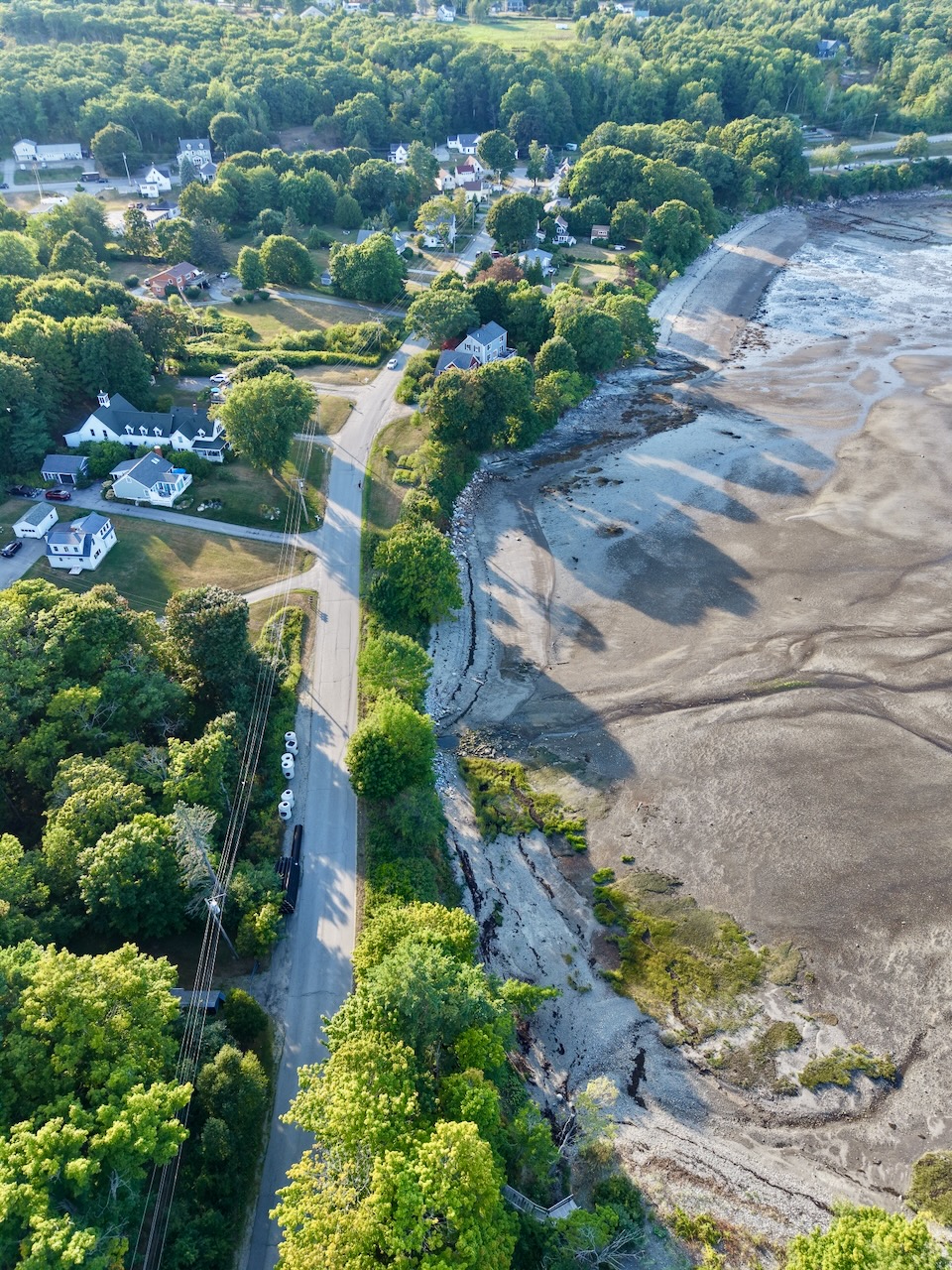
Aerial photo shows construction staging in roughly the area of the roadside parking just before the entrance to the municipal sewer pump station.
I think some of Jones’ points are excellent. In particular, he notes the generational use of these unmarked paths to access the cove. He correctly notes that people park along the shoulder of the road every day in what has become a well-worn pull-off parking area —very similar to how people use the edge of Route 52 along Megunticook Lake. The rumors that Rockport plans to mark the whole as no parking are concerning, but I see no reason why paving the shoulder needs to stop people from parking there.
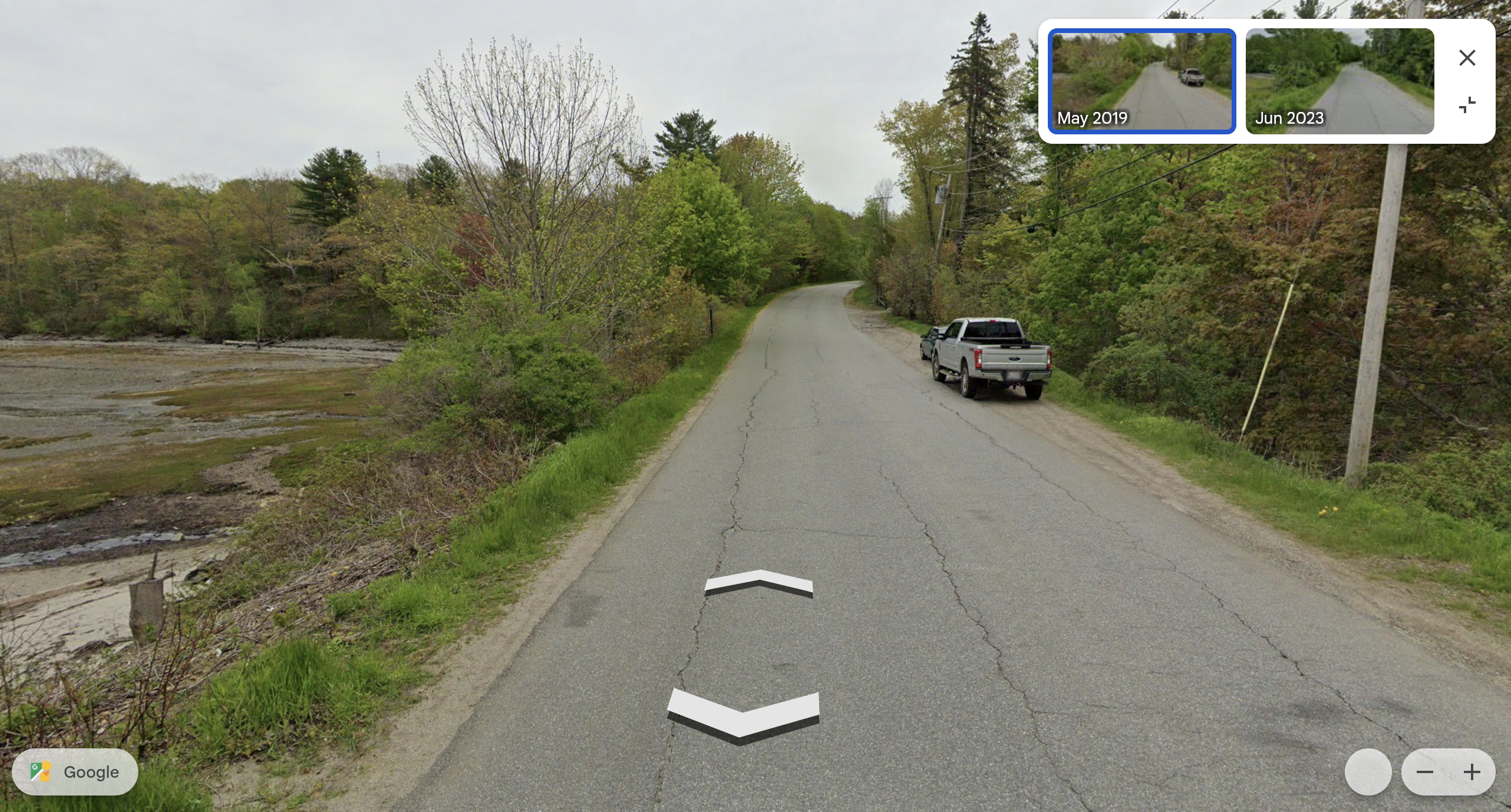
Google Street View imagery showing parking along Warrenton Street
He also raises a very interesting issue about truck traffic prohibited from Waldo Avenue being forced to use Warrenton Street. Imagine if Camden banned delivery trucks from our portion of certain roads we share with Rockport?
Rockland’s restriction seems connected to the landslides that have happened historically along Waldo Avenue and Samoset Road. I’ve yet to find the supporting documents showing that restricting truck traffic will prevent future landslides.
Jones uses this issue to reinforce what appears to be his central point: Warrenton street is inherently dangerous and pedestrians and cyclists should not be encouraged to use it. It sounds a lot like the common refrain of coastal property owners not wanting to share the viewshed.
Jones and his attorney inaccurately state that private lawns will be disrupted. In fact, the Town of Rockport is working entirely within the public right of way of a public road and if you look carefully at the surveyed, engineered plans, you can see that the town has a very large swath of unused right of way right in front of 39 Warrenton Street.
The right of way where the actual parking is located is more narrow than the section closest to Route 1. Residents who have expressed concern for preservation of existing roadside parking in the area are absolutely correct to push that issue in my opinion. If they want to improve it, maybe a little more of the existing public right of way should be used.
If the Town is going to invest money in the stream crossing on that road, it would also be a good time to formalize and improve the existing, heavily used public access to the shore.
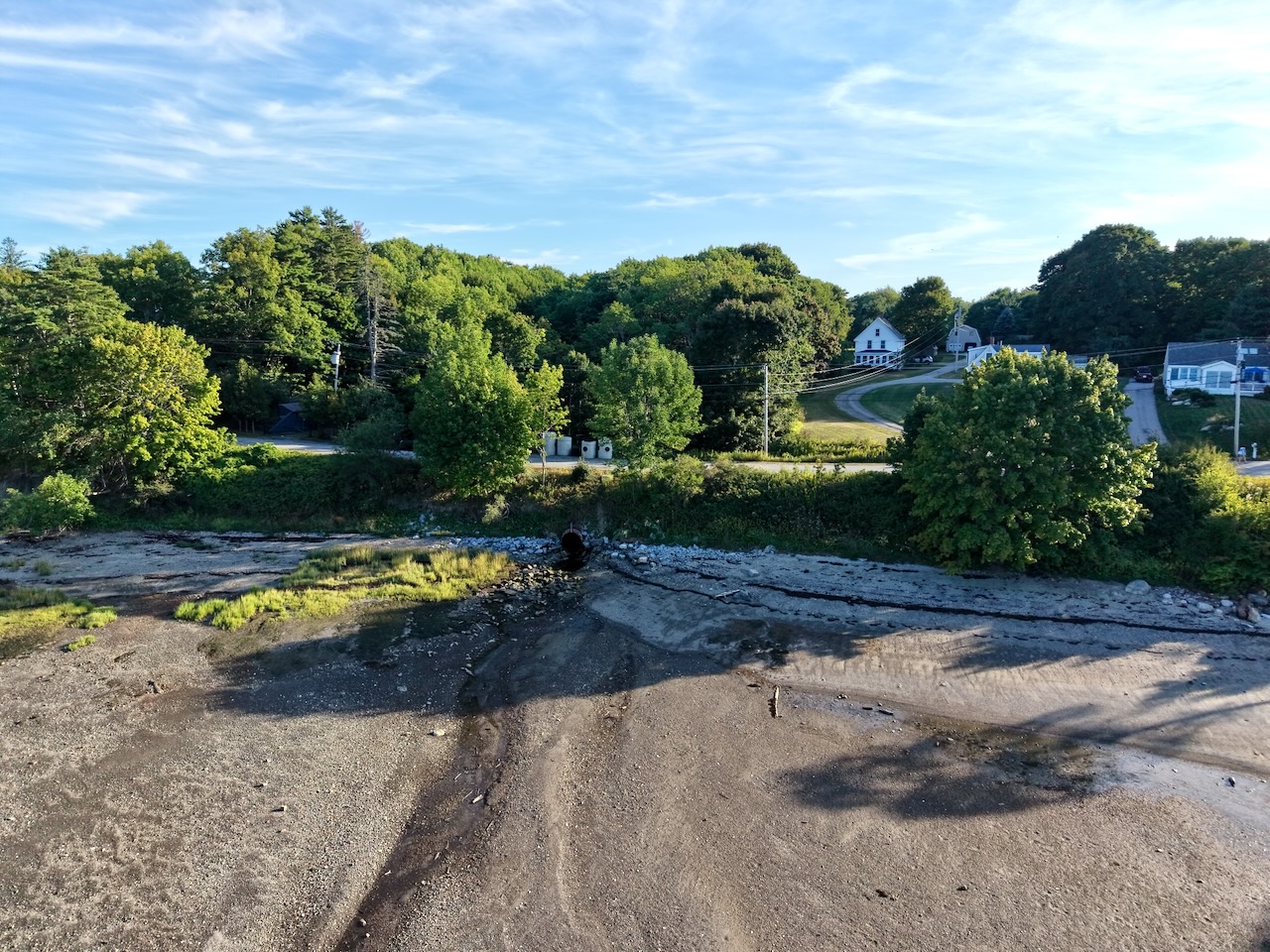
Over decades, lawns, shrubs, stone walls and landscaping can migrate into areas residents understandably begin to think of as their own yards. Then the town comes along to replace a culvert, widen a shoulder or improve drainage, and exercising a perfectly ordinary public right can feel like an intrusion.
That does not mean the resident is wrong to care. It means municipal officials are balancing competing uses of the same finite space and they have a duty to consider the public interest and not only the narrow private interest of the individual property owners.
A driver wants a wide travel lane. A cyclist wants room at the edge of it. A pedestrian wants separation from traffic. An abutter wants privacy. Public works needs room to function. Taxpayers want the least expensive solution. Nearly everybody believes the thing that matters most to them should have been obvious to the town from the beginning.
The financial constraints make those choices harder. Construction costs have climbed dramatically since 2019, and MaineDOT has warned of a substantial funding gap simply to maintain the road system we already have.
The Maine DOT work plan notes that the Federal Highway Administration reports that highway-related construction costs increased more than 70% nationally between early 2019 and 2024. A dollar invested in road projects today gets you what 68 cents would have achieved just a few years ago. And that was before the most recent increases.
During my years on the Camden Select Board, and a couple of years on the Budget Committee before that, I argued against paving at almost every opportunity.
Unfortunately, there is a limit to this.
Wait too long and a road stops needing maintenance paving and starts needing reconstruction. Poor drainage accelerates failure. When the water has nowhere to go, you really get problems.
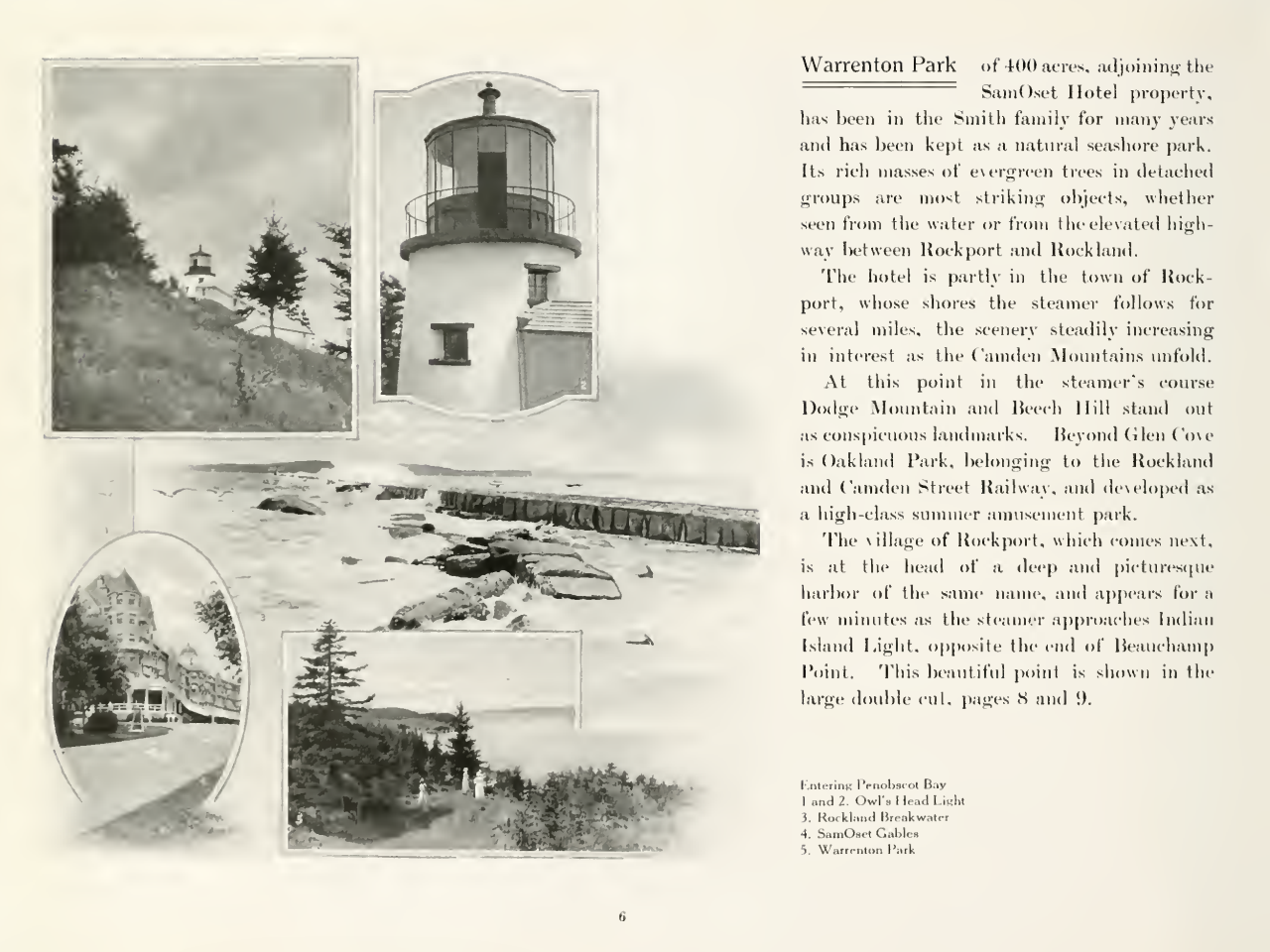
Warrenton Park is mentioned multiple times in Glimpses of Camden and other regional tourist books. Open the full 1916 Glimpses of Camden PDF
Trying to address the culverts, drainage, pavement and users of the road together is not evidence of some extravagant municipal agenda. It is what we routinely ask town officials to do: anticipate the next problem instead of waiting for something to wash out.
There is also something historically strange about treating pedestrian use of Warrenton Street as though it were a new municipal invention. Rockport residents were appropriating money for sidewalk work on Warrenton Street more than a century ago. The engineering standards and modes of transportation have changed, but the underlying question has not: how should a public road accommodate the different people who use it?
That question has no perfect answer.
Rockport could, of course, have launched a full-scale public-engagement exercise before doing anything. In reviewing some of the Pathways Committee discussion, it appears they were gearing up to assist with just that sort of effort but the construction start got moved up due to an opening in the contractor's schedule.
In Camden, road projects increasingly begin with property-owner meetings and surveys. There are good reasons for this, but it adds significantly to the time required to execute even fairly ordinary projects.
Residents do not tend to agree on the problems, solutions, schedules or priorities. Interacting repeatedly with every property owner sometimes demands the skills of a trained psychologist rather than an engineer.
More public engagement can produce better projects. But more public input is not the same thing as consensus. You can hold six meetings instead of two and still finish with one resident demanding a sidewalk, another demanding no sidewalk, another demanding the road be narrower, another demanding it be wider and somebody else asking why the town wasted so much money holding meetings.
That is municipal government.
The vast majority of people have never sent an email to their local elected officials about anything. They’ve never called public works to complain about a puddle, and they’ve certainly never hired a lawyer to prevent the town from painting bike lanes into the public right of way. Most people are simply going about their lives, worrying about their own problems and doing their best to get along with their neighbors.
That creates an unavoidable distortion in the public-input process. Our system of local government can reward squeaky wheels, threats of legal action and behind-the-scenes arm-twisting. It can also be hard for municipal officials not to take things personally when residents make allegations about their intentions, competence or transparency. I've disagreed with positions taken by Rockport staff, town managers, and elected officials plenty of times. But I also know that everyone from the Public Works Director to the Select Board to the Town Manager care about public opinion and they care about responsibly planning for the future.
Every road, every project, there will be people mad that the town did too much or too little. The existence of controversy is not evidence of incompetence. People are entitled to disagree with the design. They are entitled to scrutinize expenditures, demand records, question permits and tell their elected officials they think a decision is wrong. That accountability matters. But sometimes, towns can struggle to respond to all these requests simply because what imagined to be behind these decisions doesn't really exist.
But there is a difference between questioning a decision and assuming that disagreement proves municipal officials acted dishonestly, incompetently or without justification. Sometimes there is no version of a project that makes everybody happy. Sometimes town officials are choosing among imperfect options with insufficient money, conflicting public demands and deteriorating infrastructure.
And sometimes the boring explanation is the right one:
The road needed work.
The culverts needed attention.
Pedestrians and cyclists use public roads, too.
The town tried to deal with several problems at once.
You can disagree with how Rockport did it, but simultaneously arguing that the road is heavily used by pedestrians but shouldn't be prioritized for pedestrian improvements is a path to nowhere.
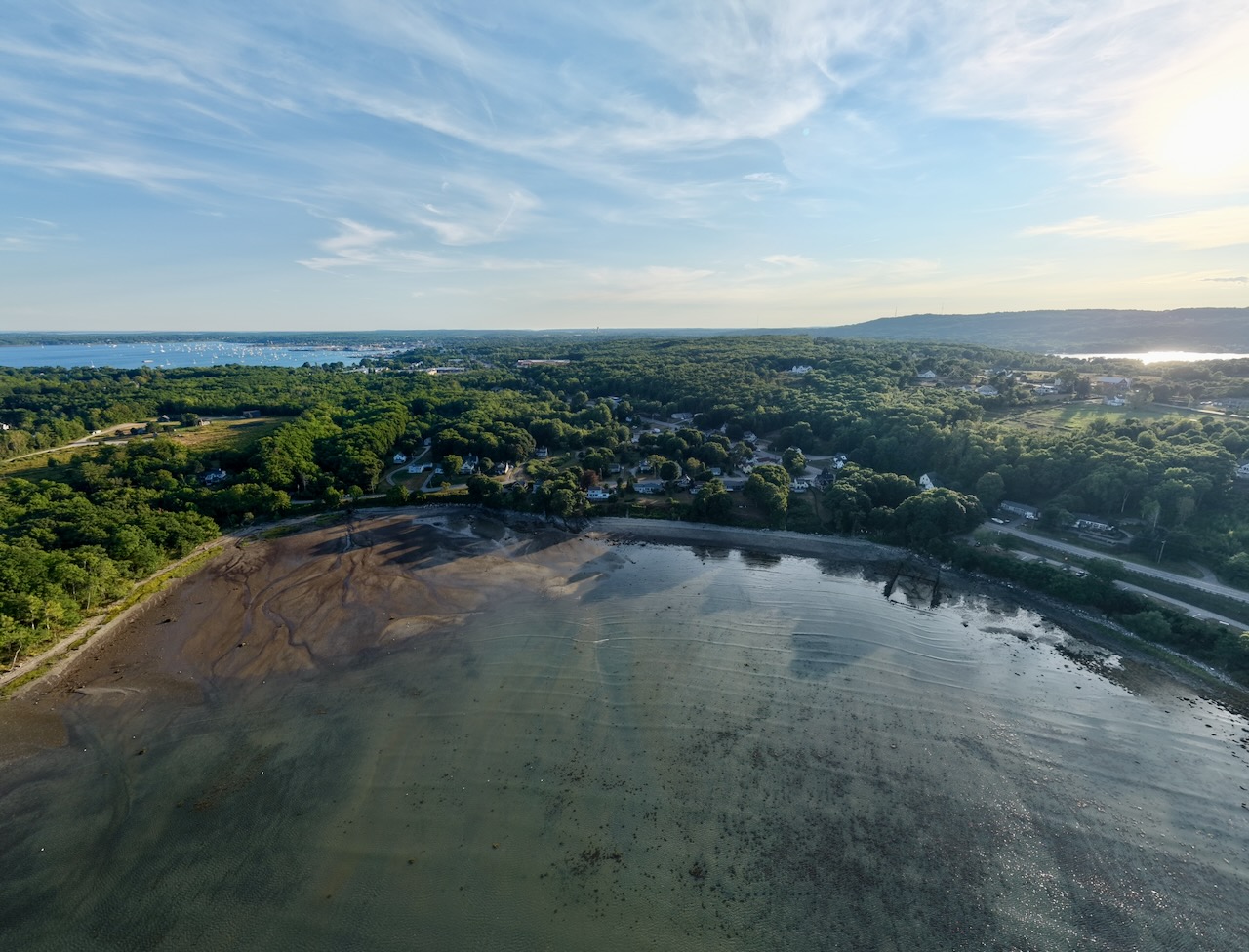 Glen Cove/Clam Cove looking toward Warrenton Street and Rockland. Photo by Alison McKellar
Additional links:
Warrenton Street project documents
-
Warrenton Street Drainage & Shoulder Widening — October 3, 2025 Bid Set — Engineering plans prepared by Gartley & Dorsky. Includes proposed plans, profiles, civil details, road sections, drainage improvements, shoulder work, and existing-conditions/topographic survey.
-
Town of Rockport — Warrenton Street Project page — Town project page describing drainage work, sidewalk removal, shoulder widening, grading, paving, and fog lines.
-
Rockport FY 2026–27 Municipal Budget — Includes Warrenton Street shoulder widening and references pedestrian safety and the Town's Complete Streets Policy.
-
Rockport 2026 Road Work/Paving Preparation — Town Public Works information concerning road maintenance and paving, including Warrenton Street.
-
Rockport Capital Improvement Plan — Includes earlier planned Warrenton Street paving, culvert work, materials, and contracted labor.
-
April 13, 2026 Select Board Packet — Includes Town Manager reporting on the Warrenton stormwater project and discussion of the Pathways Committee's review of pedestrian and bicycle considerations.
-
February 9, 2026 Select Board Packet — Includes discussion of Complete Streets and Pathways Committee recommendations concerning Warrenton Street.
Earlier planning and Warrenton Street history
-
February 10, 2014 Rockport Select Board Minutes — Includes Pathways Committee discussion of a sidewalk along Warrenton Street from Route 1 past the Samoset Resort.
-
September 18, 2012 Glen Cove document — Includes discussion of a pathway or sidewalk from the Samoset toward Brewster Point, access to Glen Cove, and comments from residents.
Alison McKellar lives in Camden