
Federal regulators accept preliminary permit for underwater data center off Eastport
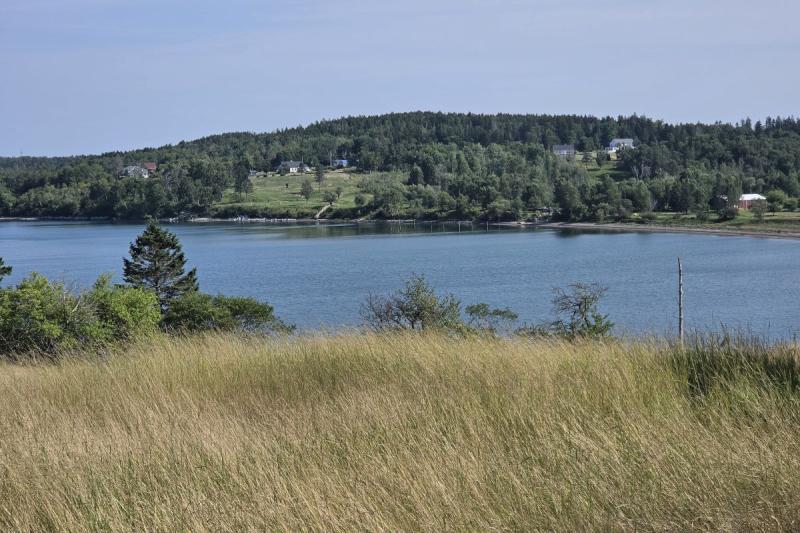 The Kendall Head area off the northern coast of Eastport. Photo by Melissa S. Razdrih.
The Kendall Head area off the northern coast of Eastport. Photo by Melissa S. Razdrih.
The Kendall Head area off the northern coast of Eastport. Photo by Melissa S. Razdrih.EASTPORT — A controversial underwater artificial intelligence data center proposed in the Bay of Fundy, near Kendall Head off the northern coast of Eastport, took a major step forward in the permitting process this week.
On Wednesday, the Federal Energy Regulatory Commission accepted DeepGreen Western Passage SPV’s filing for a preliminary permit to build a $100 million underwater data center, with a footprint of 27 acres in the bay. DeepGreen applied for the 48-month preliminary permit in February to conduct engineering and environmental studies required to secure funding and launch the project. This is not a permit for construction.
The application drew an almost immediate response from residents and Passamaquoddy officials, who strongly oppose the development, and prompted two citizen-initiated petitions designed to halt the proposal. Earlier this month, the city council voted unanimously to enact a 180‑day moratorium, giving city officials time to review and possibly amend local zoning ordinances.
In July, FERC notified DeepGreen of deficiencies in the project’s application, preventing the federal agency from accepting the application. After FERC requested additional information, DeepGreen updated its application, downsizing the project’s proposed size and energy output, and creating scalable project phases at the recommendation of Emily Carter, chief of FERC’s New England branch in the Division of Hydropower Licensing.
Details for Phase I and Phase II of the project, using marine hydrokinetic energy, are included in the updated preliminary permit application, including lowering output of the plant from 51 MW (megawatts) down to a maximum of 15 MW. The company also included names and contacts of tribal leaders in affected areas, as FERC requested, and updated maps to reflect a smaller project and all potential on-shore locations.
Since its initial filing, DeepGreen has been the focus of opposition from the Passamaquoddy Tribe, community coalitions, government officials and others who have spoken openly against the project in Eastport’s vibrant working waterfront and waters.
In August, Eastport City Councilor Karen Raye proposed a 180-day moratorium on data center projects, and their related infrastructure, after one of two community-driven ordinances to block the development was found by the city’s attorney to be “unlawful and unenforceable.”
The ordinance in question would require voter approval for new industrial or commercial development of 25,000 square feet in the city, and 10,000 square feet in the water, but the city’s attorneys with Rudman Winchell contend municipalities cannot mandate and regulate elections by ordinance. That must be done through the city’s charter.
Attorneys found that the second citizen‑initiated ordinance, which would permanently ban large‑scale data centers, to be legally sound but have suggested minor formatting changes before the question goes to voters.
Raye made it clear the moratorium, which passed unanimously by council vote, was not a substitute for a permanent ban by ordinance, but a way to create time to make the necessary legal assessments of ordinance language, gain planning board support, and arrive at a community solution.
When asked if the Rudman Winchell opinion would hypothetically apply to the Port Authority’s charter, as well, Chris Gardner, executive director of the Port Authority, said it would, but that the “Port Authority has zero authority over any of the water permitting for the site due to its nature of state and federal permitting.”
Later, Gardner said, “Any AI data center now, or in the future, is not something that the Port Authority would have any interest in partnering on, from my understanding of the Board’s position.”
The Port Authority has not taken a formal motion to oppose the project, but Gardner said “in all public conversations on the AI proposal, no board member has expressed any interest in an AI data center. It is the consensus of the board that there is no confidence in this developer based upon our limited interactions.”
He also said, “The Port Authority Board is elected to represent the interests of the community and it is abundantly clear that this community has zero interest in such and therefore the Board would represent that ‘zero interest.’”
DeepGreen Western Passage SPV was incorporated in Delaware in January, one month before submitting two preliminary permit applications to FERC — one for the Western Passage of Maine’s coast and the other for Cook Inlet in Alaska. Both are incorporated as special purpose vehicles, or SPVs.
A special purpose vehicle provides benefits and protections to projects seeking venture capital, and makes it easier for those that plan to securitize assets, including intangible ones, like a FERC preliminary permit, into the business’s finances before selling it.
Louis Wolfson, managing member of DeepGreen Holdings, LLC, the parent company for the SPVs in Western Passage and Cook Inlet, has a background in luxury real estate development at Massachusetts-based Golden Development Corp., where his LinkedIn profile refers to him as a builder and developer.
In an email to Monitor Local, Wolfson said, “as a property manager and developer who has operated within coastal dynamics for 40 years, I have too much respect for working waterfronts to introduce a project that threatens them.”
Several people have challenged Wolfson’s assertion that this project would not harm the bay’s underwater ecosystem, including the citizen group Eastport Coalition for Healthy Oceans, which is behind the two ordinance petitions, and Eastport landowner Nathan Curtis.
Curtis, who is an Eastport aquaculture employee, a renewable energy developer responsible for an Eastport community solar farm, and the founder of Midcoast Solar, said in a letter of opposition to FERC, “As an active commercial fisherman and aquaculture operator working directly in these coastal waters, I highlight the unmitigated risks of thermal pollution.”
Curtis added, “Computing ‘hives’ of the scale proposed require continuous ocean cooling, converting Western Passage into an unmetered industrial heat sink. Continuous thermal discharge into the water column threatens local water temperatures, localized current dynamics, and critical benthic habitats that support Eastport’s commercial fisheries and working waterfront.”
In its application, Wolfson calls DeepGreen’s Western Passage project an “infrastructure-layer expansion” to existing technology, like that of Portland-based Ocean Renewable Power Company. DeepGreen outlines a universal docking cradle, often referred to as an UDC in the application, that is specifically designed with what is called “open architecture” that can accommodate ORPC turbines and third-party inclusions.
While the permit mentions ORPC, that company is not involved with the Eastport project.
In a statement released earlier this month, a company spokesperson said “ORPC has no affiliation with the DeepGreen project and is not participating in its development, permitting, financing or deployment. DeepGreen has referenced ORPC’s prior work in the region and identified ORPC technology as a potential future integration, but there are no agreements or active projects between our organizations.”
Stuart Davies, ORPC’s chief executive officer, later confirmed the two companies are not in touch with each other. When asked how DeepGreen can create open architecture UDCs that allegedly work with ORPCs turbines, he said, “I have no idea what those are,” referring to the docking cradles, indicating he has never seen DeepGreen’s application.
Presented with a part of DeepGreen’s application which referenced a platform “configured to interface with ORPC modular, high-efficiency horizontal axis hydrokinetic cross-flow turbines,” Davies confirmed, in an email, “We have had no discussions with DeepGreen regarding any of this.” Additionally, Davies noted that the ORPC turbine specifications are available online and easily accessible.
DeepGreen’s application describes an intent to syphon energy “behind-the-meter” from a theoretical microgrid’s tidal turbine energy source, creating a “subsea infrastructure project.” According to Davies, ORPC’s proposed Eastport microgrid was shelved after the company applied for, but did not receive, additional clean energy grant funding. That project proposal is no longer active.
According to FERC’s Celeste Miller, acting director of media relations, acceptance of the preliminary permit application means, “the application is now considered complete,” and FERC invites public comments on the proposal.
Acceptance of a preliminary permit application for filing doesn’t necessarily mean DeepGreen will get a permit for construction.
In addition to soliciting public comments, Miller said the next steps, which are outlined in the FERC application acceptance letter, are to solicit any motions to intervene and to accept competing applications. The deadline for filing comments, motions or proposals is Oct. 19.
The next steps in Eastport include a planning board hearing on the proposed ordinances, which is scheduled for Monday, Aug. 24, at 6 p.m. at the Port Authority Meeting Center. City officials will then schedule a vote.
This story was originally published by The Maine Monitor, a nonprofit civic news organization. To get regular coverage from The Monitor, sign up for a free Monitor newsletter here.