Columbia University graduate students visit Curtis Island Light Station to study preservation, coastal resilience
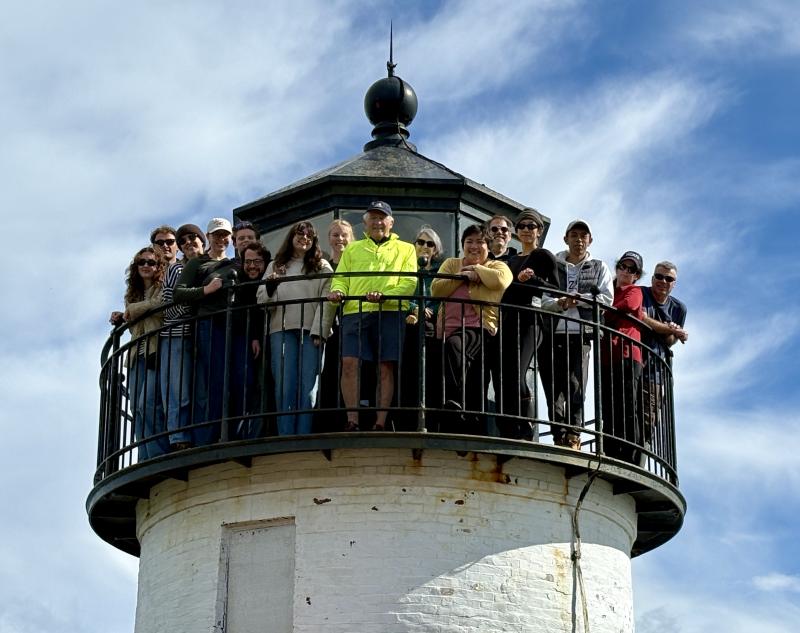 The Columbia University team the parapet of Curtis Island Lighthouse with Michael Skaling. (Photo courtesy American Lighthouse Foundation)
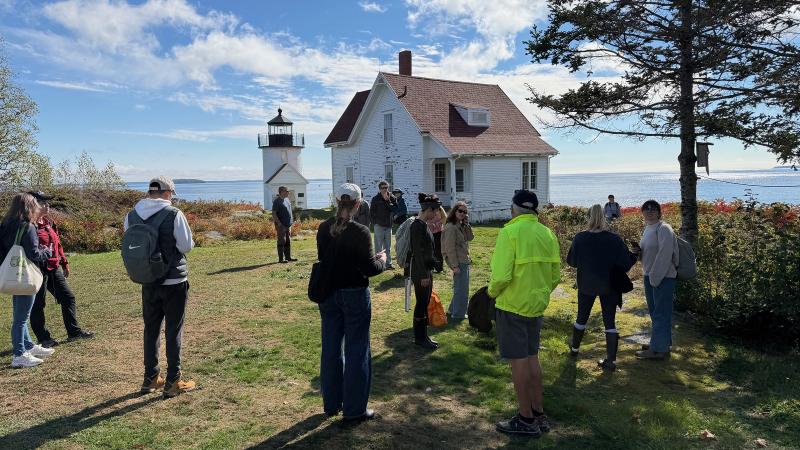 Columbia students inspecting conditions at the light keeper’s house on Curtis Island. (Photo by Chris Friden)
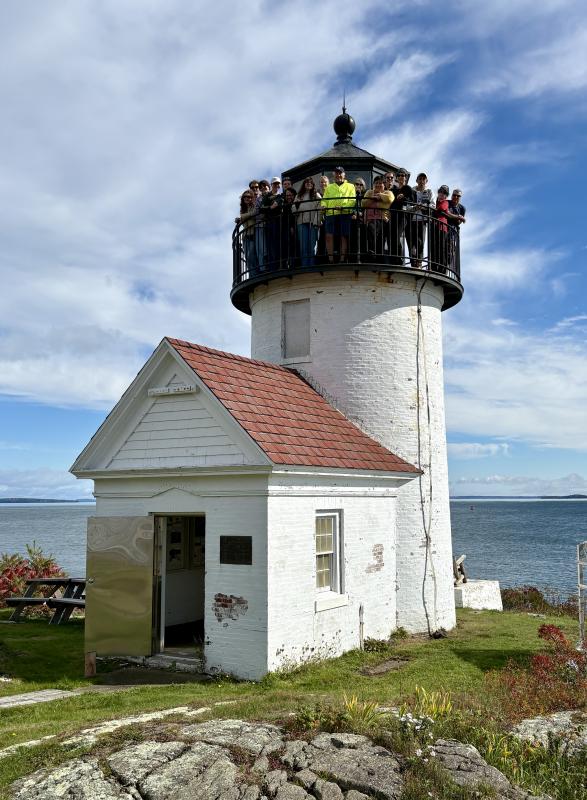 The Columbia University team at Curtis Island Light Station. (Photo courtesy American Lighthouse Foundation)
 Historic timber buildings, such as the Curtis Island light keeper’s house, require ongoing maintenance to ensure their preservation and resilience in harsh coastal climates. The light keeper’s house, and integral part of the historic light station, faces preservation challenges due to ongoing deterioration. (Photo courtesy American Lighthouse Foundation)
 The Columbia University team learning about the preservation challenges at Curtis Island Light Station from Michael & Pat Skaling of the Curtis Island Lighthouse Foundation and Bob Trapani, Jr. of the American Lighthouse Foundation. (Photo by Chris Friden)
The Columbia University team the parapet of Curtis Island Lighthouse with Michael Skaling. (Photo courtesy American Lighthouse Foundation)
Columbia students inspecting conditions at the light keeper’s house on Curtis Island. (Photo by Chris Friden)
The Columbia University team at Curtis Island Light Station. (Photo courtesy American Lighthouse Foundation)
Historic timber buildings, such as the Curtis Island light keeper’s house, require ongoing maintenance to ensure their preservation and resilience in harsh coastal climates. The light keeper’s house, and integral part of the historic light station, faces preservation challenges due to ongoing deterioration. (Photo courtesy American Lighthouse Foundation)
The Columbia University team learning about the preservation challenges at Curtis Island Light Station from Michael & Pat Skaling of the Curtis Island Lighthouse Foundation and Bob Trapani, Jr. of the American Lighthouse Foundation. (Photo by Chris Friden)
CAMDEN — Thirteen graduate students and faculty associated with Columbia University visited Curtis Island Light Station on October 14 to explore how historic lighthouses can contribute to coastal adaptation, community resilience, and the preservation of Maine’s maritime heritage.
The visit was part of Columbia’s Fall 2026 advanced studio, “Heritage on the Front Lines: Lighthouses as Drivers of Coastal Adaptation and Community Resilience,” led by Professor Erica Avrami. According to a Curtis Island Lighthouse Foundation news release, the studio brings together graduate students in historic preservation and urban planning to examine lighthouses not only as individual historic structures, but also as part of a broader coastal network with potential value for communities facing environmental change.
The studio’s work considers how historic and social conditions, public access, land use, ownership, coastal infrastructure, and climate risks can inform planning for Maine’s coastal communities. Students conducted fieldwork in Maine between October 12–17 and planned to develop research and recommendations intended to help communities understand how lighthouse sites and the wider lighthouse network might support coastal adaptation and resilience.
At Curtis Island, the students had an opportunity to experience a historic light station firsthand and consider the practical questions involved in caring for a remote coastal property. The visit connected their academic research with the work of local residents and volunteers who are committed to preserving the island’s historic buildings and maintaining a meaningful public connection to this landmark.
The visit was coordinated with help from Bob and Ann Trapani, American Lighthouse Foundation; Michael and Pat Skaling, Curtis Island Lighthouse Foundation; and Chris Friden, Camden Historic Resources Committee.Camden Harbor Master Steve Pixley assisted by providing transportation to the island.
"The Curtis Island Lighthouse Foundation appreciates the time and help of everyone who made the educational visit possible," said the Foundation.
“Visits like this help connect the study of historic preservation with the larger questions facing Maine’s coast,” said Michael Skaling, president of the Curtis Island Lighthouse Foundation. “Curtis Island is a historic place, but it is also part of a living coastal community. We welcome opportunities for students and researchers to learn from the site and to consider how preserving places like this can contribute to the future of our coast.”
The Curtis Island Lighthouse Foundation
The Curtis Island Lighthouse Foundation, established in 2023, works to raise funds and support the preservation of the Curtis Island Light Station’s four historic buildings: the Light Tower, Light Keeper’s House, barn, and oil shed. The Foundation also seeks to strengthen public awareness of the island’s history and the importance of preserving this part of Camden’s maritime heritage.
About the Columbia studio
Columbia University’s advanced preservation planning and policy studio is examining how Maine’s lighthouses can be understood as a connected system and how their historic, geographic, and community roles might inform climate action. The studio’s work includes research, mapping, comparative case studies, and engagement with Maine communities. It is being conducted alongside a related studio at the University of Pennsylvania, whose focus is at the site, landscape, and community level. Both studios are part of a collaboration with World Monuments Fund and the American Lighthouse Foundation.
Address
Curtis Island Light Station
Camden, ME 04843
United States