Big Jim to stand tall over Searsport in celebration of the Maine sardine and fishing communities
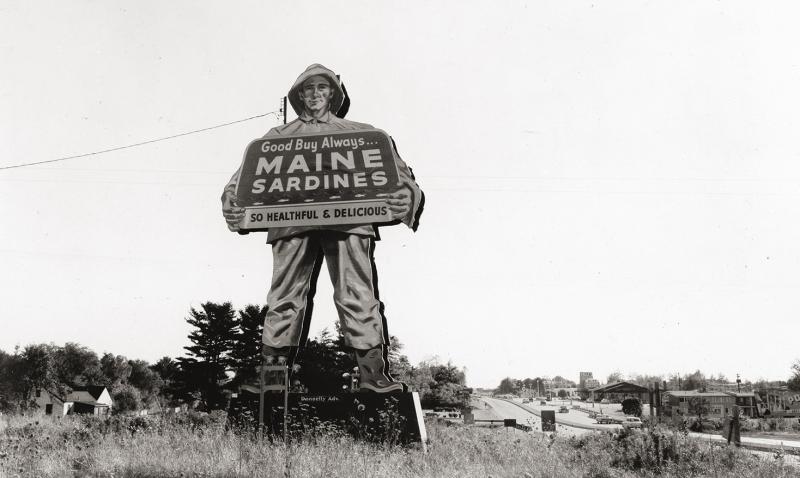 The 40-foot-tall fisherman advertises Maine-caught, processed and canned sardine in the early 1960s alongside Route 1 in Kittery, as northbound traffic streamed along what was then the major entry point to Maine after crossing the Piscataqua River from New Hampshire. (Photo courtesy Penobscot Marine Museum)
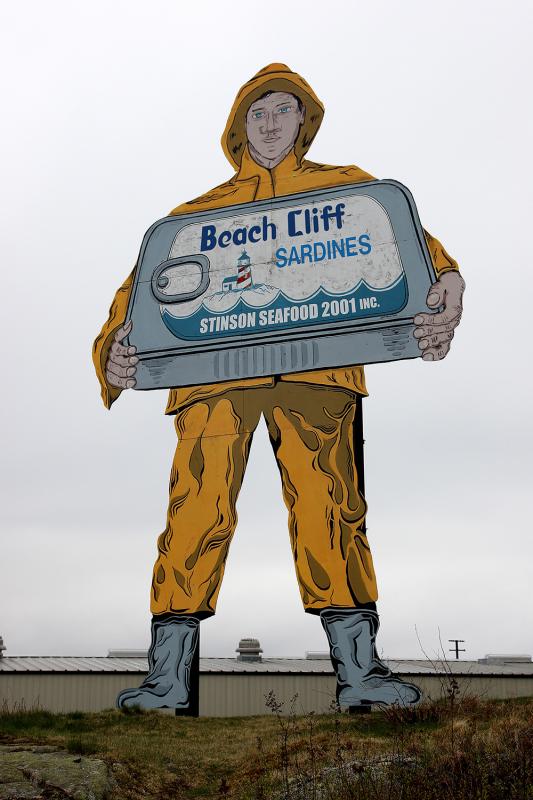
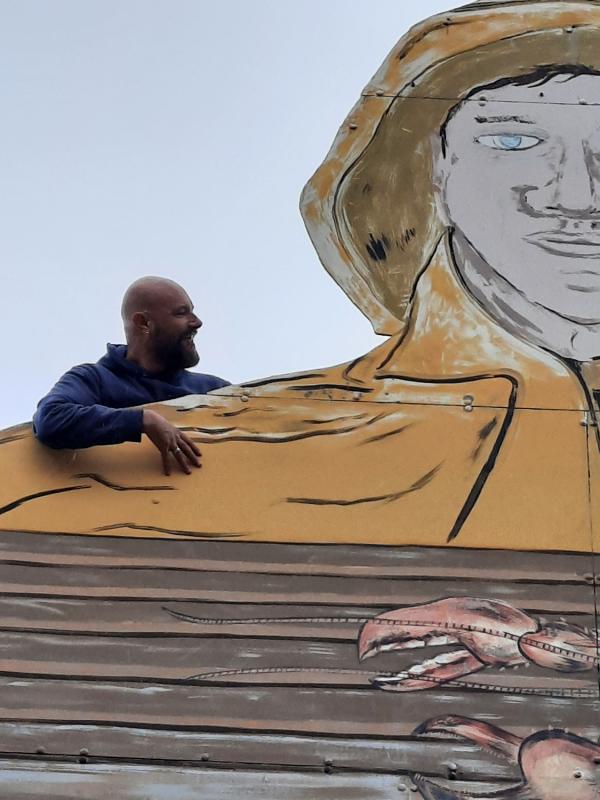 Dan Miller, a principal at Belmont Boat Works, inspects the Big Jim statue, which is being restored and will be assembled from a series of stainless steel sections after it is transported from its current home in Prospect Harbor. (Photo courtesy Penobscot Marine Museum)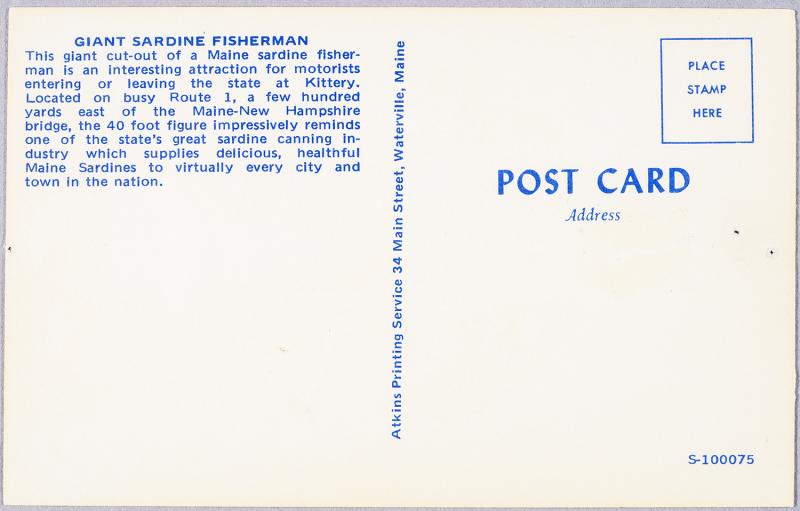
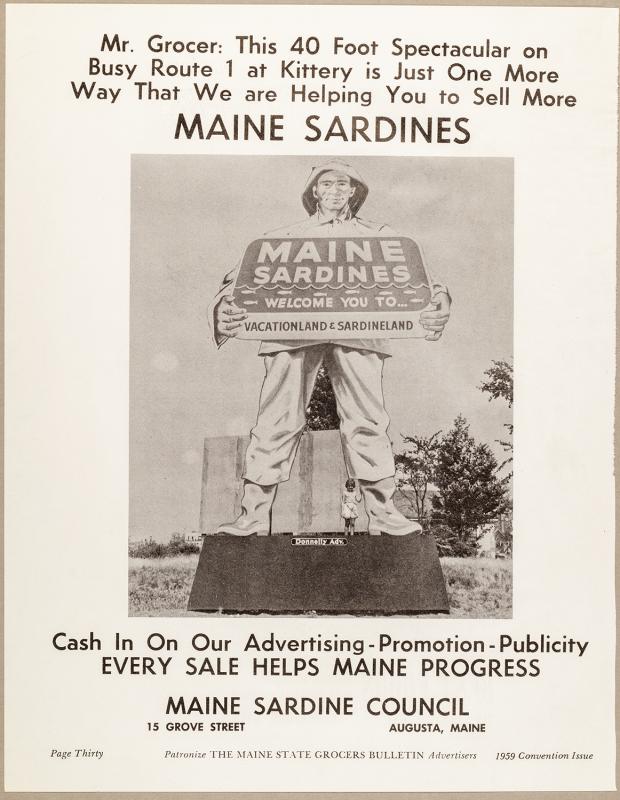
 The 40-foot-tall fisherman advertises Maine-caught, processed and canned sardine in the early 1960s alongside Route 1 in Kittery, as northbound traffic streamed along what was then the major entry point to Maine after crossing the Piscataqua River from New Hampshire. (Photo courtesy Penobscot Marine Museum)
Dan Miller, a principal at Belmont Boat Works, inspects the Big Jim statue, which is being restored and will be assembled from a series of stainless steel sections after it is transported from its current home in Prospect Harbor. (Photo courtesy Penobscot Marine Museum)
The 40-foot-tall fisherman advertises Maine-caught, processed and canned sardine in the early 1960s alongside Route 1 in Kittery, as northbound traffic streamed along what was then the major entry point to Maine after crossing the Piscataqua River from New Hampshire. (Photo courtesy Penobscot Marine Museum)
Dan Miller, a principal at Belmont Boat Works, inspects the Big Jim statue, which is being restored and will be assembled from a series of stainless steel sections after it is transported from its current home in Prospect Harbor. (Photo courtesy Penobscot Marine Museum)
SEARSPORT — An iconic billboard statue erected in homage to one of Maine's former — and lucrative — industries will soon be back alongside Route 1, this time in the Midcoast, taking up position in Searsport in front of the Penobscot Marine Museum.
More than 66 years ago, the 40-foot-tall fisherman, outfitted in sou'wester gear, stood sentry in Kittery near the edge of the Piscataqua River, which divides New Hampshire from Maine. Traffic streaming north over the "old bridge" (the Sarah Mildred Long Bridge) along Route 1 from 1959 and through the late 1960s, would be met by the fisherman presiding over the landscape, and everyone would then know they were firmly in Maine.
The statue then was relocated Down East to Prospect Harbor for 60 years, to Stinson Seafood. The new bridge over the Piscataqua River opened in 1972, and the statue, who became known as Big Jim, became a fixture over the Schoodic Peninsula. Now the Penobscot Marine Museum is restoring it.
On Memorial Day Weekend 2026, the statue will rise over downtown Searsport in conjunction with the museum's ongoing exhibit Sardineland: Boom, Bust, and Aftermath, a tribute to the communities that sustained a once-strong Atlantic herring industry.
"From the late 1800s through the early 2000s, Maine’s sardine industry played a major role in shaping coastal communities," the museum said. "The Penobscot Marine Museum’s Sardineland exhibit explores this rich history and its lasting impact on the people who lived it."
Sardines were bait fish for the lobstermen, but they were also a food staple, and canneries perched on Maine waterfronts up and down the coast. Large sardine carriers plied the waters, and boatyards built the sturdy vessels to withstand all kinds of weather.
From LubecMaine.com: “Around World War II, the sardine canning and smoking industry boomed when purchases by the Federal government to feed U.S. troops accounted for 80 percent of the industry’s annual pack. In 1950, there were 50 sardine canning plants along the coast of Maine."
The Maine Sardine Council was savvy to the industry's mark on the coastal economy, and there was collective pride in the communities that thrived on catching and packing the small Atlantic herring into tin cans destined for grocery stores around the country. The number of canneries increased to 75, and the Council commissioned the large billboard statue, then made of plywood, to help advertise how tasty sardines were.
"Good buy always," said the original 1959 sign that was held by the tall fisherman in Kittery. "Maine Sardines. So healthful and delicious."
But the industry was already in a decline for various reasons. The herring stock was overfished, market demand softened, and government set conservation limits to rein in the size of the catch. Canneries began to shut down, and the old shingled buildings were demolished. It was Stinson's — having undergone several ownership changes — in Prospect Harbor that was the last to close, in 2010.
While in Prospect Harbor, however, Big Jim (named after Jim Warren, a one-time president of the Maine Sardine Council billboard) remained standing. A machinist at Stinson's had rebuilt the statue in the 1970s, replacing the rotting plywood with aluminum panels, said Kevin Johnson, photo archivist at the Penobscot Marine Museum.
The message on the sign changed a few times, as evidenced by various photos.
Most recently, three local contractors acquired the Stinson real estate and according to a Maine Public Radio article, launched the Bold Coast Seafood company, to can lobster and crab.
Down in Searsport, staff at the Penobscot Marine Museum had been taking a deep dive into the history of Maine's sardine industry with a 2025 exhibit, drawing more than 1,200 visitors to the museum for its October one-day Sardine Fest.
"We wanted to bring attention to the exhibit and the industry that employed tens of thousands of mostly women," said Johnson.
They also worked with the Gouldsboro Historical Society, which represents multiple towns in the Prospect Harbor region, to host a June gathering, "Packed Like a Can of Sardines — Celebrating a Maine Industry". Johnson posed an idea with Society board member Jennifer Stucker, as well as the new Bold Coast Seafood owners, to borrow and restore Big Jim in Searsport.
The idea gathered momentum, and Johnson solicited the help of Dan Miller, of Belmont Boat Works, to help with the restoration and the transport of 12 aluminum panels to Searsport. He also enlisted the help of the Belfast-based Women On Walls Collective, four women artists who specialize in public art projects.
Work will involve repairing, priming, and repainting the aluminum panels and restoring the original 1959 colors and design in collaboration with local artists.
Big Jim will eventually return to Prospect Harbor, but not before his stint beside Route 1 in downtown Searsport through the summer and fall, a tribute to the hardworking people who powered Maine’s coastal economy
Currently, the museum is raising $30,000 to pay for the restoration project, and is seeking sponsors and small donations.
"The work will be done over the winter and spring, and then Big Jim will go up Memorial Day Weekend," said Johnson.
It is, already, a fun and creative project that will send Mainers down memory lane, and lift spirits, just as the statue did so in the 1960s, a big presence that delivered a 'welcome to Maine' with an understated smile that speaks volumes of the state's hardworking character.
"Big Jim is more than a roadside attraction — he represents the people, pride, and industry that shaped coastal Maine," said the museum. "Restoring him ensures that this history continues to inspire future generations. The restoration will highlight Maine’s coastal identity and the enduring spirit of its fishing communities."
To learn more about the project and how to contribute, visit penobscotmarinemuseum.org/big-jim.
Reach Editorial Director Lynda Clancy at lyndaclancy@penbaypilot.com; 207-706-6657

Sponsored Content
Main Street Shop