Black Vultures and Life Lists
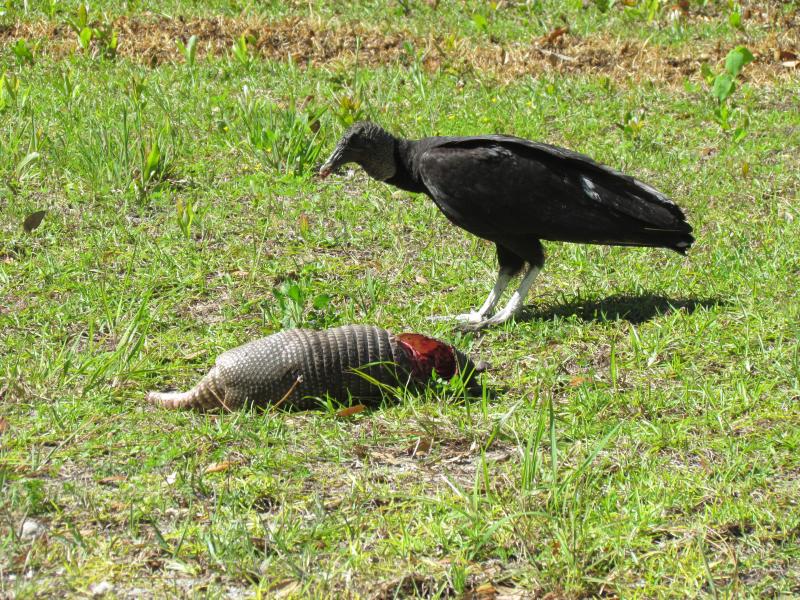 A black vulture partakes of what, to them, is a classic Florida meal: an expired armadillo. Courtesy of Allison Wells
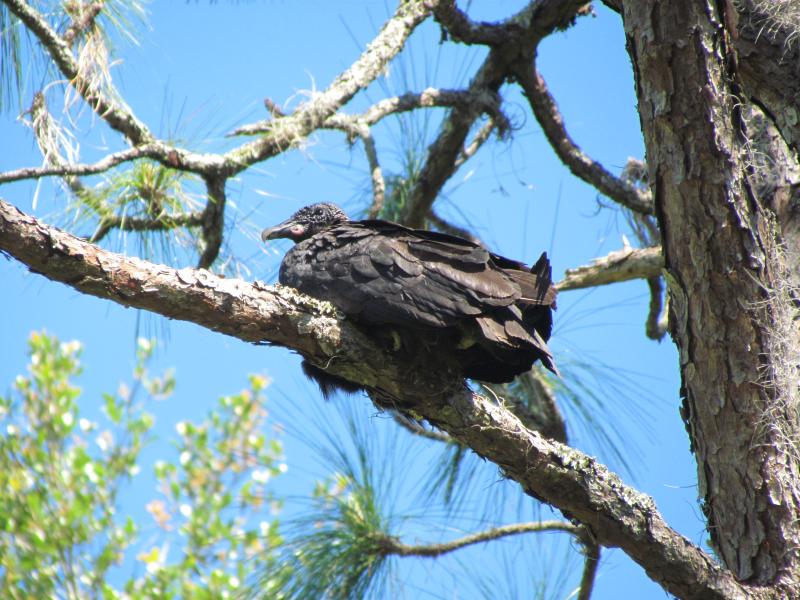 This photo of a black vulture was taken in Florida, but the species is occurring more frequently common in Maine. Courtesy of Allison Wells
A black vulture partakes of what, to them, is a classic Florida meal: an expired armadillo. Courtesy of Allison Wells
This photo of a black vulture was taken in Florida, but the species is occurring more frequently common in Maine. Courtesy of Allison Wells
This photo of a black vulture was taken in Florida, but the species is occurring more frequently common in Maine. Courtesy of Allison Wells
A black vulture partakes of what, to them, is a classic Florida meal: an expired armadillo. Courtesy of Allison Wells
This photo of a black vulture was taken in Florida, but the species is occurring more frequently common in Maine. Courtesy of Allison Wells
For most bird species, the first individual you see is indelibly etched in your memory. You may remember the place, the weather, whether you were hungry or tired, who you were with, even the smells, and the color of the sky.
But if you’ve been a bird watcher for a long time, the memory of the first encounter with certain birds can get a little hazy. For us, that’s the case for the distinctive stubby tail, silvery wingtips, and black head of the black vulture.
It may be because we didn’t see our first black vulture here in Maine where it would have been especially memorable. We are pretty sure that our first-ever black vulture was during our first trip to Florida in February of 1988. That would be the date when black vulture was added to our life list.
For those less up-to-speed with birder culture, one’s “life list” is the running list of bird species that you have correctly identified in your lifetime. Some people only count species that they have seen, but nowadays most birders include species they could identify by sound even if they are not able to lay eyes on the bird (this might be especially true of nocturnal species, for obvious reasons).
One scene we remember well from that 1988 trip to Florida was when we were in and around Ocala National Forest. Back then, birders often used a series of books called the Lane Guides (authored or co-authored by Jim Lane) that gave precise directions to great birding locations in particular states or regions. In 1988, we were using the “Lane guide to Florida,” which had led us to Ocala National Forest in search of Florida scrub-jay. Sadly, we did not find the scrub-jays.
Later we drove along a dusty dirt road where small groups of cattle were moving through a pine savannah area with grassy openings. That’s when we noticed a cow on the ground. Standing around it were vultures. A few of them were the familiar red-headed turkey vultures, but most were the smaller black vultures. We had seen our first black vultures some days before, wheeling about in the sky somewhere in the Daytona area, but this was the first time we had seen them on the ground and reasonably close.
These black vultures were hungry and aggressive. The cow must have just recently died as it was still intact, but the vultures had already started the process of converting it into a meal, pecking at the soft spots—eyes and anus especially. The scene was quite horrifying, but certainly memorable, even if technically not our first black vulture sighting.
Since then, we’ve seen black vultures in lots of places, including all around Florida. We had not yet seen one in Maine until last week, when one appeared overhead while we were out walking the dog walk. Hard to say if it was the same individual or multiple birds, but one was seen just the week before in Lewiston and another in Cumberland in February.
Black vultures have been found in increasing frequency across New England and New York in the last 20+ years. Undoubtedly, warmer winters have allowed more and more to survive farther north. We remember how unusual it was at one time to see turkey vultures in Maine! Now, no one thinks twice about seeing them. It may only be a matter of time before the same is true of black vultures. For now though, seeing one here feels wildly out of place and conjures up, at least for us, our birding memories in the south.
Jeffrey V. Wells, Ph.D., is a Fellow of the Cornell Lab of Ornithology and Vice President of Boreal Conservation for National Audubon. Dr. Wells is one of the nation's leading bird experts and conservation biologists. He is a coauthor of the seminal “Birds of Maine” book and author of the “Birder’s Conservation Handbook.” His grandfather, the late John Chase, was a columnist for the Boothbay Register for many years. Allison Childs Wells, formerly of the Cornell Lab of Ornithology, is a senior director at the Natural Resources Council of Maine, a nonprofit membership organization working statewide to protect the nature of Maine. Both are widely published natural history writers and are the authors of the popular books, “Maine’s Favorite Birds” (Down East Books) and “Birds of Aruba, Bonaire, and Curaçao: A Site and Field Guide,” (Cornell University Press).