Who was Lincoln?
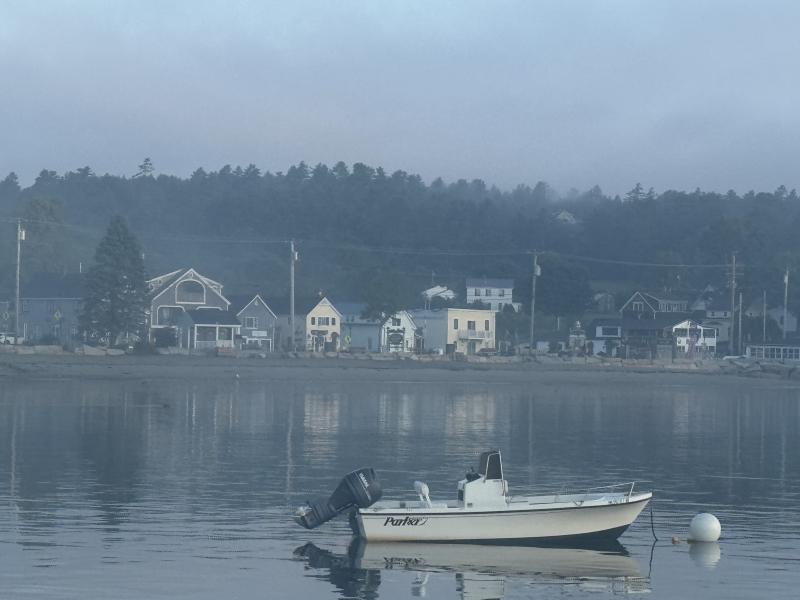 Lincolnville Beach on a foggy summer morning. (Photo by Tracee O’Brien)
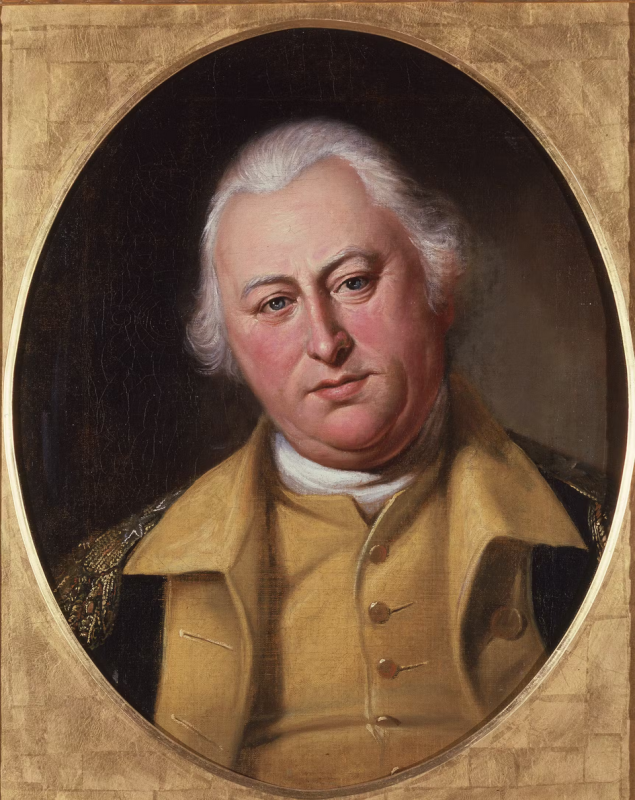 A 1784 portrait of Benjamin Lincoln by Charles Wilson Peale. (Public Domain)
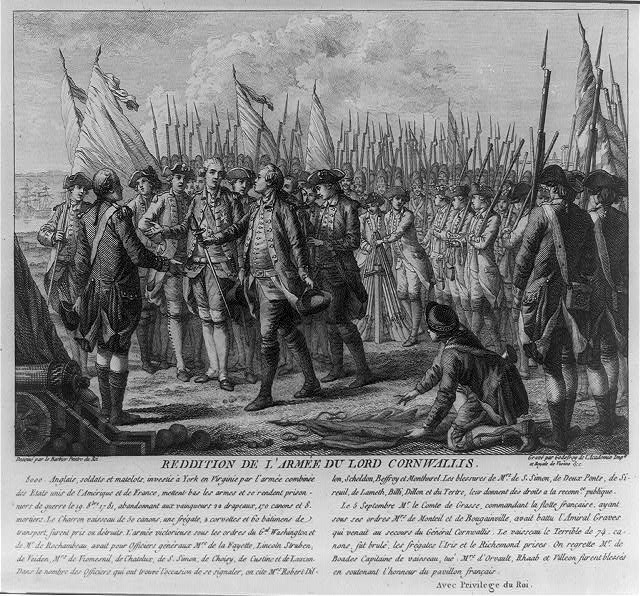 An illustration by Francois Godefroy depicting General Lincoln receiving the sword of surrender at the Battle of Yorktown, 1781. (Public Domain)
Lincolnville Beach on a foggy summer morning. (Photo by Tracee O’Brien)
A 1784 portrait of Benjamin Lincoln by Charles Wilson Peale. (Public Domain)
An illustration by Francois Godefroy depicting General Lincoln receiving the sword of surrender at the Battle of Yorktown, 1781. (Public Domain)
An illustration by Francois Godefroy depicting General Lincoln receiving the sword of surrender at the Battle of Yorktown, 1781. (Public Domain)
Lincolnville Beach on a foggy summer morning. (Photo by Tracee O’Brien)
A 1784 portrait of Benjamin Lincoln by Charles Wilson Peale. (Public Domain)
An illustration by Francois Godefroy depicting General Lincoln receiving the sword of surrender at the Battle of Yorktown, 1781. (Public Domain)Why are we Lincolnville?
This isn’t a philosophical question; really, who was this Lincoln? It really isn’t much of a mystery, but not something that I ever recall being talked about. Some might reflectively think of Abraham Lincoln, but of course our town predates that great President’s birth. No, Lincolnville was named for Benjamin Lincoln, second in command under General George Washington, and the first Secretary of War for the infant nation of the United States.
A native of Hingham, Massachusetts, Lincoln was a wealthy middle aged farmer when he took up with this group of rebels and revolutionaries, and was promoted to the role of major general of the Massachusetts Militia after the war broke out in Lexington and Concord. Though without any military experience, Lincoln soon became a trusted general in the Continental Army. He took a musket ball to the ankle in the Battle of Saratoga, and spent the rest of his life with one leg shorter than the other.
After recovering for a period back in Hingham, he rejoined General Washington, and was sent south to oppose British forces.
Following an unsuccessful attempt to retake the city of Savannah, Lincoln led his troops to Charleston, South Carolina, where they took over the garrison. Charleston was surrounded, and things were looking grim for the American forces. Lincoln advocated for the enlistment of enslaved people in the defense of the city. Rather than see enslaved people armed, the Legislature began negotiating with the British.
A fact that I don’t remember ever learning about while growing up is that Sir Henry Clinton, leader of the British forces, had issued the Philipsburg Proclamation in 1779, which offered freedom to any escaped enslaved people if they would fight for the British.
Following the end of the war, the former slave owners demanded the return of their "property", but the British refused, acquiescing to paying reparations, but transporting the African descended soldiers out of the United States. Many settled in Nova Scotia, the Black Loyalists.
Charleston was a lost cause, and Lincoln was forced to surrender the southern army.
Lincoln requested “honors of war”, allowing him to surrender with dignity, a common outcome for sieges in the early modern period, but Sir Clinton refused him. Released back to the Continental Army in a prisoner exchange, Lincoln was the at the Battle of Yorktown in the autumn of 1781 where General Washington, aided by French troops, soundly defeated the British Army, ending the war.
Then head of the British forces, Lord Cornwallis, claimed illness and sent out his second in command to officially surrender. In response, Washington had Benjamin Lincoln, his second in command, receive the sword in surrender. That must have felt vindicating after his humiliation in Charleston.
After the war, Lincoln briefly served as the Secretary of War, and remained active in the young nation until his death in 1810. As far as I can tell, he never visited the small town on the coast that had been named after him.
That is the who, but why?
Enter good old Henry Knox. Henry Knox was a Boston bookseller and a voracious reader of military history. A supporter of the revolution, he rose to the rank of Major General, as well, and was the commander of the Continental Army’s artillery.
Henry Knox had married well, and his wife’s family, the Fluckers, owned large tracts of land in Maine, comprising most of what is now the Midcoast.
The Fluckers were the heirs of General Samuel Waldo, who lends his name to our county. As the Fluckers were Loyalists, their lands were confiscated. Rather than going to the nation itself, they went into the hands of Henry Knox.
The story of the Great Proprietors is a fascinating one, and highly relevant to Lincolnville, as many of those who fought on the side of the Continental Army moved to Maine following the war, seeking land to live out the dream of freedom they had fought for, only to find wealthy landowners had already laid claim. The so-called “Liberty Men”, generally poor subsistence farmers put up a resistance. It is a story I may go into some time, when I have done more research.
Henry Knox succeeded Lincoln as the second Secretary of War, and they were friends. Then there are the Ulmer brothers, George and Philip, sons of a German immigrant from Waldoboro. George and Philip served in the Continental Army and the brothers settled in Ducktrap in 1783.
When Henry Knox showed up to lay claim to the land, the Ulmers worked with him, extracting payment from their poorer neighbors, which appears to have led to some serious bad blood between the Ulmers and the rest of the residents of Lincolnville, then the twin villages of Ducktrap and Canaan. The old conflict between the Beach and the Center.
Lincolnville was incorporated in 1802, named for Knox’s old friend. It wasn’t too many years later that the Ulmer fortune dwindled, due to bad luck and very possibly some measure of sabotage from their neighbors, who hadn’t forgotten their role assisting Henry Knox’s claim to the land where they had built their homes.
George Ulmer's house still stands looking over Ducktrap, that great, square structure. Built in 1799, after the previous home was destroyed in an unexplained fire, it long outlasted the family that built it.
There it is. The story of the name. General Benjamin Lincoln was a fascinating character, and it is unfortunate that we are not taught more about him. Maybe a good project for a LCS class sometime.
Books and Ice Cream
Monday, August 10, from 4-6:30 p.m. bring the kids to Lincolnville Central School where Bess the Book Bus and Darling’s Ice Cream Truck for a Cause will be providing free books and ice cream. 100% of any funds donated will go to the LCS Parent Teacher Organization for the good work they do supporting the students and teachers at our school.
Library Happenings
Join the needleworkers Tuesday, August 11 from 3-5 p.m. It is also a great place to find someone who can assist you with your projects. I know when I was first learning to knit I leaned heavily on my mom for support with dropped stitches, etc.
Join Professor Gray Cox of the College of the Atlantic Wednesday August 12 at 6:30 p.m. for a talk about AI.
Cribbage for everyone will be Thursday from 3-4 p.m. From 6:30 to 8 p.m. Friday August 14 will be the end of summer reading watermelon and family movie night at the library.
Okay Lincolnville, I hope you liked my little amateur history lesson, though there is certainly more to the story. The kid in me that loved to read the encyclopedia is thrilled with the access to information — amateur documentaries, old scholarly works, and of course Wikipedia which can be followed for more information.
Someday I want to visit Hingham again, and visit Lincoln’s home, which still stands. I can go to his home, even if he never visited this little town named after him.
Do what you can to stay cool. My panting pups and I agree that the Dog Days of Summer are upon us.
Reach out at ceobrien246@gmail.com.
Municipal Calendar
Monday, August 10
School House Museum open, 1-4 p.m., 33 Beach Road
LCS School Board, 6 p.m., Walsh Common
Recreation Committee, 6 p.m. Town Office
Tuesday, August 11
Library open 3-6 p.m. 208 Main Street
AA Meeting 12:15 p.m., Community Building, 18 Searsmont Road
Wednesday, August 12
School House Museum open, 1-4 p.m., 33 Beach Road
Library open 2-5
Planning Board, 6 p.m., Town Office
MCSWC Board of Directors, 6:30 p.m. Camden Town Office
Thursday, August 13
Library open 2-5 p.m. 208 Main Street
AA Beginner’s Meeting, 7 p.m., Lincolnville Historical Society, 33 Beach Road
Friday, August 14
School House Museum open, 1-4 p.m., 33 Beach Road
AA Meeting 12:15 p.m., Community Building, 18 Searsmont Road
Library open 9 a.m.-2 p.m., 208 Main Street
Saturday, August 15
Library open 9-12, 208 Main Street
Sunday, August 16
United Christian Church, 9:30 a.m. Worship and Children’s Church, 18 Searsmont Road
Bayshore Baptist Church, 10 a.m. Sunday School for All Ages, 10:40 a.m. Coffee and Baked Goods, 11:00 a.m. worship, 2648 Atlantic Highway