Soaring Vanguards
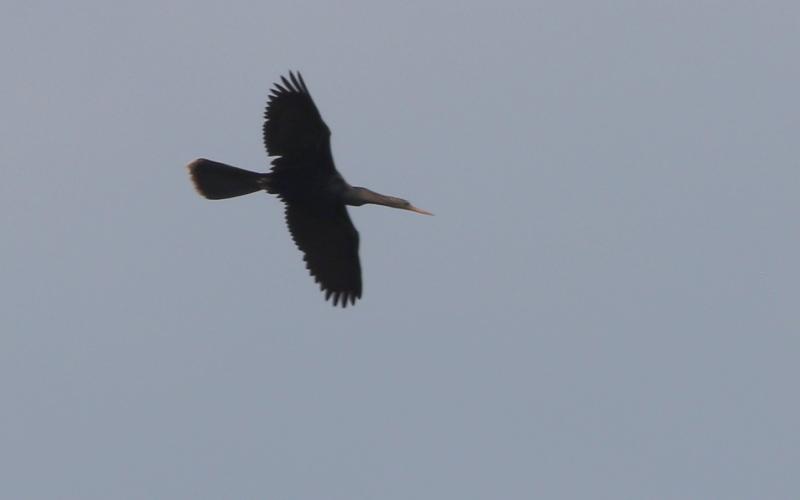 The long neck and long tail of a soaring anhinga make a very distinctive profile for this waterbird that is famously accomplished at soaring. Photo by gary_leavens, courtesy of WIkimedia Commons.
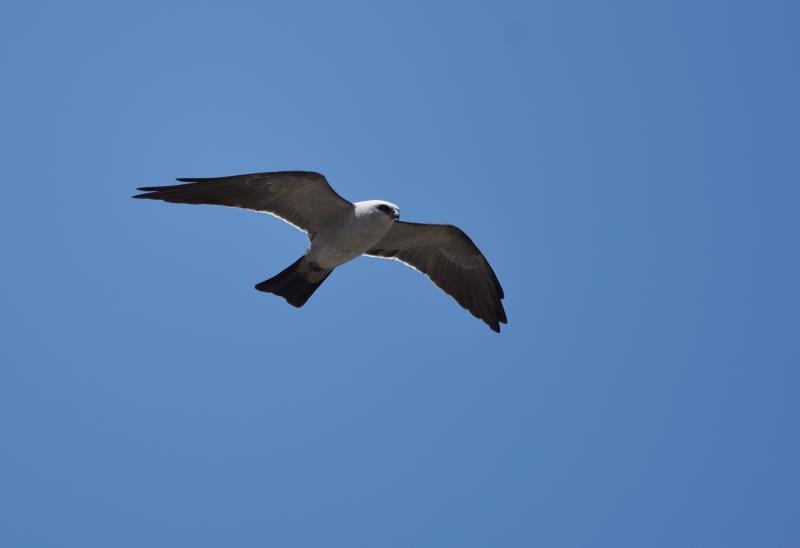 Looking like a small, graceful falcon in flight, the Mississippi kite is adept at soaring north on warm spring days. Photo by Andy Reago & Chrissy McClarren, courtesy Wikimedia Commons.
The long neck and long tail of a soaring anhinga make a very distinctive profile for this waterbird that is famously accomplished at soaring. Photo by gary_leavens, courtesy of WIkimedia Commons.
Looking like a small, graceful falcon in flight, the Mississippi kite is adept at soaring north on warm spring days. Photo by Andy Reago & Chrissy McClarren, courtesy Wikimedia Commons.
Looking like a small, graceful falcon in flight, the Mississippi kite is adept at soaring north on warm spring days. Photo by Andy Reago & Chrissy McClarren, courtesy Wikimedia Commons.
The long neck and long tail of a soaring anhinga make a very distinctive profile for this waterbird that is famously accomplished at soaring. Photo by gary_leavens, courtesy of WIkimedia Commons.
Looking like a small, graceful falcon in flight, the Mississippi kite is adept at soaring north on warm spring days. Photo by Andy Reago & Chrissy McClarren, courtesy Wikimedia Commons.Birds that are great at soaring often seem to do so into, what is for them, uncharted territory, especially in spring when they can ride warm, southerly winds and thermals.
We wrote earlier this year about the black vulture that we had seen here in Maine while out walking the dog. Several others were seen around the state around the same time. Black vultures have pushed the envelope for going far afield, with individuals making it up even into the Yukon and the Northwest Territories. That’s about two thousands miles from where they should be!
A number of weeks ago, another accomplished flyer, the famous snakebird, officially known as the anhinga, was seen circling above West Falmouth and one of the coastal islands. It is unknown whether it was the same bird or two. These birds are more than 800 miles north of their traditional breeding range.
About the same, that most elegant and graceful of birds, a swallow-tailed kite, was seen moving north above the western shore of Cobbosseecontee Lake. That’s also about 800 miles from where it should be. As impressive as it is to see one here in Maine, others have pushed even farther north to places like Prince Edward Island and Cape Breton in the Maritimes of Canada, and to Quebec City and Tadoussac in Quebec.
This week, Maine birders have been graced with multiple Mississippi kites. We know of two in the Portland area and one that provided the first-ever record for Monhegan Island. For years, it was a regular thing to look for Mississippi kites on warm days in late April and May in Cape May, New Jersey, as birds soared north from their established breeding range to the south. By 2015, some of those prospecting birds decided to stay and nest. By that time Mississippi kites had already been found nesting in New Hampshire (as we wrote about in a previous column) and in Connecticut and New York.
Far ranging Mississippi kites have made it to the Gaspe Peninsula of Quebec, halfway to James Bay in Quebec, and most astonishing of all, to the Yukon!
Many of these birds in their first year; this is the case for all of these species referenced here. They may be too young to easily find a mate and therefore don’t nest. So they seem to wander, often northward beyond the limits of where all the rest in their species is nesting. In theory, they may be able to assess the possibilities of new places to try to breed in the future where competition with others of their species will be very low.
Of the species we’ve been considering here, black vulture and Mississippi kite seem the most likely to become the next new species to eventually start nesting in the state. But the trend seems to be upward for more sightings of birds like anhinga and swallow-tailed kite, especially as they glide northward on warm, spring winds, giving birders a startled surprise when they see one overhead.
Jeffrey V. Wells, Ph.D., is a Fellow of the Cornell Lab of Ornithology and Vice President of Boreal Conservation for National Audubon. Dr. Wells is one of the nation's leading bird experts and conservation biologists. He is a coauthor of the seminal “Birds of Maine” book and author of the “Birder’s Conservation Handbook.” His grandfather, the late John Chase, was a columnist for the Boothbay Register for many years. Allison Childs Wells, formerly of the Cornell Lab of Ornithology, is a senior director at the Natural Resources Council of Maine, a nonprofit membership organization working statewide to protect the nature of Maine. Both are widely published natural history writers and are the authors of the popular books, “Maine’s Favorite Birds” (Down East Books) and “Birds of Aruba, Bonaire, and Curaçao: A Site and Field Guide,” (Cornell University Press).