New England Fishermen’s Stewardship Association welcomes new policy and advocacy leaders
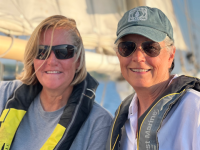
 Jason Joyce. (Photo courtesy New England Fishermen’s Stewardship Association)
 Bonnie Brady. (Photo courtesy New England Fishermen’s Stewardship Association)
Jason Joyce. (Photo courtesy New England Fishermen’s Stewardship Association)
Bonnie Brady. (Photo courtesy New England Fishermen’s Stewardship Association)
Bonnie Brady. (Photo courtesy New England Fishermen’s Stewardship Association)
Jason Joyce. (Photo courtesy New England Fishermen’s Stewardship Association)
Bonnie Brady. (Photo courtesy New England Fishermen’s Stewardship Association)The New England Fishermen’s Stewardship Association (NEFSA) has announced the appointment of Jason Joyce as Director of Advocacy, and Bonnie Brady as Policy Director, two key leadership roles that will strengthen NEFSA’s efforts to support fishermen and coastal communities, according to NEFSA, in a news release.
"Bonnie and Jason bring decades of experience advocating for fishermen and the communities they serve," said NEFSA. "Their leadership will be instrumental in shaping NEFSA’s approach to critical issues facing the fishing industry – from sustainable practices and regulations to the impacts of offshore wind development – ensuring that the voices of fishermen remain at the center of any policy decisions."
Jason Joyce, Director of Advocacy
Capt. Jason Joyce is an 8th generation Swan’s Island, Maine, commercial fisherman and USCG licensed captain. At 56, with experience in groundfishing, urchining, scalloping and shrimping, Joyce has spent most of his 40 plus years on the water lobstering.
Currently following his grandmother Roberta Joyce’s footsteps in a fourth term as town Selectman, Joyce also serves industry on the Zone B lobster council and represents Zone B fishermen on the Maine Department of Marine Resources Lobster Advisory Council.
Recently resigning in November 2025 from the Maine Lobstermen’s Association board after serving 23 years, he looks forward to his more involved role on NEFSA’s board as Director of Fisheries Advocacy.
A husband of 36 years and a father of 4 with 6 grandchildren, this role is more than a position, according to NEFSA. He considers it a solemn duty to ensure the following generations have a voice fighting for sustainable opportunities previously held by New England’s fishermen to provide for their families and sustain their communities and feed their nation.
Bonnie Brady, Policy Director
Bonnie Brady has served as Executive Director of the Long Island Commercial Fishing Association (LICFA) since its founding in 2001, where she educates policymakers and the public about the heritage, value, and realities of Long Island’s commercial fishing industry. She works to highlight the importance of buying U.S. wild-caught, locally landed seafood and represents the industry’s perspective at the town, county, state, and federal levels.
She also serves on six advisory panels across two regional fishery management councils, the Mid-Atlantic and New England Fishery Management Councils, providing at-sea and shoreside perspectives to help inform management decisions.
In addition to her work with LICFA, Brady is a founding board member of the Responsible Offshore Development Alliance (RODA) and a board member of Protect Our Coast-New Jersey, and was recognized as one of National Fisherman’s “Highliners of the Year” in 2020. A 20-year volunteer with the Montauk Fire Department and its first paramedic, her earlier career included working for Senator Bill Bradley in Washington, DC, serving as a Peace Corps health volunteer in Cameroon, and working as a print reporter.
Brady lives in Montauk, New York, with her husband, commercial trawler fisherman Dave Aripotch, and their two daughters.
"NEFSA remains dedicated to supporting the interests of fishermen by advocating for fair policies that preserve our way of life and the living working infrastructure behind sustainable domestic seafood and coastal economies," said NEFSA. "With Bonnie and Jason’s leadership, NEFSA will continue to advance initiatives that safeguard our fisheries and sustain coastal communities for generations to come."
New England Fishermen’s Stewardship Association is a bipartisan, non-profit organization committed to uniting Americans in the fight to preserve what could be the last wild frontier: the ocean, where fresh, wild, protein-rich American seafood that nourishes our nation is harvested. We’re an alliance of the wild harvesters of the waters off of New England, dedicated to educating the public about how best to manage our seafood resources through sound science and best practices of conservation used by fishermen, with a view toward economic well-being, ecosystem sustainability, and US food security.https://nefishermen.org/