Maine Library Commission discusses meaning of ‘quality’ library service
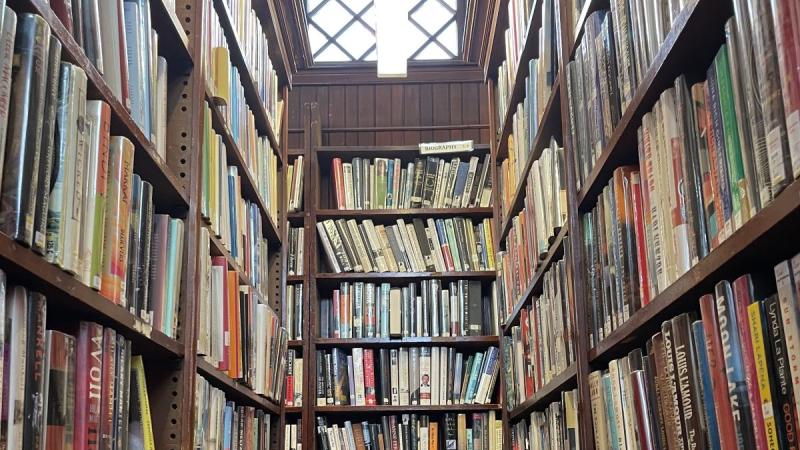 Photo by Joyce Kryszak.
Photo by Joyce Kryszak.
Photo by Joyce Kryszak.AUGUSTA — The Maine Library Commission met Monday for the first of two special meetings to begin drafting new public library standards.
The meeting, which the commission chairman twice described as a discussion of “the kumbaya of all the things that libraries do well,” was intended to gather broad ideas before commissioners settle on mandatory minimum standards.
The second meeting, scheduled for May 11, is expected to focus on setting those standards.
At the start of the meeting, Bryce Cundick, chair of the commission and library director at the University of Maine at Farmington, said state law requires the Maine Library Commission to set policies and minimum standards for public libraries — a mandate the commission had not met until now, after receiving guidance from the Office of the Maine Attorney General.
The commission dropped a different set of draft rules in January after pushback from patrons of small libraries and directors who worried the proposed standards would force them to close.
The working draft more closely conforms with state law, easing some of the earlier concerns.
Monday’s discussion gave commissioners a chance to reflect on what quality library service means in Maine, assess the strengths of the state’s libraries, consider whether minimum standards could reinforce those strengths and discuss how public libraries can evolve to meet community needs.
Commissioner Wynter Giddings, director of the Freeport Community Library, opened the discussion by saying she believes quality library service requires training.
“Librarianship is a profession,” she said, and “we receive training in that profession.”
Some of the training focuses on professional ethics and intellectual freedom, Giddings said, noting that many professions require training and emphasizing that continuing education and professional development help libraries thrive.
Commissioner Ben Treat, director of the Bangor Public Library, agreed. He said minimum library standards should include protecting intellectual freedom and patron privacy, as well as ensuring libraries are safe, ethical and inspiring.
“These are arts, cultural and literacy institutions,” he said. “Maybe that’s controversial. Maybe saying we’re focused on arts, culture and literacy is too focused, but I think it’s an important aspect of being a library.”
Cundick also agreed that libraries should offer a place “where people can feel safe and be safe.”
Other commissioners shared that view.
“We shift gears and meet the needs of our communities, and we fill gaps,” Giddings said. “We see all kinds of service gaps in our communities, and libraries often step in to fill those gaps.”
Service gaps can include “English language tutoring, tech help, helping people apply for jobs, getting people food, giving people places to go when there’s no power during a storm,” all of which depend on strong, sustainable libraries with trained and supported staff members, Giddings said.
Lewiston Public Library Director Joe Houston, who represents large institutional libraries on the commission, said the qualities that stand out to him in a public library are adaptability and collaboration.
“It’s important to listen to your community and serve what they need the most,” Houston said. “I look at libraries as reflections of their communities,” rather than being held to a one-size-fits-all standard, and that it’s important to each library to decide where to best deploy resources based on community needs.
Giddings agreed, but said one standard that all libraries should share is that collections should be based on individual communities and should “represent a broad spectrum of interests and opinions.”
To do that, she said, “there’s got to be local funding sources in order to deliver that service, and there has to be local advocacy to keep that going.”
Commissioner Sarah Moore, executive director of the Portland Public Library, is a strong supporter of library standards.
Moore said she has worked in very small rural libraries, suburban libraries and now an urban library, and said standards “are a way to define what this thing is that we’re trying to offer services for,” including setting guidelines for what constitutes a public library.
She added, “Standards are a catalyst for bringing people together,” by creating connections between people and information.
Cundick agreed, saying, “The Maine Library Commission will not stop anyone from calling themselves a library, but in order to qualify for services from the Maine State Library, there needs to be something” that sets basic standards of operation.
Commission Vice Chair Heidi Grimm, director of Merrill Memorial Library in Yarmouth, added that libraries should also be required to adopt reliable business models “to keep the place going, which is another aspect of librarianship that people often either ignore or just don’t even factor into their thoughts about a library.”
She added that library directors must have adequate professional development to run the business side, not just the lending side, of the library.
Many of the commissioners agreed that Maine’s libraries do a good job collaborating and pooling resources, and many make good use of volunteers.
But a number of commissioners, including Giddings, support requiring paid library directors — one of the key proposals that small libraries criticized in the prior draft.
“I think volunteers are wonderful, and we could not make do in many places without them,” Giddings said, but “there is a layer of sustainability and accountability that comes from being a paid staff person who gets their livelihood from their job that is not present from a person running a program on a volunteer basis.”
State Librarian Lori Stockman interrupted the conversation and urged commissioners not to get bogged down in salary discussions, which she said were more appropriately determined by the Department of Labor.
Maine State Library Trustee Jane Padham Ouderkirk of Solon urged the commission not to lose sight of the strengths of small libraries, including internet service, “especially in a poverty‑stricken area where people often don’t have access to the internet.”
Treat of the Bangor Public Library agreed, but said he does not “know how sustainable it is to expect all things to all people and provide the level of service that we’ve become used to in Maine’s libraries” with the current staffing and resources available through the Maine State Library.
Cundick said minimum standards will help libraries become more sustainable, particularly amid what he called rapid political, technological and budgetary changes.
Giddings said that in her experience, “it’s really easy to take funding away from something when there are no minimum standards,” particularly at the local level.
Following about 90 minutes of discussion about guiding principles, commissioners talked briefly about some of the language included in new rules drafted by Maine State Library staff members, but took no action on the preliminary wording.
Commissioners are expected to set the draft rules in May, including requirements around training for library directors and trustees, among other provisions.
The commission is tentatively scheduled to vote on the proposed rules in June, followed by a 45‑day public comment period. A public hearing will be held in July, after which the commission will meet again to discuss the input.
Oct. 5 has been set as the tentative date for the commission to vote on final rules, with an Oct. 22 deadline to either adopt them or restart the rulemaking process.
This story was originally published by The Maine Monitor, a nonprofit civic news organization. To get regular coverage from The Monitor, sign up for a free Monitor newsletter here.