
Maine group revives push for universal health care ballot initiative
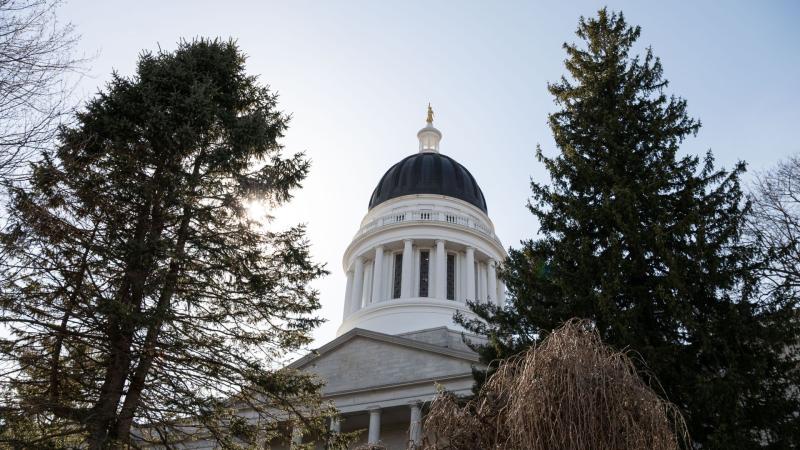 Photo by Garrick Hoffman.
Photo by Garrick Hoffman.
Photo by Garrick Hoffman.
In addition to the thousands of Mainers who showed up to vote in the primary election last month, 125 volunteers appeared at polling stations across the state for another purpose: collecting signatures to get a question about universal health care on the ballot next year.
Supporters of the question are hoping to encourage state lawmakers to establish publicly funded health care coverage at a time when rising health care costs and insurance rates are putting a strain on many Maine families.
If the petition collects at least 67,682 signatures by next April, it will appear on Maine’s 2027 general election ballot. With volunteers spread across 60 polling sites on June 9, they moved more than 20,000 signatures closer to their goal, organizers said.
“Health care is a universal issue and requires a universal solution,” said Sophie Garner, co-field director for Health Care For All Maine, the nonprofit behind the citizens’ initiative.
Health Care For All Maine’s work follows previous efforts to call for universal health care in the state. The nonprofit, formerly called Maine Healthcare Action, attempted a similar ballot initiative in 2021, but their signature-gathering was short-circuited because of the pandemic.
Last fall, state Rep. Grayson Lookner, D-Portland, resubmitted the paperwork for the initiative — keeping much of the language that had already been developed, but updating the dates of implementation — so they could begin collecting signatures again.
Signature-gathering began in earnest this April. Henk Goorhuis, the board chair for Health Care For All Maine, said that although they could have rushed to get the question on the 2026 ballot, aiming for the 2027 ballot gives the nonprofit more time to guide “a mature, robust discussion in the state of Maine” about the need for better health care coverage.
“It’s as much advocacy as education,” he said.
The effort comes as health care insurance rates in Maine have skyrocketed and as the Trump administration’s sweeping changes to Medicaid are expected to reduce federal spending on health care by over $1 trillion in the next decade.
“Nobody is satisfied with the current health care financing situation in the United States,” said Goorhuis, who added that the situation may “deteriorate further” in the coming years. In his view, a market system is a poor fit for health care because providers aren’t obligated to set a price that satisfies customers as patients with life-threatening problems don’t have the option to opt out of care if it is unaffordable. Instead, Goorhuis and other proponents of universal coverage argue that health care should be viewed and distributed as a public good.
The goal of the initiative is to pass a resolve, a non-binding call-to-action meant to put pressure on the state Legislature to take action. The resolve begins by stating that Maine’s system of health care coverage “is complex and confusing, and all too often it provides people with inadequate coverage or no coverage at all.”
It instructs lawmakers to develop a bill by 2028 that establishes a health care system that ensures all Maine residents have comprehensive, publicly funded health care. Organizers said the specifics would be left up to the Legislature, but the resolve describes a system in which residents can choose their health care providers — private or public — and have all medically necessary services paid for by the state. It suggests establishing a board to oversee the health care coverage system and to ensure providers are paid on time at the prevailing rates, and asks that there be “built-in mechanisms to lower the costs of health care.”
Organizers recognize that a 2028 deadline is optimistic, but believe it will be possible if lawmakers pull from previously proposed legislation, including a model bill drafted by the nonprofit’s sister organization, Maine AllCare. Such legislation draws from similar policies under consideration in New York and Oregon, and from examples of public health care systems in Canada’s provinces.
“Will the Legislature in Maine just be able to tap into the cornucopia of work that’s been done and develop a bill?” Goorhuis said. “We’ll see.”
Petitioners said they were encouraged by the volunteer turnout they had for signature-collecting during the primary. Their next big push for signatures will be on Election Day in November.
“So many people have been personally impacted,” Garner said. “The passion behind this is monumental.”
This story was originally published by The Maine Monitor, a nonprofit civic news organization. To get regular coverage from The Monitor, sign up for a free Monitor newsletter here.