Homeschooling is growing in Maine. Here’s what that looks like.
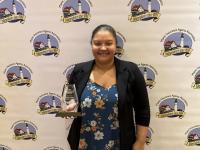
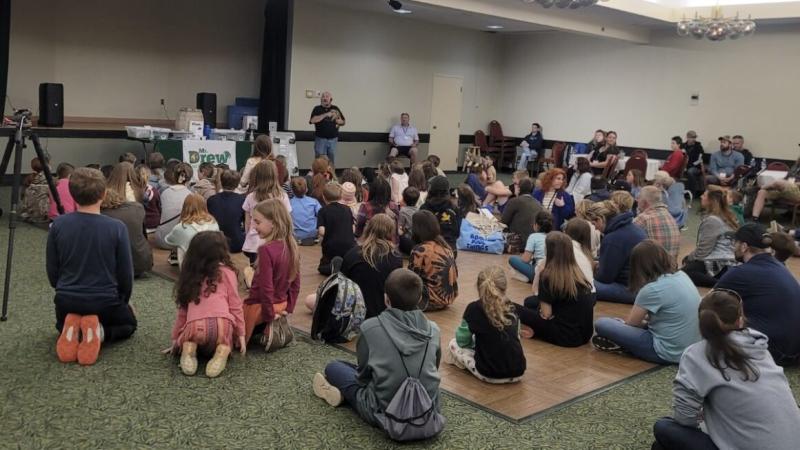 Students gather at a homeschooling conference put on by the Maine Home Education Alliance in May. Photo courtesy Brooke Thompson.
Students gather at a homeschooling conference put on by the Maine Home Education Alliance in May. Photo courtesy Brooke Thompson.
Students gather at a homeschooling conference put on by the Maine Home Education Alliance in May. Photo courtesy Brooke Thompson.Angelica Larrabee didn’t plan on becoming a homeschooling parent. She had gone to school in the same Midcoast district where she was raising her kids, and she figured they would be there “from start to finish.”
Then the pandemic hit. Larrabee’s oldest son, who was in second grade at the time, was happier learning from home. As he excelled, Larrabee decided that a homeschooling model would work better for their family.
Now, Larrabee educates all three of her kids at home. The family joined Calvary Church in Belfast, and in 2022, families at the church launched a homeschool co-op called Calvary Belfast Academy, which brings together homeschooled students once a week for classes that range from physical education to marine biology, meant to supplement their learning at home.
Larrabee enrolled her kids at the co-op that first year, along with roughly 60 other kids. The group has since doubled in size and now has a waitlist.
Larrabee, who helps out in the preschool room each week, said one of the biggest benefits has been social.
“Homeschooling can be very isolating if you allow it to be,” she said, “so I think that it’s been really helpful to have those connections.”
Another homeschool co-op operates in the same building: Sacramentum Conservatory, affiliated with Christ the King Church in Belfast. And it too has seen significant growth, from 16 students in 2022 to nearly 50 this fall.
The number of Maine children who are homeschooled has jumped since the pandemic, growing from 3.6 percent of students in the 2019-20 school year to 6.4 percent in 2024-25, according to a Maine Monitor analysis of data from the Department of Education. Last year, at least one in 10 students was homeschooled in more than 50 school districts.
The growth — which was most pronounced in central and northern Maine — follows a period of great disruption for schools, with some parents emerging from the pandemic more confident in their ability to educate their children at home. It also comes after Maine passed a law removing religious and philosophical exemptions for school-mandated vaccines, which went into effect in 2021.
It’s an increase that has been seen across the country: the percentage of school-aged children reported as homeschooled in the 2023-24 school year was twice what it was before the pandemic, according to an analysis of U.S. Census data by the Johns Hopkins Institute for Education Policy.
Many parents who choose to homeschool their children are motivated by religion, though that was more so the case several decades ago than it is now, according to Robert Kunzman, a professor at Indiana University who studies homeschooling and religious education.
He said the pandemic has resulted in “a whole lot more parents experimenting with mix-and-match approaches,” including homeschool co-ops, online education and “unschooling,” a movement of self-directed learning that is growing in popularity.
A Washington Post-Schar School poll from 2023 found that three quarters of parents cited “concern about school environment” as a motivating factor in homeschooling. Two thirds indicated a desire to provide moral instruction, and one third indicated a desire to provide religious instruction.
A similar number of respondents said public schools’ COVID-19 policies were either too strict or not strict enough. Nearly half of parents who decided to homeschool said local public schools were too liberal, compared to a quarter who said they were too conservative.
As homeschooling has become increasingly popular, so have homeschool co-ops. The parent-driven groups, many of which are religious, typically meet once a week and rely on parent volunteers to lead the classrooms. Parents also typically stay on-site throughout the co-op meeting hours.
Across the country, the growing interest in homeschooling has led to debates over regulations and oversight.
In Maine, the state tracks homeschooled students by requiring parents to write a letter of intent to provide home instruction, and parents maintain the responsibility of educating their children even if they enroll in co-ops.
Most co-op instructors are volunteer parents themselves, and the organizations aren’t subject to vaccination requirements like public and private schools.
The model can vary widely, with some focusing on academics and providing guidance for the rest of the week, and others focused on supplemental activities like music instruction that may be hard to replicate at home. Fees also vary, ranging from $50 per semester to more than $500 per year.
Parents have wide latitude when it comes to curricula, said Patricia Hutchins, a board member for Homeschoolers of Maine, a statewide organization devoted to connecting homeschool parents to one another.
The state requires instruction in several subject areas, including one year of Maine studies between grades 6 and 12, but doesn’t dictate how to teach those subjects. Students must demonstrate progress through an annual assessment, which can take several forms, including a standardized test administered in the local school district or a review of the student’s work by a certified Maine teacher or administrator.
A representative for the Maine Department of Education said the state does not retain data on how many homeschooled students pass or fail these assessments each year.
Homeschooling advocates including the National Home Education Research Institute cite research that shows home-educated children score higher than their peers on standardized tests. But it is hard to measure accurately, according to Kunzman, the Indiana University professor, as this data often relies on opt-in methods that don’t reflect the full homeschooling population and can’t be directly compared to public or private school students.
Brianna Velez, who helped launch Calvary Belfast Academy with her husband Mark Velez, said she works with an accredited teacher to pick curricula that adhere to Maine Department of Education standards for public schools and doesn’t rely on any one resource, though she cited Gather ’Round and The Good and The Beautiful as two she has used.
The Velezes decided to homeschool in part because they felt that public schools were biased against Christian perspectives, and they wanted faith to play a more central role in their children’s education.
Many of the most popular Christian homeschooling curriculum companies, including Abeka and the Home School Legal Defense Association Online Academy, which Homeschoolers of Maine lists as a resource on its website, teach young-earth creationism, the idea that the earth is several thousand years old rather than approximately 4.5 billion, as scientists have concluded through radiometric dating.
The Maine Department of Education doesn’t regulate or track homeschool co-ops. Nor does Homeschoolers of Maine. But leaders at homeschool co-ops across the state, many of which formed in the wake of the pandemic, say the model is growing and enrollment is going up as more parents search for support.
“Maine has a very robust homeschool community, and it’s not just religious people,” said Pastor Jonah Hadley of Mercy Chapel in Sanford, who helped form a church-based homeschool co-op in 2020. “There’s a very grassroots foundational community of homeschoolers here.”
Mercy Chapel’s co-op currently has 80 students, and Hadley said they had to start limiting it to congregation members only because demand was so high. The co-op relies on roughly a dozen volunteer teachers and assistants to function each week, and parents stay on site. Hadley also teaches a Bible class for high school students, which he said attracts teenagers who get taken out of public school for part of the day to attend.
Garth Berenyi and his wife initially sent their first son, who is now 32, to public school, but began homeschooling when Berenyi felt God had given him and other parents the responsibility to guide their children’s education. He joined Calvary Co-op in Orrington roughly 15 years ago and now leads the organization, which welcomes roughly 200 students each year.
The co-op, based out of Calvary Chapel Penobscot Valley, began as an unofficial group of parents getting together for regular potlucks to support one another. As it developed into a more structured co-op, the organization met every Friday, but increasing demand near the start of the pandemic led the group to expand to Thursday meetings as well.
Students and their parents are required to regularly attend a Christian church, and “any continuous activity in direct opposition of the Bible” is cause for revocation of membership, according to the co-op website.
“We’ve had people from different places that will come on in,” Berenyi said. “If they’re looking for homeschool support, and they recognize that we are using a Bible-based curriculum, and they want to come, then we let them come.”
Both Calvary Co-op and Calvary Belfast Academy focus on supplemental classes and activities instead of core academic courses. Sacramentum Conservatory, meanwhile, follows a classical education model that focuses on Western civilization and has been embraced by conservative organizations including the Heritage Foundation.
Garrett Soucy, pastor of Christ the King in Belfast, helped start Sacramentum and homeschools his 11 children with his wife. The church is part of the Communion of Reformed Evangelical Churches, a conservative Protestant denomination affiliated with Canon Press, which produces a Christian homeschooling curriculum.
At Sacramentum, learning is divided into three stages: grammar, logic and rhetoric, the last of which Soucy teaches, giving his students assignments for their four at-home days each week.
Headmistress Sarah Nicholson described the co-op as a more “formal, structured setting” than other models. She said she has fielded multiple calls this year from parents looking for advice in starting their own co-ops and started a waitlist for Sacrementum now that the conservatory has tripled in size.
Brooke Thompson, a mother of six, began homeschooling as her oldest child, now 21, was about to start school, inspired by a friend in college who had been homeschooled.
In 2020, after participating in a homeschool co-op for a decade, she decided to start her own: Haven Homeschool Collective in Woolwich. The enrichment-focused co-op has since expanded to three locations: Woolwich, which serves roughly 70 students; Standish, with nearly 90 students; and Haven High, a teen-focused initiative in Topsham with 45 members.
The Woolwich location has plenty of parents whom Thompson called “veteran homeschoolers,” but the Standish location is primarily made up of “post-2020 homeschoolers.” Many were motivated by the pandemic and the law that removed vaccine exemptions for public and private school attendees, she said.
In 2020, Thompson helped start the Maine Home Education Alliance, which focuses on connecting homeschool parents to resources and learning opportunities like internships and apprenticeships.
Last spring, 1,000 people attended MHEA’s first statewide homeschool conference. In 2021, she helped launch the Maine Homeschool Sports League, which now has more than 1,000 participants. Her co-op also hosts a prom each spring, which drew more than 300 students this year.
“In the next five years, you’re going to see a lot more of that,” Thompson said.
The growing interest in homeschooling comes as many of Maine’s rural public schools grapple with declining enrollment and budget challenges.
In Regional School Unit 22 — which serves the towns of Hampden, Newburgh, Winterport and Frankfort — the share of homeschooled students has nearly tripled since 2019.
More than 200 students who live in the district were homeschooled last year, said Superintendent Nicholas Raymond, explaining that they lose between $8,500 and $9,000 in state funding per homeschooled student. While there are fewer students for the district to serve, overall expenses have grown.
“We have less students and less funding, but the needs are growing,” especially in safety, special education and pre-K programs, Raymond said. “That puts a burden more so on the local residents than anything else.”
Even when parents opt for home education, their children can still access public resources. That’s especially popular for extracurricular activities, but Raymond said RSU 22 also has homeschooled students who come in for one or two classes each day; the district gets some state funding for the time they’re on-site.
If homeschooling rates continue to climb, Raymond said RSU 22 will continue to adjust its budget each year based on enrollment. “We will meet the needs of the students we have,” Raymond said, while respecting families who decide that homeschooling is right for them.
Hutchins, who sits on the board of Homeschoolers of Maine, said the growing number of parents homeschooling their children shows a desire to guide their children’s education directly.
“Some Christian families — not all, but some — may feel that sending their kids to a public school is like sending them to a school with an alternate religion,” Hutchins said.
“We’re very accustomed to thinking of public schools as neutral — a public school is kind of like a valueless place where everybody can go, and it’s like this utopia where students of all different backgrounds just fit — whereas a lot of Christian families might say there is no such thing as a neutral location.”
This story was originally published by The Maine Monitor, a nonprofit civic news organization. To get regular coverage from The Monitor, sign up for a free Monitor newsletter here.