This Week in Lincolnville: Transitions in Seasons and Life
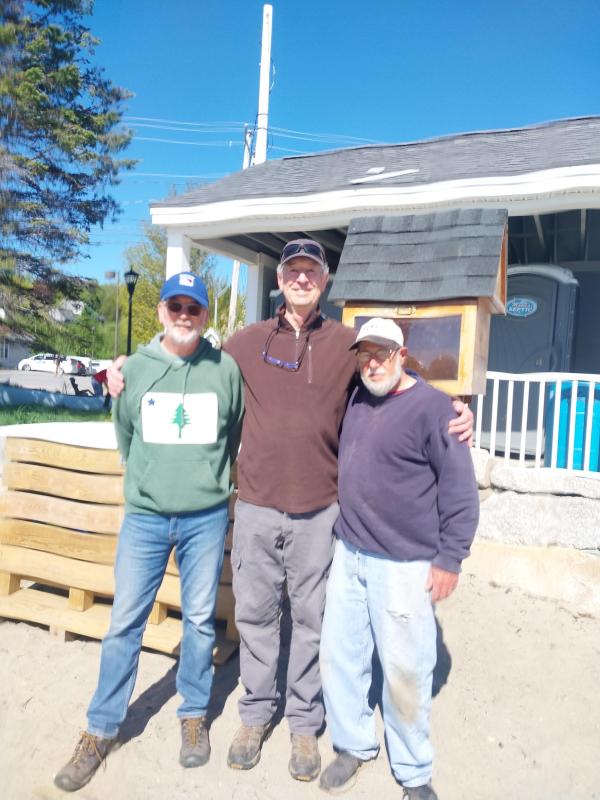 From left, Lincolnville Improvement Association president James Rossi, Peter Hartel, and Nick Jacobitis finish installing the Beach Toybox at Lincolnville Beach. (Photo courtesy of Diane Vanpelt.)
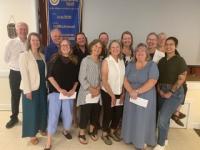
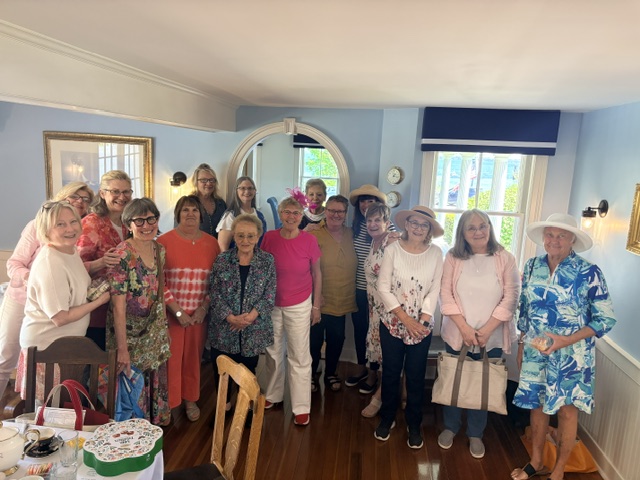 The Lincolnville Women’s Club gathered at the Spouter Inn for their annual tea. (Photo courtesy of Diane Vanpelt.)
 From left, Lincolnville Improvement Association president James Rossi, Peter Hartel, and Nick Jacobitis finish installing the Beach Toybox at Lincolnville Beach. (Photo courtesy of Diane Vanpelt.)
The Lincolnville Women’s Club gathered at the Spouter Inn for their annual tea. (Photo courtesy of Diane Vanpelt.)
From left, Lincolnville Improvement Association president James Rossi, Peter Hartel, and Nick Jacobitis finish installing the Beach Toybox at Lincolnville Beach. (Photo courtesy of Diane Vanpelt.)
The Lincolnville Women’s Club gathered at the Spouter Inn for their annual tea. (Photo courtesy of Diane Vanpelt.)
It catches me off guard every year. The rapidity in which the barren landscape of Maine in Spring explodes, seemingly overnight, into an absolute riot of green, of flowers, and well, of black flies; but, they only stay around for so long.
I don’t think I could ever live very long in a place without real, delineated seasons. As we slip into June, we are at the transition. Before us lies summer, with hot days, cool foggy mornings heavy with the smell of the sea, torrential thunderstorms in the afternoons and evenings.
My mind is on a different transition. The calendar this week is pretty full, culminating with Friday evening, the day my eldest child, along with all her classmates at Camden Hills Regional High School graduate.
After 13 years of an amazing public education, nine at LIncolnville Central School, and the last four at Camden Hills, she is ready for her next steps. Our youth are transitioning to colleges and universities near and far, to military service, to the work force. Some will remain local. Some will go far away. Some will return to visit, and some may move back, and still others may find their heart in some other amazing part of this world.
Lincolnville has been sending its youth out into the world since we first emerged well over 200 years ago as twin villages of European settlers named Canaan and Ducktrap. We raise bright, dynamic young people, sure to leave their mark, and to bring with them values they learned in our community.
I recently came upon a picture of my daughter, smiling broadly with two poofy pigtails, standing in Ms. Conover’s classroom, visiting her kindergarten classroom a few days before the start of school. I juxtapose this with the image of the striking young woman in a long black dress, standing in front of the blooming lilac bush in the dooryard, leaving for her senior prom last night. The same smile, maybe with a bit of an exasperated edge at her dad insisting he take pictures.
I think of all of us nervous Kindergarten parents from that day in 2013, our little boys and girls about to take their first big step. Paintings, handwriting exercises, early arithmetic worksheets and those black and white early reading books came home in their backpacks every afternoon.
The stress of Covid on the class, which struck just as they entered middle school, the age where things really start to change emotionally and socially.
Here they are, different in so many ways, but, to my way of looking at human development, still the same bright eyed 5 year olds deep down. We grow, we learn, we develop, but we remain the same person at our core.
As our children grew, so did we, the parents. We are a little older, maybe a little grayer- 13 years is a long time. We have moved, changed jobs, lost loved ones, ended marriages. We have had our own triumphs and set backs. This week we will celebrate our children's accomplishments, and send them into the world to do things, big and small, and hopefully make our world a better place.
We really, really want them to come back to visit us from time to time.
Our Great-Grandmothers Bread, by Diane O’Brien
Twenty-five years ago when I was interviewing Lincolnville’s octogenarians nearly everyone of them told me some version of this: “My mother made the best biscuits.”
Biscuits apparently appeared at every meal, hot out of the oven, warmed over for breakfast, and cold in school lunch boxes. Biscuits featured in the few memories Wally had of his ancestors.
Old Beriah Woodward, my sons’ great-great-grandfather, was notorious with his grandchildren for picking over the bowl of warmed up biscuits with potato-bug-stained fingers, having come straight to the family breakfast table from the garden where he patrolled the potato patch every morning.
My husband introduced me to cold bean and raw onion sandwiches, the lunch he carried as a child to school, most likely between his mother’s days-old biscuits.
Getting those 80-year-olds to talk to me as I gathered information for the book I was writing often started with the food.
“What did you eat when you were young?” I’d ask.
Biscuits, Mama’s biscuits, they’d tell me. Followed by, “she made the best biscuits.” And then, warmed by the memory of those biscuits, they’d talk and talk and talk about life in early 20th century Lincolnville.
As someone who has pored over many musty account books, one item had me puzzled. What was saleratus? Nearly every list of goods purchased by a woman (calico, thread, spices, flour) included it. Saleratus, I learned, was the archaic term for 19th Century baking soda, also known as sodium bicarbonate, a leavening agent for baked goods.
While yeast is a living organism, a single celled fungus that feeds on sugars, causing breads to rise and beer to ferment, baking soda causes a chemical reaction with the other ingredients. It releases carbon dioxide bubbles so the dough rises. The reaction takes place in the oven; biscuits come together quickly, unlike yeast doughs that need a warm bowl and an hour or more to rise.
My octogenarian friends told me about biscuit wood — poplar was popular, to make a quick, hot fire in the cast iron cook stoves of their childhood.
And unlike yeast doughs that often require long, slow kneading, biscuit dough shouldn’t be handled overmuch; fold it over and push as many times as your age someone told me – 20 or 30 times is plenty. Otherwise, the biscuits will be tough. Does that mean the younger the baker the better the biscuits?
One memorable Grange supper I got to make biscuits with a crew of Lincolnville’s old gals – Janet Richards, Isabel Maresh, and Ruth Pottle. We made them in the Grange kitchen the afternoon of the supper, mixing up the batter, Ruth stamping them out with an empty soup can, Janet tucking a pat of butter into the top of each one, Isabel fretting over the old stove that was struggling to get hot enough.
Next Saturday Tranquility Grange holds its annual Spring Fling public supper and variety show. Since I’ve somehow become one of the town’s old gals, I’ll be in the kitchen putting out several dozen pans of biscuits, hot from the oven to go with the beans and casseroles and salads.
Want to join me? I’d love to have two or three of you in the kitchen with me - don’t have to be old or female! Let me know if you want to help! Find me at 323-1237 or obrienragrugs@gmail.com.
Toy Box at the Beach
Thanks to the Lincolnville Improvement Association, the Lincolnville Beach Toy Box is back, on the sand in front of the beach kiosk. They are starting from scratch this year, and while they have collected some beach toys, including several donated by the Lincolnville Women’s Club at their annual tea at the Spouter Inn, further donations are always welcome. Pick up a suitable beach toy next time you are out and drop it off in the toy box.
Perish the thought of any child, or grown up child, not have a bucket and shovel during their time on Lincolnville Beach:
This family will continue to be out every morning to empty the trash cans and clean the beach, in what is increasingly seeming like an ancestral duty. We should gather the seven O’Brien cousins together to explain to them that one day the town contract to clean Lincolnville Beach will fall to them.
Lincolnville Historical Society Radio Play
Tickets for To Jack a Salesman at the Lincolnville Historical Society School House Museum are now available on the website, https://www.lincolnvillehistory.com/, with the June 12 supper and show at 6 p.m. for $25, and the June 14 2 p.m. matinee without supper going for $10.
Rosey Gerry’s radio plays are performed in the style of the old audio dramas, a form that I am delighted has returned to modern audiences in the form of podcast dramas.
Local characters, local content, and the whacky humor we come to expect from a Rosey production.
Library Happenings
Needleworkers will meet Tuesday from 3 to 5. Take your handwork, and spend some time with your fabric loving neighbors. MahJongg for Everyone will be held Friday at noon. This Saturday, June 6 at 10 a.m., bring your little ones, five and under, for Music Together with Amelia. Move, dance, and sing.
Yes, it is already June. The days are bright, and we are rapidly approaching midsummer. I hope you are planning to take some time off at some point, to take advantage of our amazing outdoors, our long summer evenings. Dig in the garden, fire up the grill, go for a walk in the woods- don’t forget tick precautions.
Spare a thought for the young people, graduating this Friday, and a wish that they may pursue their dreams, whatever that may be.
Be kind. Reach out at ceobrien245@gmail.com.
Municipal Calendar
Monday, June 1
School Committee, 6 p.m., LCS
Tuesday, June 2
Library open 3-6 p.m. 208 Main Street
AA Meeting 12:15 p.m., Community Building, 18 Searsmont Road
Select Board, 6 p.m., Town Office
Wednesday, June 3
Library open 2-5
Comprehensive Plan Review Committee, 6 p.m., Town Office
Thursday, June 4
Library open 2-5 p.m. 208 Main Street
AA Beginner’s Meeting, 7 p.m., Lincolnville Historical Society, 33 Beach Road
Friday, June 5
AA Meeting 12:15 p.m., Community Building, 18 Searsmont Road
Library open 9-2 p.m., 208 Main Street
Saturday, June 6
Library open 9-12, 208 Main Street
Sunday, June 7
United Christian Church, 9:30 a.m. Worship and Children’s Church, 18 Searsmont Road
Bayshore Baptist Church, 10 a.m. Sunday School for All Ages, 10:40 a.m. Coffee and Baked Goods, 11:00 a.m. worship, 2648 Atlantic Highway