This Week in Lincolnville: Food and Community
 ”Driving to pick up children.” Sunset on Route 1. (Photo by Tracee O’Brien)
”Driving to pick up children.” Sunset on Route 1. (Photo by Tracee O’Brien)
”Driving to pick up children.” Sunset on Route 1. (Photo by Tracee O’Brien)I like to cook. There is something amazing about putting food in front of people you love — a warm soup on a cold evening, a plate of greens harvested from a summer garden, a custard full of eggs supplied by the backyard dinosaurs.
My earliest jobs were in the food industry, starting with a summer gig at 15 for Rick McLaughlin at the Lobster Pond Takeout, now McLaughlins, just down the hill. Breading station, that was my place, coating seafood with the deep fried triumvirate of flour, egg wash, and cracker meal destined to become crispy goodness in Rick’s vat of oil.
I still hear Rick in my head, reminding me to separate the raw clams into rings, to ensure that they would be breaded on all sides, to sift the cracker meal regularly, avoiding clumps.
We served classic Maine seaside cuisine: Fried clams, shrimp, and scallops; chowder, steamers, and whole lobsters; burgers, dogs, and ice cream.
On a warm day, there would be lines outside the take-out window, people coming up sunburned from the beach, and those grabbing a quick bite before hopping on the ferry to Islesboro. I remember more than one famous face ordering a bowl of clam chowder or a lobster roll prior to heading over to that island enclave.
Later in my youth, I started working for Swan’s Way, Stacey Glassman’s Lincolnville based catering company. Stacey’s food was much more complex: European inspired dishes with local produce, long before farm -o-table was a common thing.
My role was generally relegated to difficult to mess-up appetizers like grilling chicken satay, toasting baskets of garlic oil brushed crostini over a bed of charcoal, hollowing out an entire crate of lemons to be filled with lemon mousse at the request of some bride who had seen this done in a Martha Stewart magazine. Lemon juice squirting in my eye, getting into the little cuts all prep cooks inevitably acquire. You will forever be my nemisis, Ms Stewart!
All the while, I was absorbing Stacey’s flair for presentation, artful plating, and garnishes, which added beauty to each tray of passed delicacies.
We all need to eat, but what we eat says something important about our culture, our identity. As the child of the 1970s and 1980s, with parents who were slightly bohemian, but not hippies, I was certainly introduced to foods that my parents never consumed in their own youth.
With a dairy cow and chickens, many of the dishes my mother made were heavy in milk and eggs, and most of the meat I consumed I had seen raised. A great deal of our food was purchased at the Belfast Coop, a place I got to know well during my mother’s occasional work shifts in the early days, when all members were expected to occasionally work the cash register.
Crumbly homemade bread, with gloopy co-op peanut butter and jelly made from berries harvested from Cameron Mountain, all wrapped in wax paper, alongside a slightly withered apple and a carrot or two from the summer’s harvest stuck in my Star Wars tin lunchbox.
It sounds a heck of a lot better to 51-year-old me than it did to 8-year-old me, who dreamed of creamy Skippy and Smucker's on Wonder Bread with a foil wrapped Ding Dong on the side. I'd attempt to trade, but no luck. Also, those tin lunch boxes would always get kicked across the playground by some bigger kid.
Over time more exotic foods made their way into the house. Hot chili oil, soy sauce, kimchi. El Paso crunchy taco shells with orange tinted hamburger became my most requested birthday dinner. So fancy. That gourmet food store that existed for a time in the old mill at Tannery Lane, where occasionally my mom would buy shrimp chips — what I now know to be a popular pan-Asian snack — colorful, plastic looking disks that puffed up crisp and delicious and briny when introduced to hot oil.
I spend far too much time watching food videos on the internet, with a particular love of those combining food and history. Recipes from early America, the influence of immigration on our eating habits. Videos about wartime British cooking, archaeological speculations about the food of ancient cultures.
I remember my father telling me about the first time he encountered pizza, as a teenager visiting Old Orchard Beach in the mid-1950s, a strange dish to his Augusta-raised eyes. I was recently diving into videos about how Chicago was an early innovator of ethnic cuisine, and I asked my mother, a native of the city’s North Shore, about her experience with food growing up.
She had no experience with the food of Greek immigrants, of deep-dish pizza. She grew up on classic Midwestern meat and potatoes. She may of gone into the city to visit Marshall Fields, but not into those ethnic neighborhoods. My dad grew up on classic Maine beans and dogs, with soft white bread and hard margarine on the side. And leftover beans on toast Sunday morning, bean sandwiches in his own lunchbox Monday.
Their palates expanded as they grew up and saw more than the North Shore or Augusta, Maine. My Dad’s time in the service in the Philippines and Korea must have been enlightening for a child of Maine. They shared their evolving tastes with my brothers and I, who, as we began to explore the world, discovered more new flavors, which we pass on to our children.
As I cook for my family most nights, sometimes (often, Tracee says) grumbling, I am influenced by my own limited travels, by the people who have shared food with me along the way. Taiwanese dishes that stray far from the American Chinese of my youth. Strong spices, strong flavors, the knowledge that tacos go beyond orange hamburger and premade shells. Food from South America, the Caribbean, from Eastern Europe. It is amazing what you can do with cabbage and onion.
An old friend and I have separately been searching for a recipe that replicates the deep -ried mashed potato balls we used to get late night at a chipper in Cork in 1995. A recipe for Greek egg-lemon soup I was taught by another old friend remains a household staple that I anticipate will be carried on by at least one of my children. The scallion pancakes and dumplings I encountered during my short time in Taiwan remain the ultimate comfort food for my family and me.
The first Europeans to immigrate to this land relied on the Native population to help them to not starve. Today, the beans, chilis, potatoes, tomatoes, squash, and countless other staples of the Americas have found their way into the cuisines of the world, and still new Mainers bring new foods and ways of cooking to our rocky shore.
Thank you for the Somali samosas, Jamaican patties and jerk chicken, kebabs and dolmades, tourtiere, ployes, kimchi, tikka masala, and hot pot. Thank you to the Old Mainers — the Penobscot, Passamaquoddy, Micmac, and Maliseet people for introducing us to baked beans. Also for helping my ancestors not starve. Sorry we did not repay your kindness.
Many years ago, I recall reading an article in a Maine newspaper about refugees moving to Lewiston. A local, with a very French name, was quoted, stating something along the lines of, “new people means new food and new parties!” I can get behind that sentiment.
Anyway, there is a football game on this Sunday afternoon, and I have the opportunity to provide sustenance to my family and whoever else should turn up to cheer and/or yell at the Patriots, so I should get to work. Welcome the stranger and feed them.
LCS Community Night
Join the Lincolnville Central School community for Soup and Trivia this Saturday, January 24, 5-7 p.m. Gather your trivia team and enjoy a family friendly evening at Walsh Common. Sign up here www.tinyurl.com/lcs-trivia-night .
Lincolnville Library
Join the needleworkers every Tuesday from 3-5 p.m. Knit, crochet, weave, spin, and felt together. Also on Tuesday, January 20 at 1:30 p.m. will Conscious Aging, an informal discussion with Roe Chiacchio, RN. A place to ask questions, share experiences, and explore aging with resilience and vitality.
Wednesday, January 21, at 6:30 p.m. will be a presentation on the Feathered Gems of Costa Rica, presented by Cathy Sears, adventurer and photographer. See some birds you are highly unlikely to find at your backyard feeder!
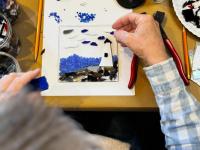
Cribbage for Everyone will be Thursday, January 22, at 3 p.m., and join the community for a Visible Mending workshop on Saturday, January 24 from 1 to 3 p.m. with Sara Beth Casburn and Sarah Kuhn. Materials will be provided.
Okay Lincolnville, it is late January. Things can look pretty bleak. Find warmth and light where you can. Find it in you friends and neighbors, in the sense of purpose that comes from fighting the good fight, from standing up, even in the smallest ways, for the things in this world that need standing up to. Cook something new, serve it to someone you care about, serve it to the stranger. Reach out at ceobrien246@gmail.com.
Municipal Calendar
Monday, January 19
Martin Luther King Day, Town Office Closed
Tuesday, January 20
Library open 3-6 p.m. 208 Main Street
AA Meeting 12:15 p.m., Community Building, 18 Searsmont Road
Thursday, January 22
Library open 3-6 p.m. 208 Main Street
Friday, January 23
AA Meeting 12:15 p.m., Community Building, 18 Searsmont Road
Library open 9-12, 208 Main Street
Saturday, January 24
Library open 9-12, 208 Main Street
Sunday, January 25
United Christian Church, 9:30 a.m. Worship and Children’s Church, 18 Searsmont Road
Bayshore Baptist Church, 10 a.m. Sunday School for All Ages, 10:40 a.m. Coffee and Baked Goods, 11:00 a.m. worship, 2648 Atlantic Highway