In the Land of the Carolina Chickadee
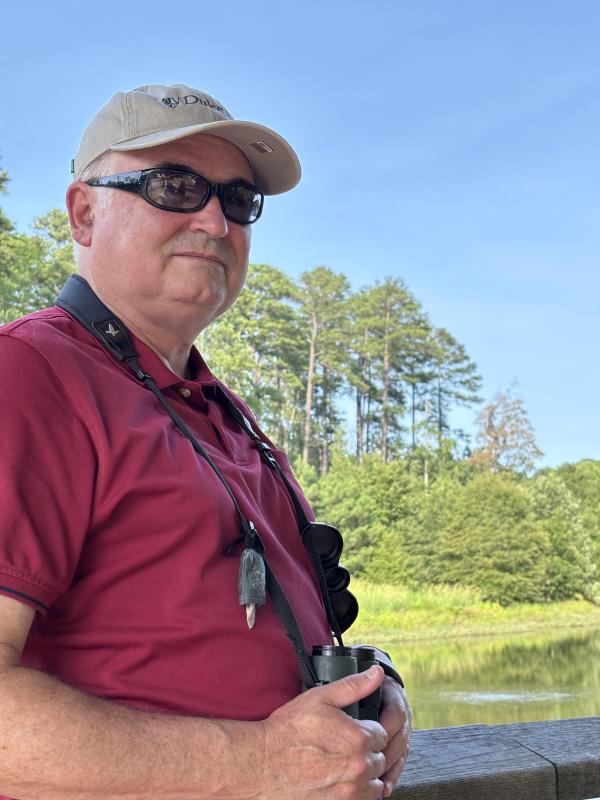 The authors (Jeff here) spent some time looking for birds on the trails at the Duke Ponds on the Duke University campus on a hot day in August. It was a pleasure to find brown-headed nuthatches and Carolina chickadees here. Courtesy of Allison Wells
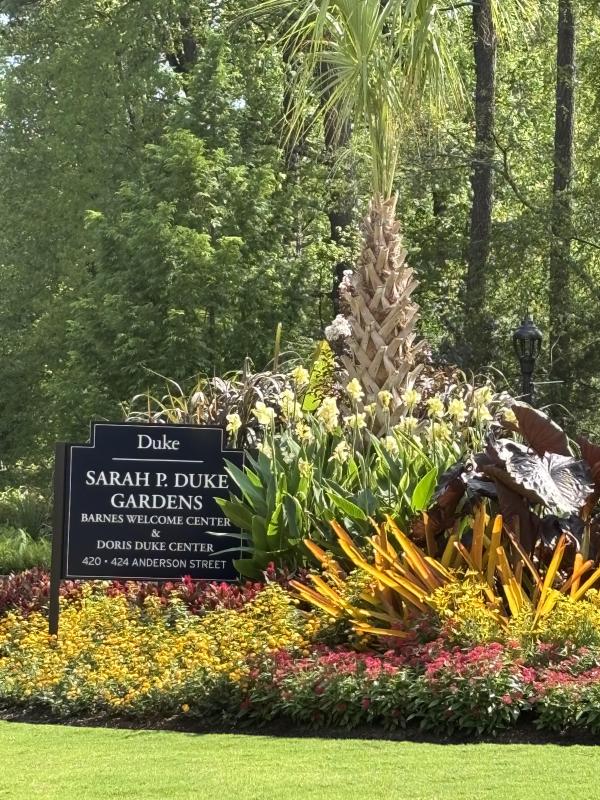 The Sarah P. Duke Gardens at Duke University in Durham, North Carolina provides a popular respite for visitors from around the world and, according to eBird, 148 bird species have been recorded there. Courtesy of Allison Wells
The authors (Jeff here) spent some time looking for birds on the trails at the Duke Ponds on the Duke University campus on a hot day in August. It was a pleasure to find brown-headed nuthatches and Carolina chickadees here. Courtesy of Allison Wells
The Sarah P. Duke Gardens at Duke University in Durham, North Carolina provides a popular respite for visitors from around the world and, according to eBird, 148 bird species have been recorded there. Courtesy of Allison Wells
The Sarah P. Duke Gardens at Duke University in Durham, North Carolina provides a popular respite for visitors from around the world and, according to eBird, 148 bird species have been recorded there. Courtesy of Allison Wells
The authors (Jeff here) spent some time looking for birds on the trails at the Duke Ponds on the Duke University campus on a hot day in August. It was a pleasure to find brown-headed nuthatches and Carolina chickadees here. Courtesy of Allison Wells
The Sarah P. Duke Gardens at Duke University in Durham, North Carolina provides a popular respite for visitors from around the world and, according to eBird, 148 bird species have been recorded there. Courtesy of Allison WellsLike early migrating birds, we have recently made a trek south from Maine to North Carolina. It’s not the time of year when most Mainers head south—not when temperatures have regularly been in the nineties in the Tar Heel State. We traveled to Durham, North Carolina, to help our son move and settle in for the start of his first semester at Duke Law School.
For us northerners, the temperature and humidity have been pretty tough, and we haven’t had much time to look for birds and other creatures. But we have enjoyed experience birds in a new place. Of course, very few birds are singing in August, especially when the sun is scorching. The ones we’ve heard singing are largely the same ones we might hear in Maine—birds like American goldfinches and song sparrows.
We escaped the heat one early evening by soaking ourselves in a cool pool while watching a swirling flock of about fifty chimney swifts high above, looking like specks of black pepper in the milky white sky. We guessed that they were likely migrants beginning their journey to their South American wintering grounds.
One late afternoon, we had a little time to wander in the mixed woods near some containment ponds on the Duke University campus. Tiny blue-gray gnatcatchers wheezed from the sweetgums; gray catbirds mewed from the thickets, and overhead in a tall pine, nestling great blue herons clattered noisily while an adult stood on the edge of their large, stick nest. Carolina chickadees busied themselves among the leaves and branches of the forest, sounding quite similar to their close relatives, the black-capped chickadees, the nearest populations of which can be found hundreds of miles away in the mountains of western North Carolina.
Then we noticed some inconspicuous squeaky calls from high up in the pines. It was a bird species that we never get in Maine even as a rarity—brown-headed nuthatch. A pair of these little birds quietly inspected the bark and pine needle tassels looking for food. A minute later, we spotted the distinctive shape and white wing patches of a black vulture overhead. Yes, a few make it to Maine, but here in North Carolina, they are a regular sight.
Another day, we spent some time in the famous Sarah P. Duke Gardens. The lush and gorgeous flower gardens were filled with butterflies as visitors from around the world marveled and at least one large wedding party assembled for photos. We happened to be there on the afternoon of one of the heat advisories that have overcome much of the nation recently. It was amazing to still hear and see at least a few birds doing what they do despite the heat. Ruby-throated hummingbirds buzzed around the gardens, a northern mockingbird flew into a bush and began picking off and swallowing the small berries. High above in the hot air, an osprey incessantly called - perhaps a young one learning to fly but still begging for food from its parents? Northern cardinals chipped, American robins squealed. We found a bench in the cool shade and sat for a few minutes listening to some more Carolina chickadees.
We were a long way from Maine.
Jeffrey V. Wells, Ph.D., is a Fellow of the Cornell Lab of Ornithology and Vice President of Boreal Conservation for National Audubon. Dr. Wells is one of the nation's leading bird experts and conservation biologists. He is a coauthor of the seminal “Birds of Maine” book and author of the “Birder’s Conservation Handbook.” His grandfather, the late John Chase, was a columnist for the Boothbay Register for many years. Allison Childs Wells, formerly of the Cornell Lab of Ornithology, is a senior director at the Natural Resources Council of Maine, a nonprofit membership organization working statewide to protect the nature of Maine. Both are widely published natural history writers and are the authors of the popular books, “Maine’s Favorite Birds” (Down East Books) and “Birds of Aruba, Bonaire, and Curaçao: A Site and Field Guide,” (Cornell University Press).