
How Maine candidates for governor would address the housing shortage
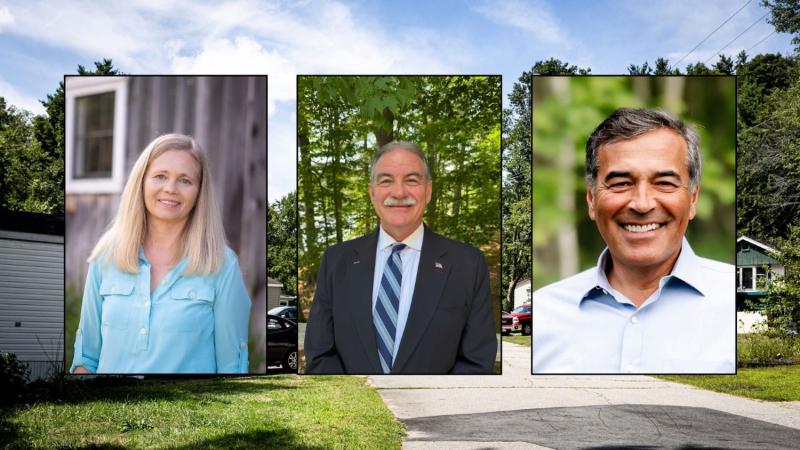 Democrat Hannah Pingree, Republican Bobby Charles and independent Rick Bennett are running for governor. Photos of the candidates courtesy of their campaigns; background photo by Troy R. Bennett.
Democrat Hannah Pingree, Republican Bobby Charles and independent Rick Bennett are running for governor. Photos of the candidates courtesy of their campaigns; background photo by Troy R. Bennett.
Democrat Hannah Pingree, Republican Bobby Charles and independent Rick Bennett are running for governor. Photos of the candidates courtesy of their campaigns; background photo by Troy R. Bennett.
When it comes to securing Maine’s future, few issues are spoken about with more urgency than making housing more available and affordable.
This summer, 90 percent of people who took a survey conducted on behalf of the Maine Affordable Housing Coalition said the next governor should address the state’s housing shortage and the cost of housing.
The median cost of a home in Maine increased by 67 percent from August 2019 to this August, according to the Maine Association of Realtors. The median monthly rent for a two-bedroom unit increased by 52 percent from 2019 to 2025, the latest state data shows.
Some forces driving up housing costs are outside a governor’s control, such as the increase in prices for building materials, which are largely affected by inflation and trade disputes — issues dealt with at the federal level.
But there are steps that the state could take to increase the housing stock and bring costs down. The three candidates for governor each want to address regulations, taxes and workforce issues, but they have their own views on what they would prioritize if elected.
In September interviews with The Maine Monitor, Democrat Hannah Pingree promised to continue Maine’s efforts to invest in building affordable housing; Republican Bobby Charles said he is eyeing property tax cuts; and independent Rick Bennett vowed to help homebuyers directly.
Bobby Charles
Charles, a former U.S. State Department official, is focused on relieving Mainers’ property tax burdens to keep people in their homes. He has promised to increase the homestead exemption. The exemption currently allows for permanent residents of Maine to lower their property tax bill by reducing the value of their permanent home by up to $25,000. Charles is proposing to increase the exemption to $100,000. Pingree and Bennett support expanding the exemption, too.
Charles wants to revamp Maine’s revenue-sharing system, which sends 5 percent of the state’s sales, income and other tax revenues to towns and cities to help them reduce their property tax burdens. About 20 percent of the total revenues distributed is directed toward municipalities with “disproportionate tax burdens.”
Those communities have to qualify as needing an adjustment for “sudden and severe disruption” of property valuations. In 2027, the top five municipalities getting the greatest amount of this money are expected to be Bangor, Lewiston, Auburn, Waterville and Orono, according to projections from the Maine Office of the State Treasurer.
Charles believes the state’s current system gives more money to towns with higher taxes, thereby “incentivizing local governments to keep your taxes high. It kills accountability and fuels irresponsible spending,” Charles argues on his campaign website. He said he would reward towns that lower their property taxes with more revenue.
And he said he would reduce “unfunded mandates,” referring to laws he believes have been passed by state lawmakers without appropriate funding, thus pushing costs to local governments. Separately, he has promised to eventually eliminate the income tax, the second-biggest provider of revenue in Maine behind property taxes.
He has also proposed reducing regulations, saying permitting and some requirements for roofing, insulation and sprinklers are unnecessarily driving up costs.
“You’ve got to allow the builders to go ahead and build without a lot of these regulations,” he said in his interview with The Monitor. “You need to think in terms of: How do you lower property taxes, so people can stay in the house?”
Hannah Pingree
Pingree spent six years as director of the Governor’s Office of Policy Innovation and the Future. Her office is credited with putting a number to the housing crisis, finding in 2023 the state would need up to 84,000 new units by 2030 to keep up with demand.
The policies she has proposed to pursue as governor would largely build on current initiatives, including spending $100 million on building new housing and preserving existing homes; expanding programs that support building affordable middle-income and senior housing, as well as the state’s mortgage program for first-time buyers; and working with private companies, nonprofits and land trusts to match state funds with their resources to secure land for housing.
Pingree said she will try to protect what affordable housing already exists in part by continuing Maine’s efforts to help mobile home park residents facing increased lot rents by supporting co-operative forms of ownership and preventing sales to out-of-state investors. She said she will use funding incentives to ensure older housing stock is preserved.
Pingree has also pledged to review the state’s permitting processes at the Maine Department of Environmental Protection, the Maine Office of State Fire Marshal and elsewhere.
She aims to boost the state’s local construction workforce by pledging to permanently fund free community college, and work with companies and unions to create more apprenticeship programs. Those efforts would both help Maine’s economy and the housing situation, she said.
“We have got to do everything we possibly can to make it easier to build housing, to let the market build more housing, let people do more of what they want on their own land, but also subsidize some of the housing units that we need,” she said.
Rick Bennett
Unique to Bennett’s housing proposal is a focus on giving money to homebuyers directly. He argued the upfront cost of buying a house — with the average price now above $400,000 — is one of the biggest obstacles people face, and is driving up the average age of first-time buyers.
“Somebody who’s 45 years old taking out a 30-year note for their first home, it’s not where we should be,” Bennett said.
Bennett would have the state help Mainers pay their monthly mortgage bills in return for the state getting a cut of the improved appreciation when the home is sold in the future. He also promised to create a state-backed down payment guarantee that would help first-time homebuyers purchase a home with less cash upfront.
The state had a homeowner assistance fund for people struggling to pay their mortgage during the COVID-19 pandemic that used American Rescue Plan Act money. It also runs a first-time homebuyer program. But Bennett’s proposal is different because it would use state money to insure up to three-quarters of a down payment as a second party to a lender. While buyers would still be responsible for the full down payment, they would have to provide less of it upfront.
Bennett, a state senator who operates two rental properties, has also said he would propose a bond to “support Maine’s factory-built housing industry, improve the state’s housing workforce and repair our existing homes,” according to his campaign website.
His approach to improving the permitting system would be to create an online system where a permit can be tracked, so officials can follow its path and see where there are hang-ups.
A multi-faceted problem
The next governor will have to contend with a number of competing interests and constituencies who bring their own views to housing issues.
Municipalities, for instance, don’t want the state to set one-size-fits-all zoning rules, said Kate Dufour, director of advocacy and communications for the Maine Municipal Association. Instead policymakers could offer different models for municipalities to choose from to encourage growth while still adhering to the towns’ own plans, she said.
Developers, meanwhile, see a twofold benefit — for both builders and homebuyers — in reducing the time it takes to permit and build homes.
Builders typically take out construction loans to finance their projects, which generate interest and drive up the price of the house the longer they take to be built. The National Association of Home Builders estimates about 26 percent of the cost of a single-family house comes from dealing with regulations at all levels of government.
Finding ways to shorten the permitting process “can lower the costs by thousands of dollars,” said Karl Eckhart, vice president of state and local government affairs for the National Association of Home Builders.
Finally, groups supporting the creation of more affordable housing emphasize the need for continued state funding.
Housing cost relief has traditionally targeted households making below 60 percent of an area’s median income, but state support for people making above that threshold — through programs such as the Maine State Housing Authority’s Rural Affordable Housing Program — shows the housing crunch affects Mainers at all levels, said Laura Mitchell, executive director of the Maine Affordable Housing Coalition.
Mitchell said the government should view housing much like the roads and bridges it helps pay for — essential infrastructure that keeps communities together.
Without state funds, “a lot of this housing would not get built, period,” she said, “and not at a price affordable to people working in Maine.”
Matt Junker contributed reporting.
This story was originally published by The Maine Monitor, a nonprofit civic news organization. To get regular coverage from The Monitor, sign up for a free Monitor newsletter here.