Finding Our Voices educates medical students about domestic abuse
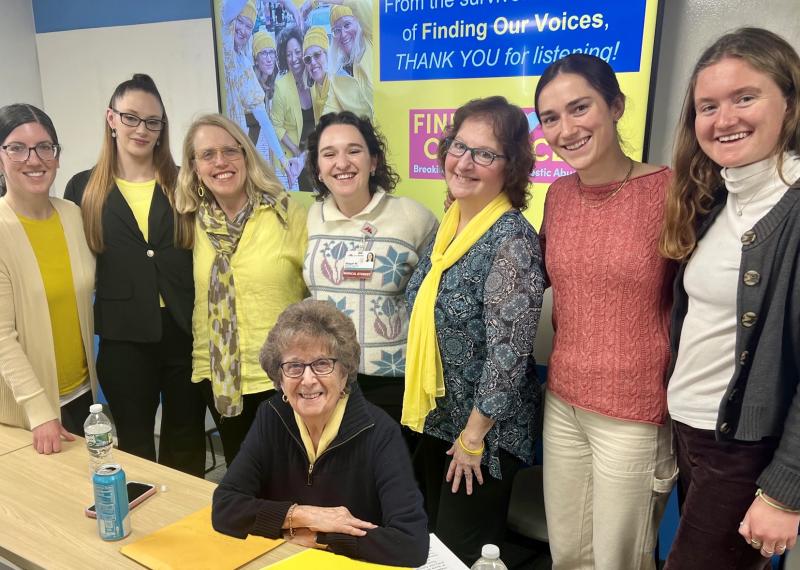 Finding Our Voices survivors shared how they were treated by medical professionals as part of a training about intimate partner abuse to 40 future doctors at Tufts Medical School in Portland. From left to right, Survivors Laudan Ghayebi, Noel Richardson, and Patrisha McLean, Student Abby Mueller, Survivor Mary Kamradt, and students Lucy Rickerich and Katherine Leggat-Barr. Seated in front is Survivor Mary Lou Smith. Photo supplied by Finding Our Voices.
Finding Our Voices survivors shared how they were treated by medical professionals as part of a training about intimate partner abuse to 40 future doctors at Tufts Medical School in Portland. From left to right, Survivors Laudan Ghayebi, Noel Richardson, and Patrisha McLean, Student Abby Mueller, Survivor Mary Kamradt, and students Lucy Rickerich and Katherine Leggat-Barr. Seated in front is Survivor Mary Lou Smith. Photo supplied by Finding Our Voices.
Finding Our Voices survivors shared how they were treated by medical professionals as part of a training about intimate partner abuse to 40 future doctors at Tufts Medical School in Portland. From left to right, Survivors Laudan Ghayebi, Noel Richardson, and Patrisha McLean, Student Abby Mueller, Survivor Mary Kamradt, and students Lucy Rickerich and Katherine Leggat-Barr. Seated in front is Survivor Mary Lou Smith. Photo supplied by Finding Our Voices.Finding Our Voices survivors from four areas of Maine provided future doctors with training on how to save and soothe lives of domestic abuse victims at a presentation to second-year students at Tufts Medical School in Portland.
The three-hour presentation to 40 obstetrics and gynecology students was given by domestic abuse survivors Laudan Ghayebi from Falmouth, Mary Lou Smith from Scarborough, Patrisha McLean and Mary Kamradt from Midcoast Maine, and Noel Richardson from Fryeburg.
Ghayebi presented an original data-driven slideshow examining domestic abuse as a critical public health issue and highlighting its profound physical, psychological, and long-term health impacts. The 45-minute slideshow also emphasized the role of healthcare providers in recognizing abuse and responding with trauma-informed, survivor-centered care.
Ghayebi is a public health professional specializing in disaster preparedness, infectious disease epidemiology, and public health education. She prefaced the slideshow by telling the students, "Throughout my career, I’ve spoken to large audiences countless times. But speaking about domestic abuse from my own experience is different; this nervousness comes from shame, worry, fear of retaliation, and the weight of ongoing post-separation abuse. I may appear composed, but my body tells a different story."
Ghayebi and the four other survivors from Finding Our Voices took turns talking about their experiences with the medical establishment.
Richardson, a Central Maine Community College student, told of how at Franklin Memorial Medical Center everyone from the registration clerk to triage nurse to doctor were "amazing" after her ex had punched her in the face, and took particular care in reassuring her that she was safe in taking pain medication against his habit of falsely accusing her of substance abuse in trying to get custody of their child.
There was also plenty of testimony to missed opportunities by medical professionals in providing comfort, treatment, validation, and resources to domestic abuse agencies.
"A number of times I literally saw students' jaws drop," Patrisha McLean, CEO+Founder of Finding Our Voices said of this part of the presentation. "Once was when Mary Kamradt, our Director of Operations, told of being treated for smoke inhalation and shock after her husband burned down their house. She told the female doctor her husband had set their house on fire, killing the family dog, and the doctor replied, 'How sad. My husband can be mean sometimes, too.'"
Said one of the students about the Finding Our Voices presentation: "After hearing what domestic abuse looks like on a personal scale, I feel better equipped to look out for the warning signs in my patients, and also to hold space for patients who may be in domestic abuse to share their struggles."
The nonprofit is continuing to work with the Tufts students in developing more effective screening for domestic abuse by medical professionals than the current "Do you feel safe at home" question which survivors in the group all contend is useless.
Finding Our Voice is the grassroots nonprofit breaking the silence of domestic abuse and providing resources to women survivors toward personal healing and systemic change across Maine. Its programs include Get Out Stay Out funding, donated dental care, an online support group, and Healing Together retreats. Its prevention work includes a winter/spring 2026 classroom tour of 16 high schools from Sanford to Calais that starts with a young person sharing their experience of dating abuse. For more information visit https://findingourvoices.net.

Sponsored Content
Main Street Shop