
Want to strengthen democracy? Start here in our community.

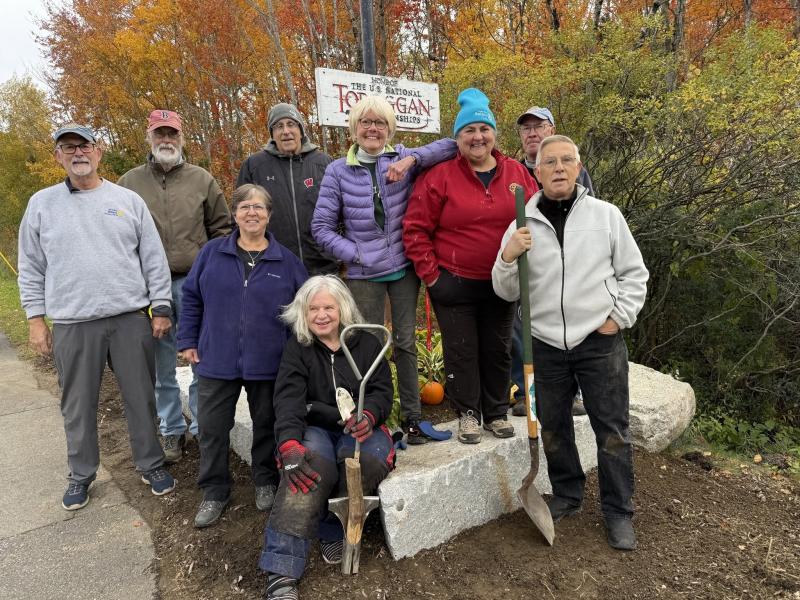 Organizations like Rotary Clubs in our community strengthen democracy by mobilizing our neighbors towards a common goal and practicing good governance.
(Photo source: West Bay Rotary Club Facebook page)
If you want to see democracy in action, you don’t have to go to Augusta or Washington, DC. You can see it right here, every day, in Midcoast Maine.
It happens when neighbors organize a community cleanup, volunteers serve meals to people in need, a church brings people together to help a struggling family, or a nonprofit board works through a difficult decision about the future of its organization.
These activities might not look like democracy at work. But I believe they are among the ways we sustain it.
After more than 30 years working in the nonprofit sector, I have come to appreciate that charitable organizations do more than deliver services, protect the environment, preserve cultural institutions, or raise money for worthy causes. They also give opportunities to practice the skills democracy requires: listening to one another, working towards common goals, making collective decisions, and taking responsibility for the results.
This is an idea I explore in an upcoming commentary that is scheduled to come out later this fall in an academic journal that I will share via LinkedIn once it is published. In the meantime, and in honor of Election Day, I wanted to bring that argument closer to home, because our community has a remarkable civic resource that deserves our attention: our tradition of volunteering and community involvement.
Nearly 200 years ago, French political philosopher Alexis de Tocqueville observed that Americans had an unusual ability to organize ourselves around shared concerns. de Tocqueville recognized that these associations did more than solve practical problems: they helped people learn how to govern themselves and participate in democratic life.
Maine has a strong foundation
According to a 2024 study of Maine’s civic life conducted by the Goldfarb Center for Public Affairs at Colby College, our state ranks third nationally in volunteering. That is something to celebrate. Whether you serve on a nonprofit board, help a local food pantry, support a local library, protect a favorite stretch of coastline, or volunteer at a community event, you demonstrate that you are willing to invest your time and energy in something larger than yourself.
But volunteering alone does not guarantee a healthy democracy: what matters is how organizations operate and how we treat the people who place our trust in us. In my experience, five principles are especially important.
First, we need a common purpose.
Think about what happens when people come together to save a beloved community institution, support a neighbor facing hardship, or protect a treasured natural resource. They may have different political views, different backgrounds, and different ideas about how to solve a problem. Yet a shared goal gives them a reason to work together.
Democracy requires that same willingness to look beyond our individual preferences and find ways to advance the common good. We will not always agree, but we must be willing to work alongside people with whom we disagree.
Second, we need trust.
Every nonprofit depends on trust. Donors trust that their money will be used responsibly. Volunteers trust that their time will make a difference. People who rely on an organization’s services trust that it will act in their interests.
That trust cannot be taken for granted. It must be earned through responsible decisions, consistent actions, and respect for the people an organization serves.
The same is true of our public institutions. When trust erodes, participation becomes harder to sustain. When trust is earned, people are more willing to contribute, cooperate, and take part.
Third, we need transparency.
One of the most important lessons that any nonprofit can learn is that being honest about problems can strengthen an organization rather than destroy it.
Transparency means more than sharing good news. It means acknowledging mistakes, explaining difficult decisions, and being candid about what is not working.
In 2010, The Chronicle of Philanthropy reported on Water for People, an international nonprofit organization working to expand access to clean water. The article explored problems with water systems, community support, and maintenance. It also described substantial philanthropic support, including grants from the Gates and Case Foundations.
The lesson is not that admitting mistakes automatically attracts money. It is that honesty gives donors and other stakeholders the information they need to understand a problem and an invitation to help address it.
Our communities need that same candor. We cannot solve problems if we refuse to acknowledge them, and we cannot hold institutions accountable if we do not know what they are doing.
Fourth, we need good governance.
Serving on a nonprofit board is an opportunity to practice democracy in a very practical way. Board members must consider different perspectives, weigh competing priorities, make decisions together, and accept responsibility for their choices. Good governance also requires putting the organization’s mission ahead of any one individual’s interests.
A nonprofit should not simply become an extension of its founder, executive director, or largest donor. Its leadership must be accountable to the mission and the people the organization exists to serve.
This can be uncomfortable. It sometimes means asking difficult questions of people we admire or challenging decisions made by someone who has devoted years to an organization. But responsible oversight is not a lack of loyalty: it is part of the responsibility that comes with leadership.
Finally, we need accountability.
Charitable organizations enjoy an important place in American society. Many receive tax-exempt status because they serve purposes that benefit the public. In return, they have obligations to use their resources responsibly and in accord with their missions.
Accountability requires boards to oversee finances, monitor performance, manage risks, and ensure that decisions serve the organization’s purpose rather than private interests. It also means recognizing that no one person should have unchecked authority simply because they founded an organization, made a big gift, or hold a leadership position.
These principles apply to public institutions as well. In a democracy, authority comes with responsibility, and those entrusted with it must answer for how they exercise it.
What can we do here in Midcoast Maine?
We have a great deal to build on. But strong volunteer participation should be a starting point, not a reason for complacency.
If you volunteer, consider how you can contribute beyond completing a task. Ask questions. Offer ideas. Help the organization you serve become more transparent and accountable. If you serve on a board, make sure meetings encourage thoughtful discussion and that everyone has a meaningful opportunity to participate.
If you support a nonprofit organization financially, take an interest in how it operates – not just what it accomplishes. Ask how it measures success and how it responds when things go wrong.
And if you are not currently involved in a community organization, consider finding one whose mission matters to you. You do not have to take on a major commitment. A few hours of service, participation in a community project, or attendance at a local meeting can be a good start.
Most importantly, we should welcome people who bring different experiences and perspectives. Organizations become stronger when they make room for new voices, encourage honest discussion, and recognize that good ideas can come from unexpected places.
Democracy is more than casting a ballot every few years. It is a way of living together that depends on participation, trust, shared responsibility, and the willingness to hold ourselves and our institutions accountable.
These habits are learned and reinforced in everyday settings, including the nonprofits, civic groups, houses of worship, and volunteer organizations that are woven into the fabric of our community.
Maine already has a strong tradition of coming together to help our neighbors. We should be proud of that tradition and continue to nurture it. Because when we strengthen the organizations that serve our community, we do more than make Maine a better place to live: we help sustain the culture of democracy on which our community -- and our country -- depend.
Organizations like Rotary Clubs in our community strengthen democracy by mobilizing our neighbors towards a common goal and practicing good governance.
(Photo source: West Bay Rotary Club Facebook page)
About this blog:

Diane Lebson, CFRE, is CEO and Co-Founder of Evergreen Philanthropic Solutions, a Camden‑based consultancy that helps nonprofits in our community, throughout Maine, and across the country raise money and plan for their futures. She is also on the graduate faculty at the University of Maine's School of Policy and International Affairs where she teaches fundraising and nonprofit management. A member of the West Bay Rotary Club, Diane is the author of For A Good Cause: A Practical Guide to Giving Joyfully.