What to know about this year’s flu, COVID-19 and RSV shots
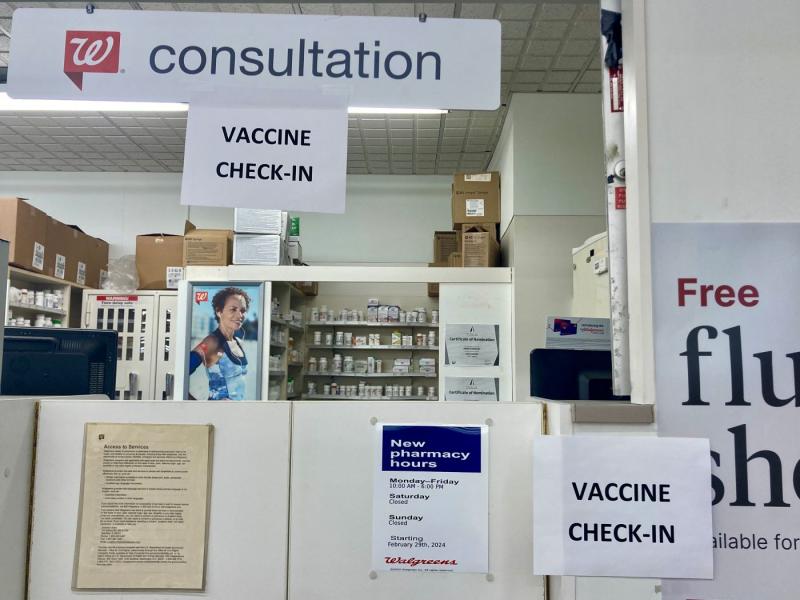 Flu shots on offer at a pharmacy in Portland in 2024. Photo by Stephanie McFeeters.
Flu shots on offer at a pharmacy in Portland in 2024. Photo by Stephanie McFeeters.
Flu shots on offer at a pharmacy in Portland in 2024. Photo by Stephanie McFeeters.
Doctors are encouraging Mainers to follow guidelines from major medical groups recommending regular annual vaccines ahead of the fall respiratory virus season.
National physicians’ groups, including the American Academy of Pediatrics, issued immunization recommendations last week. The groups cited recent research from the Vaccine Integrity Project at the University of Minnesota and the American Medical Association published in the medical journal JAMA that found that the latest influenza, COVID-19 and respiratory syncytial virus vaccines remain safe and effective against severe illness.
The groups said they are filling the need for a trusted source for vaccine recommendations as limited guidance is coming from the federal government.
Pediatricians in Maine said the recommendations are important in keeping children safe as they start the new school year.
“Parents are ready for their kids to come home with the runny noses and the coughs and all the things that come with going back to school,” said Dr. Kristy Perkowski, a pediatrician at the Northern Light Mercy Dr. Harry E. Davis Pediatric Center in Portland.
Even healthy children that don’t have underlying medical conditions can face severe and potentially life-threatening complications from the viruses, she said, “and it’s for that reason that the American Academy of Pediatrics has maintained the vaccine schedule that we’ve been working with for some time and hasn’t changed the recommendations.”
Typically, the federal Centers for Disease Control and Prevention would issue immunization guidelines this time of year, but the agency has so far not issued recommendations on COVID-19 or RSV shots and said health care providers should follow last year’s recommendations for the flu vaccine, citing “legal uncertainties and inquiries.” The agency’s advisory committee on immunization practices, a group of independent medical experts, has been in limbo since last year when Health and Human Services Secretary Robert F. Kennedy Jr. removed all committee members and replaced them with new members, including several vaccine skeptics.
“There has been a complete dismantling of the system that we use to ensure that we provide safe care with the best evidence,” said Dr. Laura Blaisdell, a pediatrician and the co-chair of the Maine Immunization Coalition. The guidelines from the medical groups are meant to fill that gap, she said, and ensure “Americans have evidence-based recommendations without political bias.”
This is the second year that the Vaccine Integrity Project has conducted a comprehensive review of scientific evidence on vaccine safety and effectiveness. The review found that the COVID-19, flu and RSV vaccines consistently reduced the risk of severe illness and hospitalization among various population groups, including children, pregnant individuals and older adults.
The fall respiratory virus season typically starts in October and hits its peak in December and January. There were nearly 1,400 flu-related hospitalizations in Maine during the 2025-26 respiratory virus season, as well as 528 hospitalizations related to COVID-19 and 243 hospitalizations related to RSV, according to data from the Maine CDC. There were 73 deaths associated with the flu and 65 deaths related to COVID-19.
Doctors in Maine have faced more questions from families about the safety of vaccines since the onset of the pandemic, as misinformation began to circulate, said Dr. Mary Ottolini, the chair of pediatrics at the MaineHealth Barbara Bush Children’s Hospital in Portland.
“Everywhere, parents are understandably very confused,” she said. “The best thing parents can do to keep their children out of the hospital this winter is to get them vaccinated.”
Here are the immunization recommendations issued last week by the American Academy of Pediatrics, American Academy of Family Physicians, American College of Obstetricians and Gynecologists and the Infectious Diseases Society of America:
Influenza
All children 6 months and older without underlying medical conditions should receive an annual flu vaccination, according to the groups’ recommendations. Children between the ages of 6 months and 8 years who have received fewer than two doses of the flu vaccine before July of this year or who have an unknown vaccine history should get two doses separated by at least four weeks. All other children 18 and younger should receive one dose of the vaccine.
“As soon as it is available in your area, it’s appropriate to get it,” said Perkowski, the Portland pediatrician. “You want to get it before flu is circulating, before we’re hearing of an increase in cases and certainly by the end of October so that you are prepared for the peak of flu season.”
All adults, including pregnant women, should receive an annual flu shot, per the groups’ guidance.
COVID-19
All children under 2 years of age should receive an annual updated COVID-19 vaccination, according to the recommendations. Children 2 years and older who are at high risk of severe illness, live in group homes or live in households with people at high risk of severe illness should also get vaccinated.
The pediatrics academy also said that any child two or older, regardless of risk factors, could get vaccinated if their parents wanted that.
Although the group did not issue specific recommendations for those children, Perkowski said parents on the fence should consider that the vaccine is effective at reducing emergency room visits and hospitalizations related to COVID-19.
“I always tell people there’s only so much we can do. There’s a lot of things we can protect against and some things we can’t,” Perkowski said. “And this is something where you can get additional protection.”
The groups also recommend that all adults, including pregnant women, receive an annual updated COVID-19 vaccine. Adults 65 and older should receive two doses six months apart.
Respiratory syncytial virus (RSV)
Women who are 32 to 36 weeks pregnant between September and March 1 should receive a dose of the RSV vaccine, per the groups’ guidance. Giving the vaccine during the last couple of months of pregnancy gives the body time to form antibodies and passes immunity to the baby.
RSV is particularly dangerous to infants. The vaccine that is administered during pregnancy is relatively new to the market, and Ottolini, the pediatrics chair at the Barbara Bush Children’s Hospital, said doctors are already seeing the impact.
“I can tell you it’s made a big difference in the number of babies that we are seeing who are hospitalized to begin with, and especially those who get really severely ill,” she said.
Infants under 8 months of age whose mothers were not immunized during pregnancy should receive monoclonal antibodies during their first RSV season, according to the recommendations. Children 8 to 23 months old at high risk of severe illness and children under 18 who are immunocompromised should also receive a vaccine during RSV season.
Adults between 50 and 74 who are at increased risk of severe illness should receive a one-time vaccination. All adults 75 and older should get the RSV vaccine.
This story was originally published by The Maine Monitor, a nonprofit civic news organization. To get regular coverage from The Monitor, sign up for a free Monitor newsletter here.