MidCoast Regional Housing Trust debuts renovated Rockport farmhouse soon to rent to the 'missing middle'
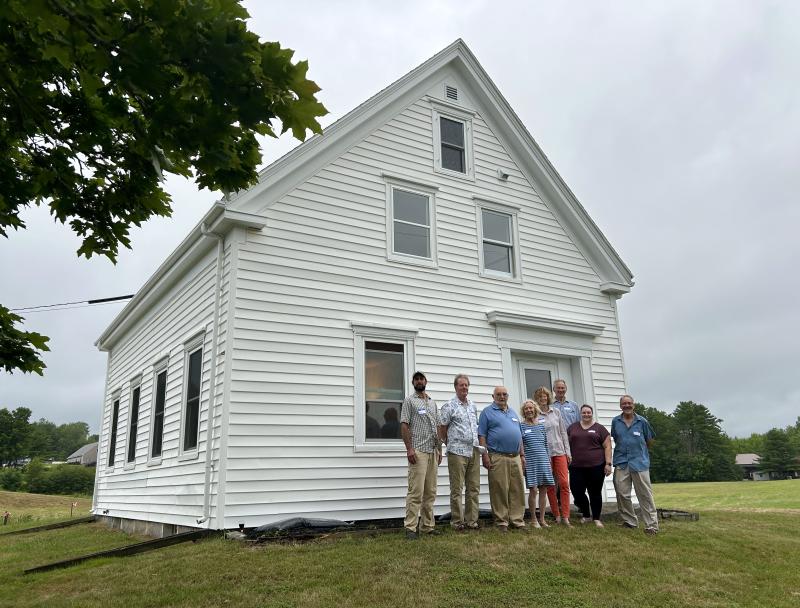 The Homestead, with MidCoast Regional Housing Trust board members and advisors, Aug. 3, from left to right: Aaron Englander, Maine Coast Heritage Trust; MCRHT architect and Board VP Peter Gross; Homestead Clerk of the Works Allen Mitchell; MCRHT fundraising committee members Joan Welsh, Claire Tully, Bob Fillnow and Committee Chair Laura Towne-Miller; and MCRHT Board President Jonathan Goss. (Photo by Lynda Clancy)
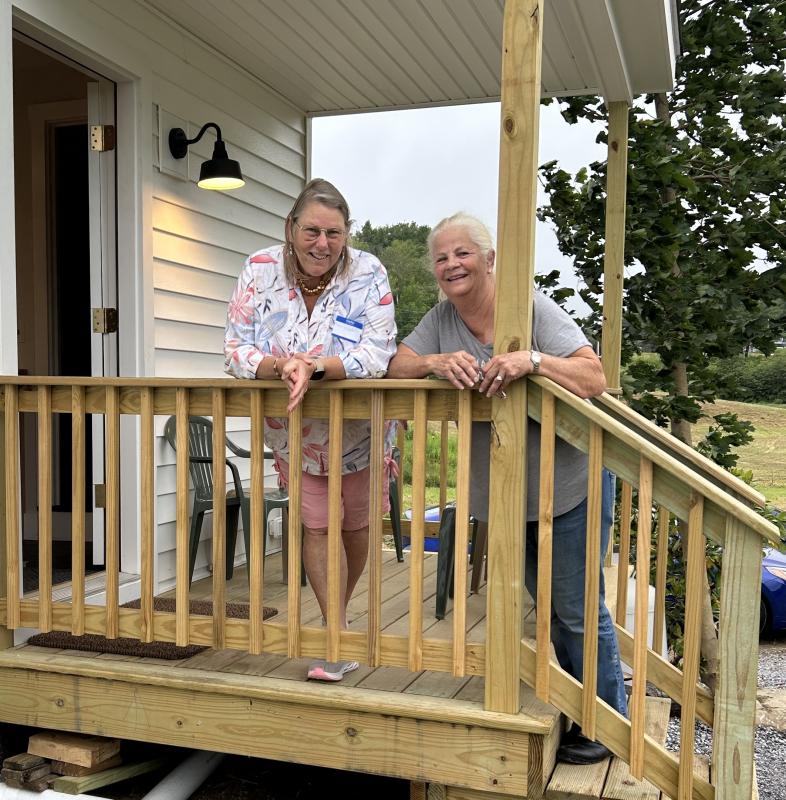 Julie Wheaton, who grew up in the Homestead house, with old family friend Susan Vanorse. Susan was a good friend of Julie's mother, Marieta, who died in 2023. The two often made plenty of grape jelly from the Concord grapes that were cultivated by Marieta Wheaton's grandparents a century ago on the edge of Erickson Fields. (Photo by Lynda Clancy)
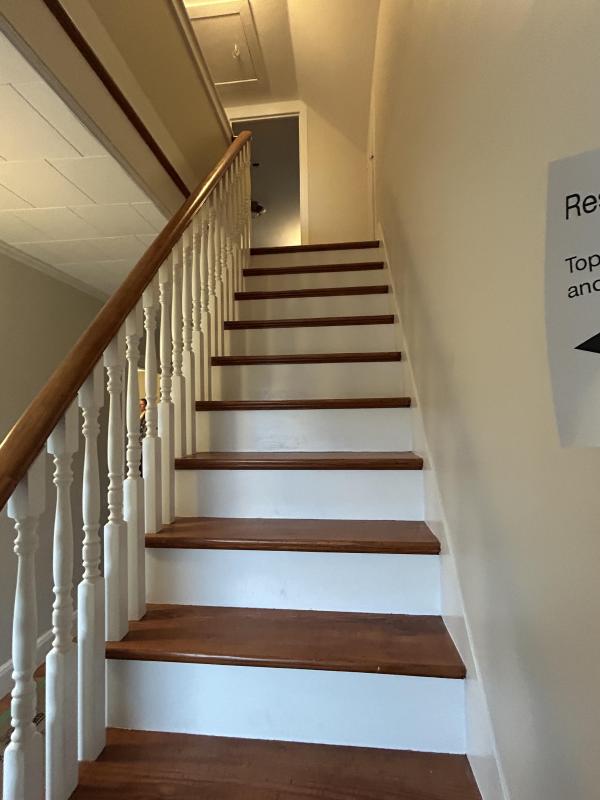 Inside the Homestead.
 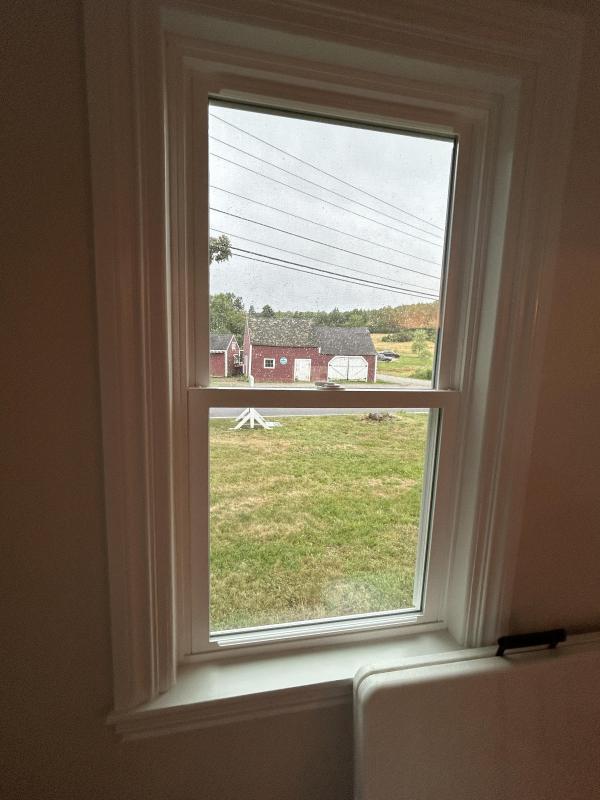 A view from the Homestead across the road to Erickson Fields.
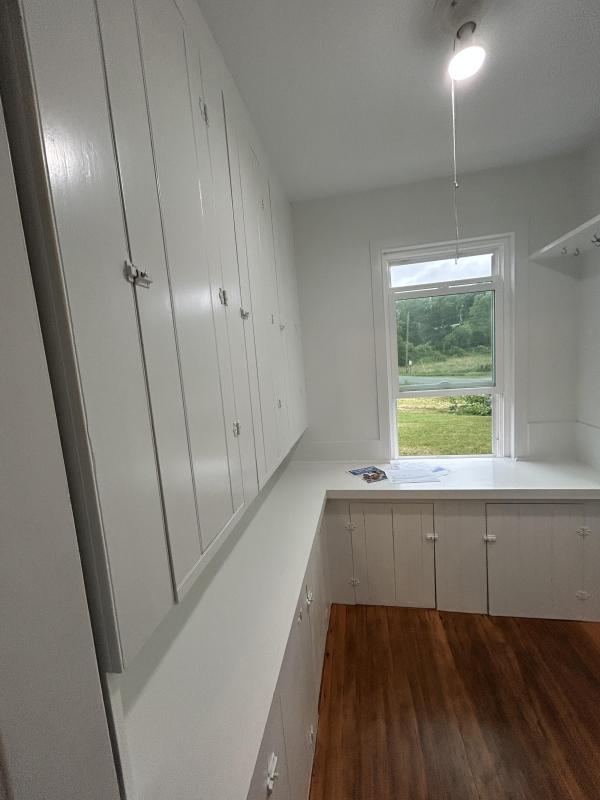 Old farm cabinets in the Homestead.
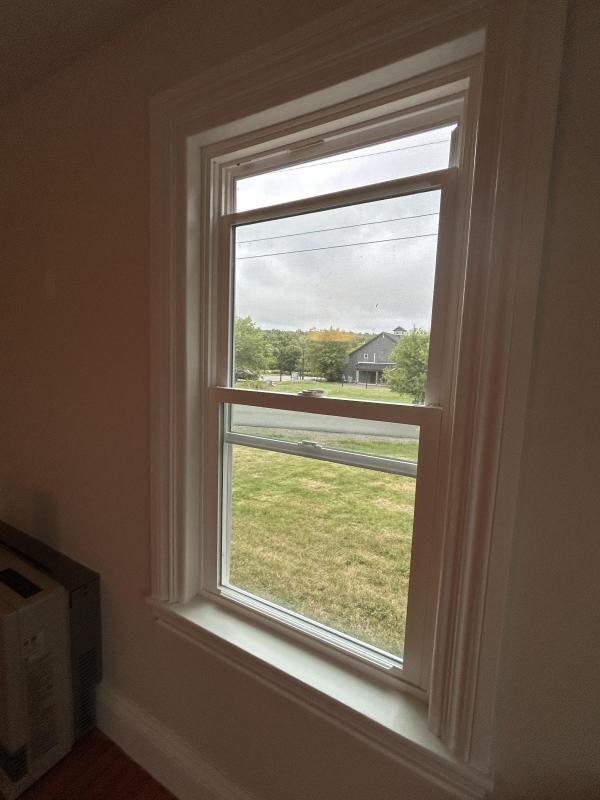 A view to the east, and the soon to be Montessori School, on Cross Street.
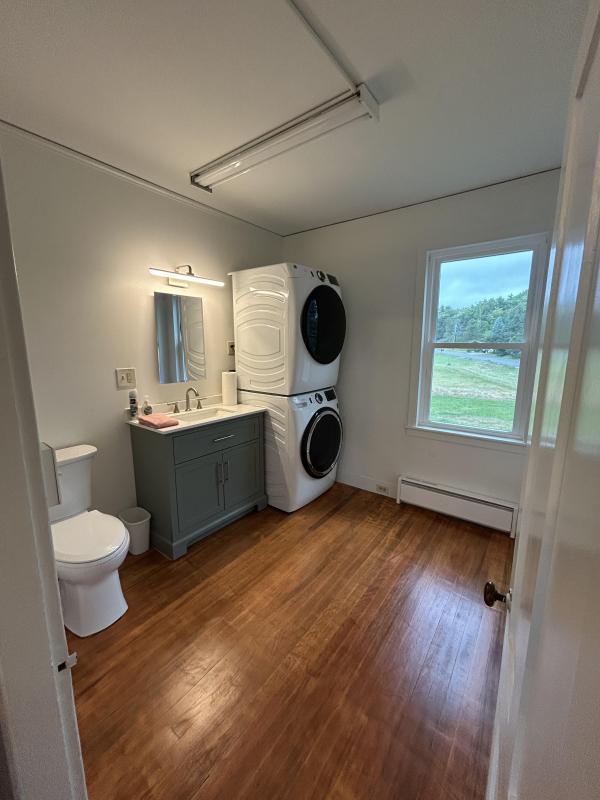 Family sized washer and dryer in the large downstairs bathroom.
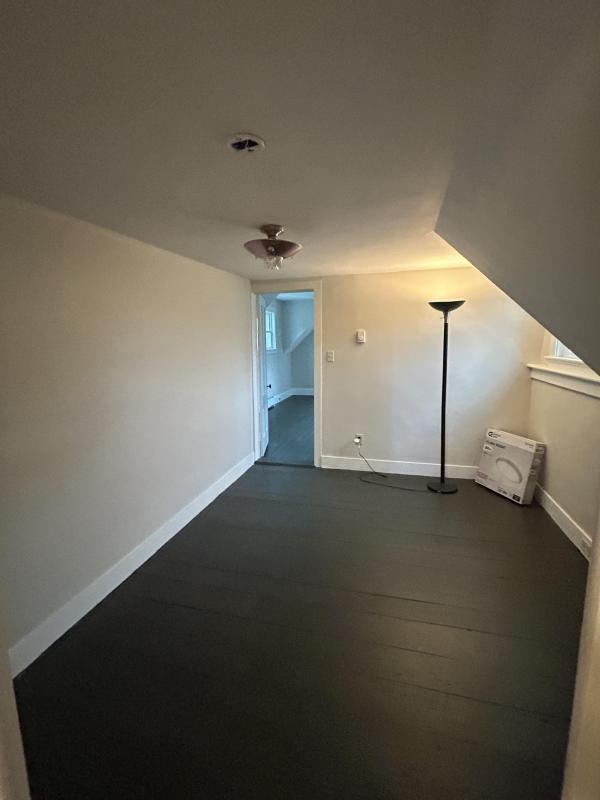 Upstairs, at the Homestead.
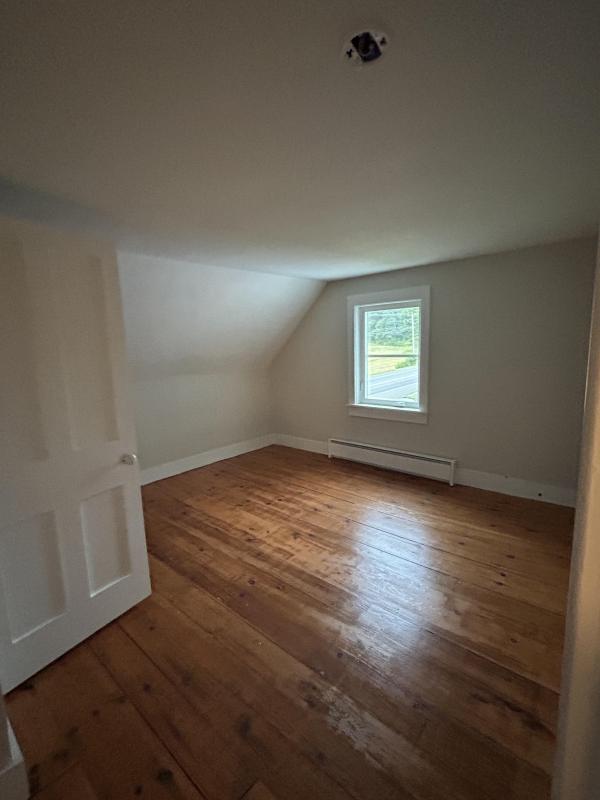 Upstairs, at the Homestead.
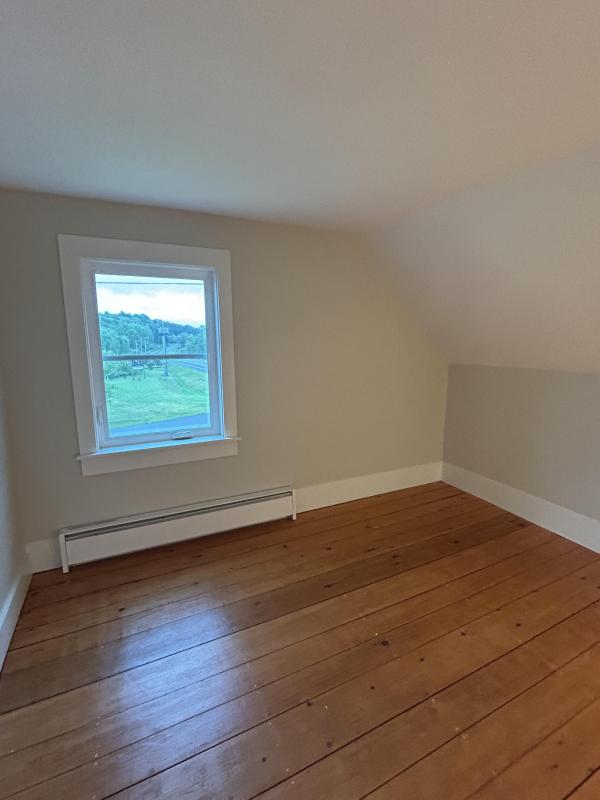 Upstairs, at the Homestead.
The Homestead, with MidCoast Regional Housing Trust board members and advisors, Aug. 3, from left to right: Aaron Englander, Maine Coast Heritage Trust; MCRHT architect and Board VP Peter Gross; Homestead Clerk of the Works Allen Mitchell; MCRHT fundraising committee members Joan Welsh, Claire Tully, Bob Fillnow and Committee Chair Laura Towne-Miller; and MCRHT Board President Jonathan Goss. (Photo by Lynda Clancy)
Julie Wheaton, who grew up in the Homestead house, with old family friend Susan Vanorse. Susan was a good friend of Julie's mother, Marieta, who died in 2023. The two often made plenty of grape jelly from the Concord grapes that were cultivated by Marieta Wheaton's grandparents a century ago on the edge of Erickson Fields. (Photo by Lynda Clancy)
Inside the Homestead.
A view from the Homestead across the road to Erickson Fields.
Old farm cabinets in the Homestead.
A view to the east, and the soon to be Montessori School, on Cross Street.
Family sized washer and dryer in the large downstairs bathroom.
Upstairs, at the Homestead.
Upstairs, at the Homestead.
Upstairs, at the Homestead.
Upstairs, at the Homestead.
The Homestead, with MidCoast Regional Housing Trust board members and advisors, Aug. 3, from left to right: Aaron Englander, Maine Coast Heritage Trust; MCRHT architect and Board VP Peter Gross; Homestead Clerk of the Works Allen Mitchell; MCRHT fundraising committee members Joan Welsh, Claire Tully, Bob Fillnow and Committee Chair Laura Towne-Miller; and MCRHT Board President Jonathan Goss. (Photo by Lynda Clancy)
Julie Wheaton, who grew up in the Homestead house, with old family friend Susan Vanorse. Susan was a good friend of Julie's mother, Marieta, who died in 2023. The two often made plenty of grape jelly from the Concord grapes that were cultivated by Marieta Wheaton's grandparents a century ago on the edge of Erickson Fields. (Photo by Lynda Clancy)
Inside the Homestead.
A view from the Homestead across the road to Erickson Fields.
Old farm cabinets in the Homestead.
A view to the east, and the soon to be Montessori School, on Cross Street.
Family sized washer and dryer in the large downstairs bathroom.
Upstairs, at the Homestead.
Upstairs, at the Homestead.
Upstairs, at the Homestead.ROCKPORT — It was a celebration on multiple fronts: New housing has been created in a region that lacks available properties. An old farmhouse was successfully renovated in a matter of months, while maintaining its historical legacy. And, a community came together to preserve and enhance not only Rockport's agricultural heritage, but to help create a neighborhood in an area of town that is increasingly dedicated to education and farming.
On August 3, members of the MidCoast Regional Housing Trust and Maine Coast Heritage Trust, along with local architects, contractors and friends gathered at the recently renovated farmhouse on the corner of Cross Street and Route 90 in Rockport to mark the building's new lease on life. The home had been in Marieta (Erickson) Wheaton's family for generations, until she died in 2023 and the six-acre property and house was subsequently transferred to Maine Coast Heritage Trust.
It has been a slow and steady process, based on a collaboration between nonprofits that value land conservation and housing for working people.
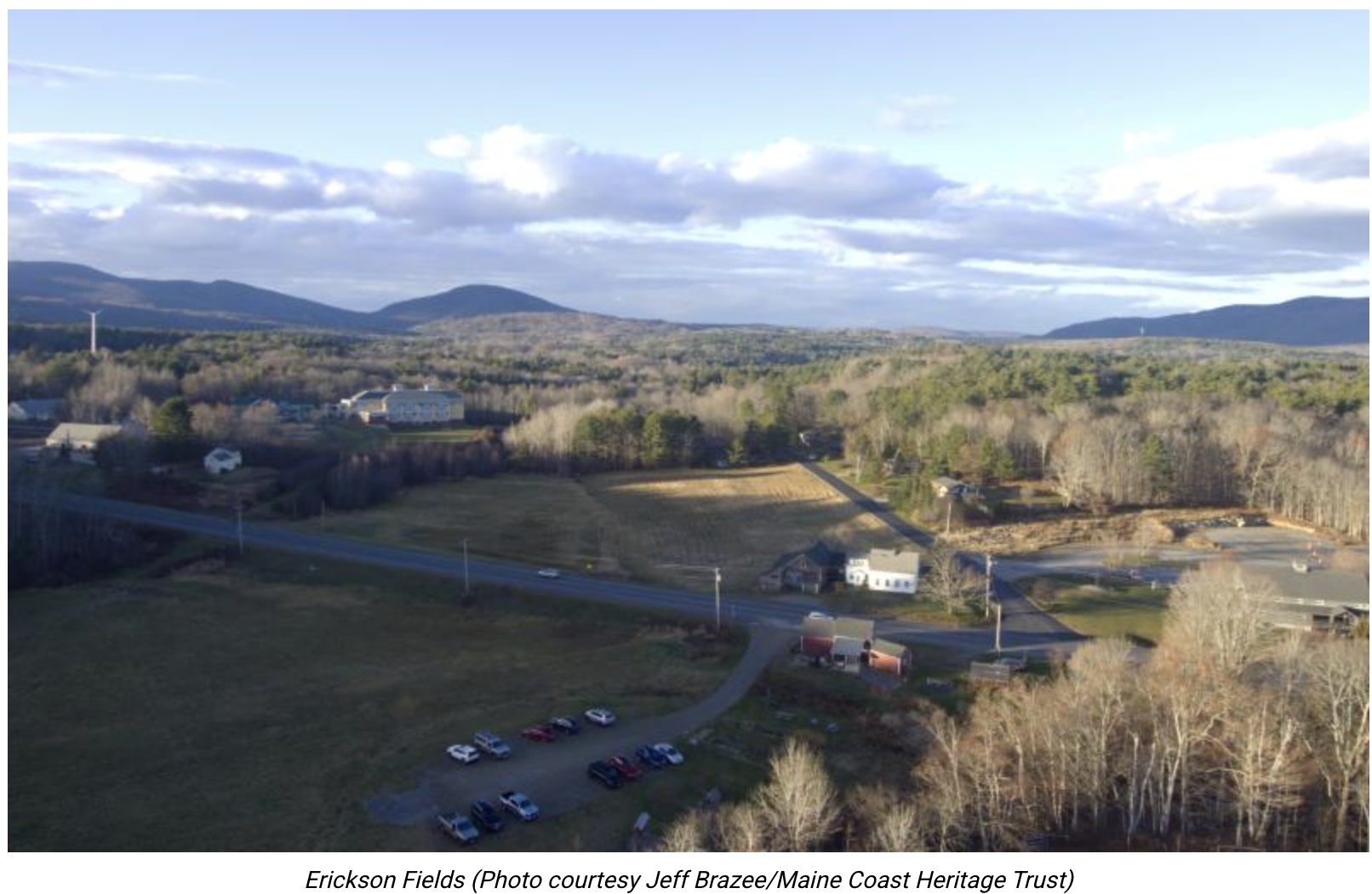
Its roots lie in the 2009 Maine Coast Heritage Trust acquistion of Erickson Fields, a large tract of open space, and now community gardens, across the street from the farmhouse. The land trust, which owns Aldermere Farms in Rockport, had acquired Erickson Fields from Wheaton, adding acreage to its agricultural programs.
After Wheaton died, the land trust acquired the six-acre lot on which Wheaton's farmhouse sits and began collaborating with the nonprofit MidCoast Regional Housing Trust, whose goals are specific to helping expand housing stock for a demographic often overlooked by market forces. The housing trust defines that demographic as the 'missing middle' — not served by low income housing and affordable housing, nor high-end luxury housing — but the middle market.
In November 2025, the Maine Coast Heritage Trust facilitated the donation of the 1850s farmhouse and one acre to the MidCoast Regional Housing Trust. Since then, work has been going full throttle with the renovation of the house — now known as the Homestead — as well as the design and engineering of two new buildings that will each house four one- and two-bedroom apartments.
Housing Trust Board President Jonathan Goss stood in the living room of the farmhouse Aug. 3, talking with community members about the project. The walls of the home were freshly painted, and the wood floors, some original pumpkin pine, gleamed. Goss thanked a variety of involved volunteers, including housing trust board members, and answered questions of neighbors about next steps.
He reiterated the trust's focus on the missing middle, that middle-income segment of the population that has been squeezed out of available housing, thanks to market forces, lack of new construction, a deficit in the number of homes available to rent or buy, and a growing Midcoast population.
And with housing at a premium, those in the workforce move elsewhere, Goss said. Which leaves local businesses, hospitals and institutions without staff, and schools with shrinking enrollments.
"Our target is the working households who do not qualify for subsidized housing, but in a way, cannot afford the housing that we have in Knox County," said Goss.
"Our workforce is shrinking," he said. "Those of us who have been here for a long time are retiring. We're not able to attract these workers. Talk to any business owner about how hard it is to offer jobs to someone, and have them turn it down because they can't find housing that fits with the salary they've been offered. That's a challenge."
Goss and the housing trust intends to answer the needs of households earning between 80-150% of the Area Median Income. The housing trust's targeted demographic includes households with an annual gross income range of $56,000-$145,000 per year, depending on household size.
For Rockport and Knox County, the AMI is $98,300, according to the Federal National Mortgage Association (FNMA), or FannieMae.
AMI, according to the Maine State Housing Authority, is: "the total household income of the middle household, when all household incomes in the area are ordered from smallest to largest. Half of households earn more than this amount and half earn less. The area of an AMI can refer to the entire state, a county, a town, or other geographic region."
The Homestead
The MidCoast Regional Housing Trust about to open the application process for prospective renters of the renovated Homestead, and is making final construction improvements.
The Homestead, which is a single-family home, has a living room, front parlor, bathroom and laundry, a rebuilt kitchen, a small back deck, and several upstairs bedrooms. The details are classic Maine farmhouse, a building that is both cozy and rambling. It also carries its own unique architectural touches, such as a curved wall below the front staircase, courtesy of a period of time when Rockport Harbor was booming with industry, and shipbuilding.
It is believed that the 19th-Century shipwrights, who were handcrafting massive three- and four-masted schooners in Rockport Harbor, took their skills of curving planks into graceful hulls and carefully outfitting the vessels with cabinetry into building Rockport houses during the winter months.
The house has built-in cabinets, and a set of back stairs that have been worn comfortably by the tread of generations bounding up and down from bedrooms to the kitchen. It is a farmhouse with character. And now it has insulated walls in the basement, as well as upgraded heating systems to keep new tenants warm.
Julie Wheaton, Marieta's daughter, was pleased to see the progress made with her family's old home, and is happy to know it will be occupied by residents wanting to live in Rockport. She was at the gathering, describing the historical legacy of the Erickson family, who once farmed the large tract of land that the land trust now owns and contributed to the town's agricultural heritage.
The Homestead is in close proximity to schools, with the Camden-Rockport Elementary School just over the back field, and the Camden Hills Regional High School but half a mile west.
Directly across the street is the former Anchor Church, which was recently acquired by the Lesher Foundation and is due to be sold to the Children's House Montessori School as that independent school relocates — and returns — to Rockport from Camden.
While housing is to be constructed on the housing trust's parcel, the surrounding open field will remain in farmland, said Aaron Englander, Associate Director of Stewardship at Aldermere Farm and Erickson Fields. The intent, he said, is to put more garden space in the back corner of the field.
"We'll keep the programming on the farm [Erickson Fields], with the kids having easy access from the school," said Englander, commenting on the integration of education and agriculture. "There are going to be a lot of families who will need a place to grow food. The whole project is meant to show how we can do land conservation, preserve agricultural soils, and housing, and provide access to trails and green space so people can have a nice quality of life and a place to live," he said. "That is hard to find nowadays."
Goss said Maine Coast Heritage Trust: "is leading the way. I have been to some of their meetings and there are a lot of conservation trusts in the state that want to learn how this works. I know that Aaron and his team, and our team, are hoping that this will be a positive model to be replicated."
To replicate this model, "we wouldn't be able to do it without each other," said Goss.
And in answering a question from those gathered, he said the housing trust is open to land donations, in general.
"If anyone had property that they would like to see be used in the fashion that the housing trust is planning, we would love to hear about it," said Goss. "We would love to find out how that could work."
As for the Homestead, the housing trust will be establishing an application center posted at MCRHT.ORG
"We are optimistic that we will be vetting applications in late August and identifying a household for the farmhouse by the first half of September," said Goss.
"The high cost of housing isn’t just an economic problem; it’s a community problem. When the people who teach our children, respond to emergencies, or manage restaurants, can’t find housing nearby, the Maine we know begins to fray. Towns lose their heartbeat. Schools lose families. Local businesses lose workers.
"At the Midcoast Regional Housing Trust, we focus on what’s known as the “missing middle” — households that earn too much to qualify for subsidies but far too little to compete in today’s market. These are our neighbors, our co-workers, our friends. Everyone deserves a chance to live where they work and contribute to the communities they love." — Jonathan Goss
Read: Keeping the Maine we love within reach
Reach Editorial Director Lynda Clancy at lyndaclancy@penbaypilot.com; 207-706-6657