‘Massive Easter egg hunt’ yields new record of puffin burrows on Eastern Egg Rock
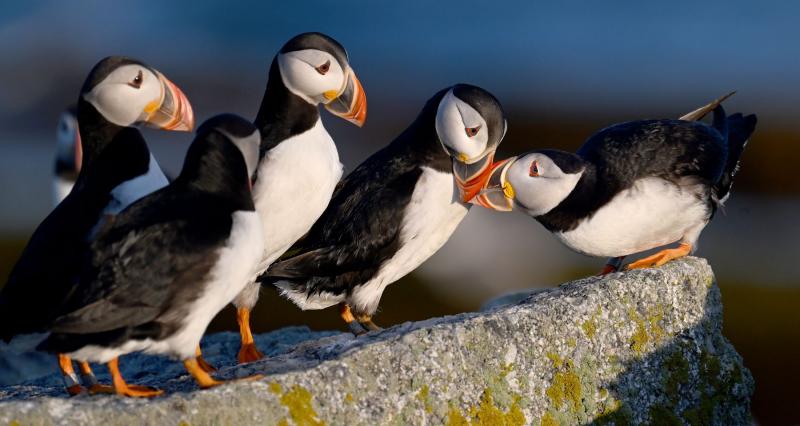 Puffins on Eastern Egg Rock in July 2026. Photo by Derrick Z. Jackson.
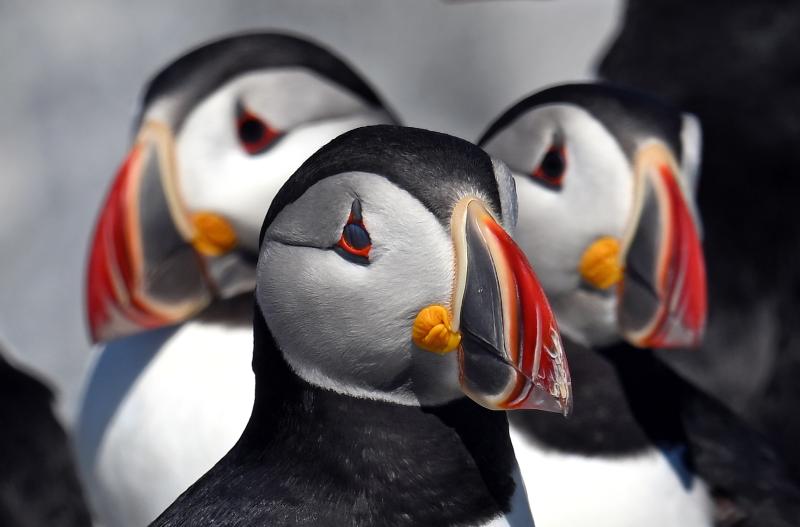 Puffins on Eastern Egg Rock. Photo by Derrick Z. Jackson.
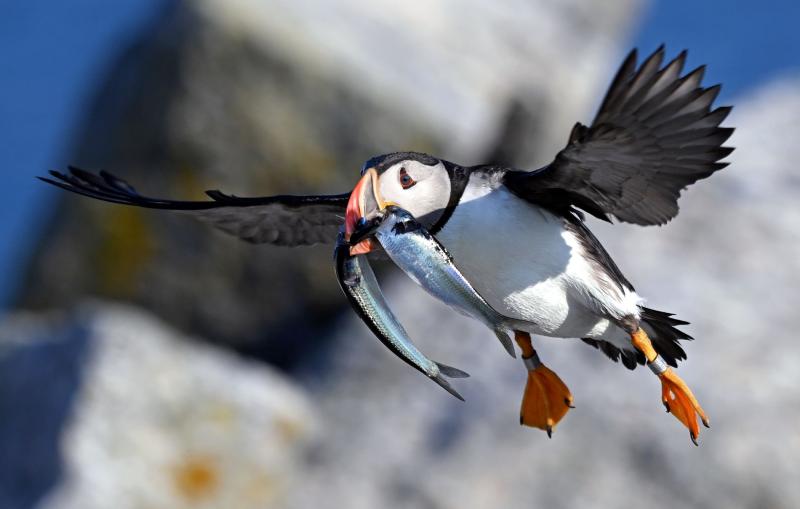 A puffin returns to Eastern Egg Rock with two herrings. Photos by Derrick Z. Jackson.
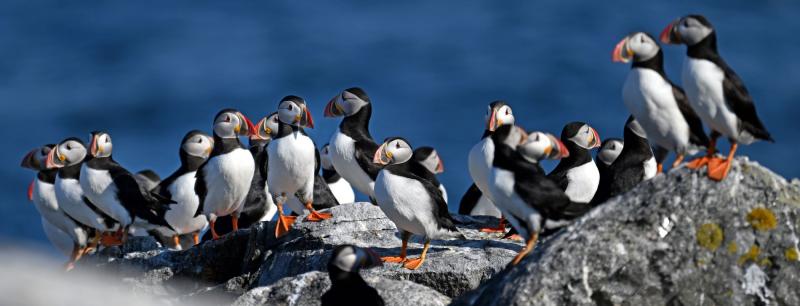 Puffins on Eastern Egg Rock. Photo by Derrick Z. Jackson.
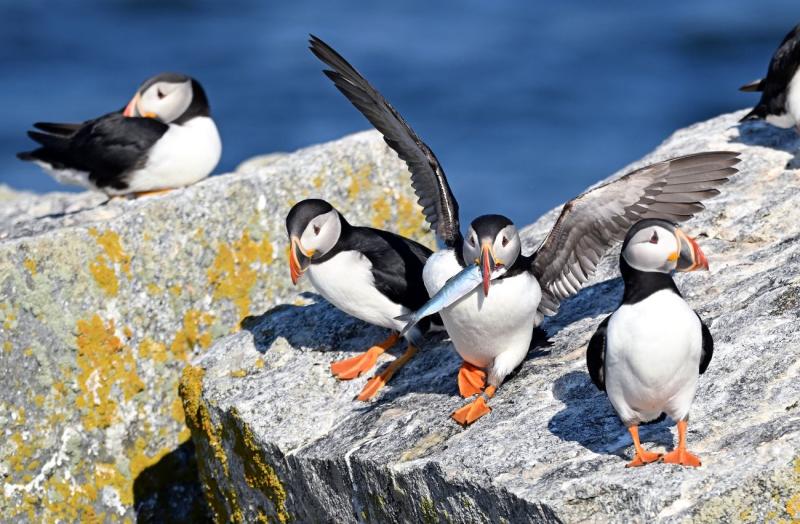 Puffins returning to Eastern Egg Rock with herring for their chicks. Photo by Derrick Z. Jackson.
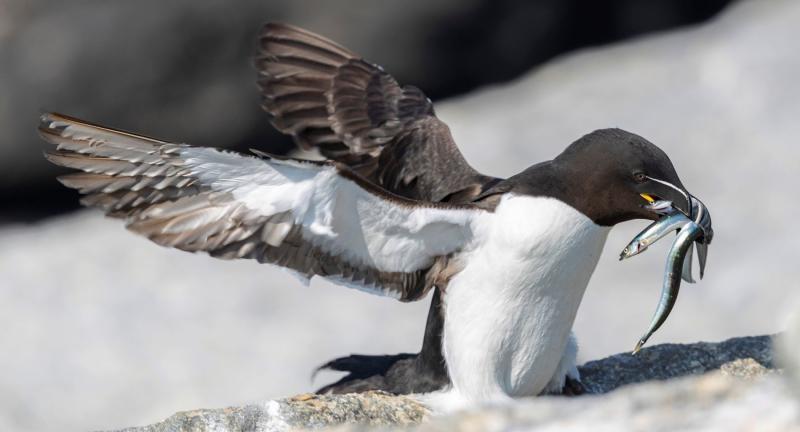 A razorbill carrying sand lance lands on Eastern Egg Rock. Photo by Jean Hall.
Puffins on Eastern Egg Rock in July 2026. Photo by Derrick Z. Jackson.
Puffins on Eastern Egg Rock. Photo by Derrick Z. Jackson.
A puffin returns to Eastern Egg Rock with two herrings. Photos by Derrick Z. Jackson.
Puffins on Eastern Egg Rock. Photo by Derrick Z. Jackson.
Puffins returning to Eastern Egg Rock with herring for their chicks. Photo by Derrick Z. Jackson.
A razorbill carrying sand lance lands on Eastern Egg Rock. Photo by Jean Hall.
A razorbill carrying sand lance lands on Eastern Egg Rock. Photo by Jean Hall.
Puffins on Eastern Egg Rock in July 2026. Photo by Derrick Z. Jackson.
Puffins on Eastern Egg Rock. Photo by Derrick Z. Jackson.
A puffin returns to Eastern Egg Rock with two herrings. Photos by Derrick Z. Jackson.
Puffins on Eastern Egg Rock. Photo by Derrick Z. Jackson.
Puffins returning to Eastern Egg Rock with herring for their chicks. Photo by Derrick Z. Jackson.
A razorbill carrying sand lance lands on Eastern Egg Rock. Photo by Jean Hall.On July 24, a research crew studying puffins on Eastern Egg Rock spread out among the boulders to mark burrows where they had seen birds delivering fish to chicks. As they did that, they also saw puffins disappear in new crevices between boulders with fish.
When the crew members returned to their research cabin and revised the summer’s tally of burrows where puffins were trying to raise a chick, they realized they had confirmed a record 192 active burrows. Since then, the crew discovered eight more, making it 200.
Calling the count a “massive Easter egg hunt,” Alison Ballard, a wildlife biologist who is supervising the project, said the record snuck up on them.
“It was kind of like a slow burn,” she said. “Every day I asked the crew, ‘Did you see new burrows?’ ‘Did you look for puffins with fish?’”
Eastern Egg Rock, off midcoast Maine, is the site of a conservation effort that began in the 1970s. Puffin chicks were transported from Newfoundland as part of Project Puffin, now called the Audubon Seabird Institute. The purpose was to restore puffins to an island where they had been hunted off in the 1880s. The restoration was the world’s first successful effort to return a seabird to an island where it had been eliminated by humans.
Researchers now return to the island each summer to track the puffins’ progress. As a writer and photographer who has co-authored two books on the project, I often join them. In mid-July, I camped on the island for several days and watched as Ballard’s crew of undergraduate and graduate college students — Victoria Smith, Eily Buchanan, Sydney Kuipers and Savanna Pierce — went about their count.
The previous record, in 2019, was 188 burrows.
The count is hard work. Puffin pairs raise a single chick in burrows under boulders. Ideally, researchers like to band as many chicks as possible for ongoing research. But most burrows on Eastern Egg Rock are so far under the rocks that they are hopelessly out of the reach for even the nimblest of young adults to reach them in a process called “grubbing,” no matter how they contort themselves. Last year, Ballard’s crew grubbed a record 37 chicks, but that was still a fraction of the chicks being raised.
Most confirmations are done by watching and keeping track of the moment a puffin disappears under a new boulder to deliver fish to a chick. This is a dizzying task, as the birds are fast: they can beat their wings up to 400 times a minute and can fly between 50 and 60 miles an hour. After venturing out into the ocean to dive for fish, the puffins barely announce their return, shooting like a laser, straight and low out of the horizon and onto the island at highway speed.
Part of the rush is to avoid laughing gulls that try to mug them in midair to steal their fish. Unless one is lucky enough to make out the approach over the ocean of a tiny puffin form with a fish dangling from its mouth, a puffin is likely to shoot into a burrow so fast that all you catch is the sight and sound of the final flap of the wings squeezing in between the granite. You can easily miss whether the bird arrived with fish.
When I was there, I was blitzed during the peak of early morning and late afternoon feedings by three, four or even five fish deliveries seconds apart. One day, the crew asked me to keep a lookout for new burrows, and I felt accomplished to spot five.
It was not only the search for puffin burrows that had the researchers spinning their heads. Normally, a new puffin burrow record would be the undisputed highlight of the breeding season on the treeless seven acres of Eastern Egg Rock, which sits in outer Muscongus Bay, six miles out from Pemaquid Point.
This summer, the puffins had to share top billing with a particular pair of razorbills.
A razorbill is a larger, chunkier, black-and-white cousin of the puffin. It is the closest living relative of the extinct great auk. Razorbills have been flying around Eastern Egg Rock for decades ever since puffins were restored. But while there is documentation of puffins breeding on Eastern Egg Rock in the 1800s, there is no historical record of razorbills ever nesting here.
On June 19, Buchanan and Kuipers were hunkered down in bird blinds near one another when both spotted a razorbill circling the island with fish in its mouth. Buchanan took a few photos. As first-timers on the island, they were not sure what to make of the sighting.
The two of them went back to the cabin and reported the sighting to Ballard. Her face lit up. She had seen razorbills land on the island before but had never seen any parents with fish.
She and Smith went out to find the burrow. Smith recorded the sounds of a chick. Ballard explored the burrow cavity and found an unhatched razorbill egg, perhaps from last summer.
The razorbill chick fledged out into the ocean on July 4.
During my visit a few days later, the crew talked about what this could mean.
Maine’s razorbills, like puffins, are at the southernmost end of their breeding range in North America. Amid climate change that is driving many animal and plant species northward and has made the Gulf of Maine one of the fastest warming bodies of ocean on Earth, Smith found it remarkable that the razorbill pair would breed on Eastern Egg Rock.
The closest previously known breeding island is Matinicus Rock, nearly 30 miles east.
Ballard said the unprecedented razorbill nesting and puffin burrow record offer hope at a moment when seabirds are facing a dramatic decline, having lost 70 percent of their population between 1950 and 2010 from human activities. In 1902, there were just two puffins left in the state of Maine, on Matinicus Rock, alarming early conservationists who paid a warden to protect them. Today, there are an estimated 1,400 pairs across several islands.
“It just goes to show what can result from 50-plus years of hard work and collective effort,” Ballard said. “It shows you how resilient these birds are.”
This story was originally published by The Maine Monitor, a nonprofit civic news organization. To get regular coverage from The Monitor, sign up for a free Monitor newsletter here.