Bill to provide $45 million in farm funding fails House vote
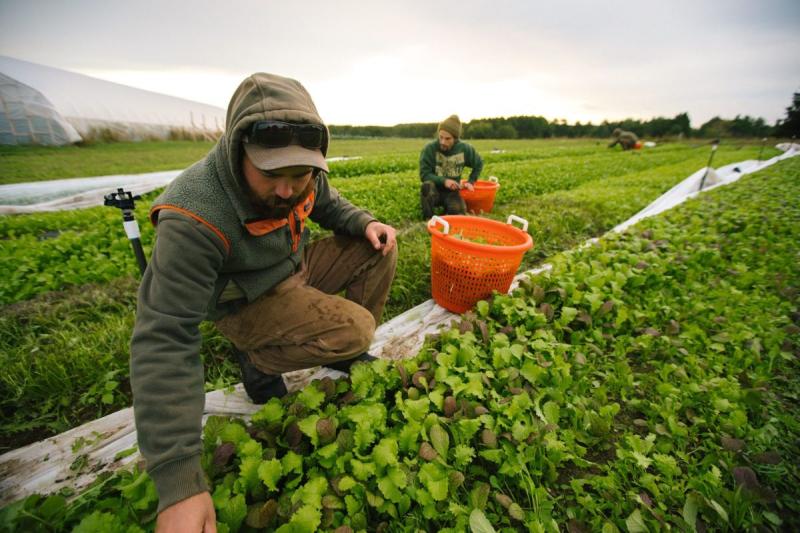 Photo provided by The Maine Monitor
Photo provided by The Maine Monitor
Photo provided by The Maine MonitorMACHIAS — Farm owners and land stewards in Washington County will have to wait to see whether a $45 million funding package is coming their way after state legislators declined Tuesday to authorize the bond.
Proposed in January by Rep. Bill Pluecker, I-Warren, the bill — L.D. 2094 — was drafted to fund agricultural and forestry initiatives statewide through a bond. Among its proposals is $4 million to help farmers install irrigation systems to protect crops from drought conditions.
The $45 million bond would “build resilient businesses that help support food access when our supply chains are threatened,” Pluecker, who represents House District 44, told Monitor Local.
Pluecker, a small farm owner and teacher who serves as House chair of the Joint Standing Committee on Agriculture, Conservation and Forestry, said the bill would provide “structural support” to farmers, conservationists and others by giving them access to funding for improvements.
In a statement supporting the bill, Maine Farmland Trust, a nonprofit that works to preserve the state’s working farmland, noted that “agriculture is infrastructure, it is time that we invest in it as such.”
The bond initiative proposes $5 million for grants to help farmers gain access to working farmland.
For Mary Briggs of Far Out Farm, a grant like this would offer immediate relief for a pressing problem at her small operation in Lubec.
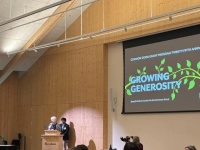
During the recent drought, pests ate her crops, Briggs said at Eastern Maine Regional Opportunities for Ocean, Timber and Soil, a gathering held in Machias in March.
She said she had to choose between maintaining her fence or updating her irrigation system — and chose irrigation.
Briggs said the rising cost of supplies places significant limitations on small farms.
Dozens of farmers appealed to legislators on March 26, traveling to the State House in Augusta to urge lawmakers to pass the bill.
On Monday, the final version of the bill narrowly passed in the House. But without a two‑thirds majority, the bond will not reach voters in November.
The measure was sent back to the House floor for a roll call Tuesday. Again, it failed to win the votes needed to reach the ballot, leaving it stalled in the Senate as the second session marches to a close.
Republican Rep. Will Tuell of East Machias, who serves House District 10, voted no on the proposal.
“The state is already committed to over $1 billion worth of bonds as noted on the floor yesterday,” Tuell told Monitor Local after the bill failed to achieve a supermajority for a second time. “We can only borrow another $210 million; otherwise, we are looking at raiding the Rainy Day Fund and increasing spending.”
However, for the 40 conservation experts and property and farm owners who attended the EMROOTS gathering in Machias, the conversations echoed the statewide concerns addressed by L.D. 2094.
Breakout sessions at the event highlighted widespread worry about an aging workforce and the loss of skills among younger generations.
Suggestions included reclaiming lost knowledge, matching sellers of working farmland with farmers looking to buy and expanding education programs that support and reskill rural youth.
The ideas now sit on a flipchart with the planning committee, waiting to be revisited at next year’s conference — if change does not come sooner, said Lucy Zwigard, who, among other roles, is the Washington County food programs coordinator at Healthy Acadia and facilitator of the Washington County Food Council.
Machias farmers and conservationists raised other concerns, including the need for better processing infrastructure, training initiatives on healthy soil and land viability, sociocultural “connection” with the land and new ideas for reforestation and seedling access.
These issues shape a broader discussion encouraged by L.D. 2094 and its proposed financial solution. The debate comes at a time when federal funding freezes and shifts in trade policy are creating economic uncertainty for agricultural stewards, and when rural Maine’s aging farmers are increasing far faster than their younger successors, according to the 2022 Census of Agriculture.
As of Thursday, L.D. 2094 sat with the Senate for concurrence or acknowledgment that no supermajority exists.
This story was originally published by The Maine Monitor, a nonprofit civic news organization. To get regular coverage from The Monitor, sign up for a free Monitor newsletter here.