
UMaine asks faculty to retire to address budget shortfall
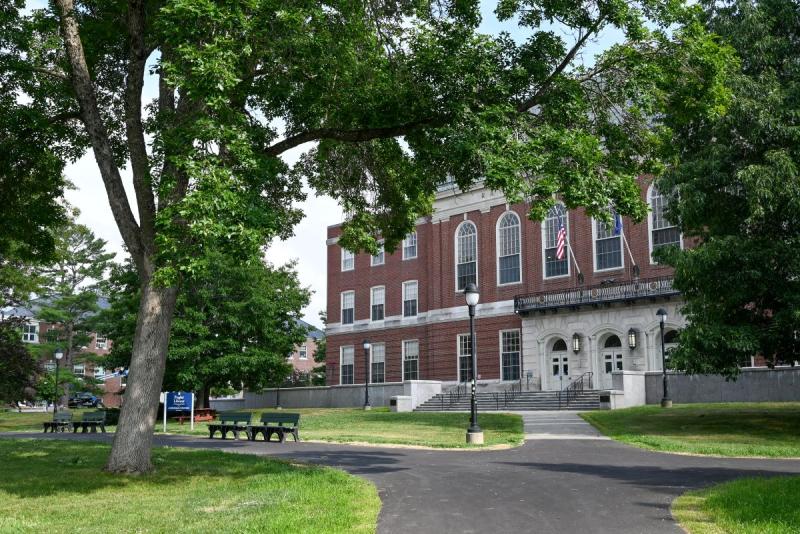 The University of Maine in Orono, pictured here, is facing a budget shortfall of $19 million. Photo by Kristian Moravec.
The University of Maine asked 158 faculty members at its campus in Orono and regional campus in Machias this week if they would consider retiring voluntarily in a move to address a steep budget shortfall.
The university told eligible faculty on Nov. 3 that they could receive a one-time payment equivalent to their base salary if they voluntarily retire by next September. Faculty members are eligible if they are at least 55 years old and have 10 years of full-time experience at the school. They have until Jan. 2 to decide whether they want to accept the offer.
Affiliated Faculties of the University of Maine System, a union that represents faculty, voted to accept the incentive, according to union president Lydia Savage, who proposed the measure. Savage said that no departments were specified for the retirement incentive. The goal was to make sure people did not feel pressured, she said.
But Savage said the offer to retire is not without its own problems: Departments will lose experienced faculty, she said. If too many people leave, the university has to navigate hiring more people, though they would likely be hired at lower salaries.
“People are very unhappy that it has come to the point in the budget crisis that we have to offer a retirement incentive,” Savage said. “Faculty and staff … have very little input into the budget, and yet we’re the ones who are going to bear the brunt of the losses.”
Maine’s flagship public university is grappling with a $19 million shortfall projected for the 2028 budget year, which starts in July. University officials said in September that they would need to lay off faculty and staff to address the gap.
So far, officials have said that UMaine will shave $10 million from the university’s academic expenses, which make up about half of the entire budget. In October, officials then announced that UMaine could save an additional $6 million through potential cuts in other units on campus, such as the president’s cabinet, and through new sources of revenue.
The retirement incentive comes after unions and other groups gathered in late October to condemn the cuts and call for administrators to seek alternative measures to solve the budget gap rather than laying off faculty and staff.
At the gathering, union leaders and students also called for the state to increase its appropriation to the university. State Sen. Mike Tipping, D-Orono, who was recently reelected to his seat, also made an appearance and said that public higher education has been underfunded for decades.
Savage said that the announcement of cuts, which did not specify who would be on the chopping block, created anxiety on campus.
“People are not just worried about their jobs, they’re worried about their departments. What happens if somebody gets cut from a department? Can they deliver courses?” Savage said. “They’re worried about their students.”
University of Maine System spokesperson Samantha Warren said that the system, which oversees the state’s public universities, committed up to $6 million in one-time payout costs to schools, including the UMaine retirement incentive and a separate retirement incentive program that is underway at the University of Maine at Farmington.
Warren said that officials at UMaine will work with units across the university to find other revenue streams and permanently reduce expenses. Federal labor laws limit the university from speaking further about the retirement initiative, Warren said.
This story was originally published by The Maine Monitor, a nonprofit civic news organization. To get regular coverage from The Monitor, sign up for a free Monitor newsletter here.